Brigates Publishes Image Sensor Datasheets

...
Brigates publishes fairly detailed datasheets of its image sensors with characterization data. It's a brave move as some of the parameters are quite far from the state of the art.

BG0703 is a 1MP 1/2.7-inch rolling shutter image sensor aimed to high-end surveillance and industrial imaging markets:


A newer and improved 1080p 1/3-inch BG0803 targets the same market:

11:49 AM

Challenges: ST Signs Huge Contract with Apple

...
French-language site Challenges reports that ST has signed a huge contract with Apple for image sensors, which will boost the workload at its Crolles plants, where fifty new machines are being installed. The influx of this and other new orders allows the Crolles 200mm fab to reach utilization rate of 100%, while Crolles 300mm plant utilization exceeds 80%. When questioned, ST group refused to comment.

Possibly, the French site talks about ST AF ToF sensors used in iPhone 7.

Thanks to SL for the link!
9:21 AM

Mediatek to Enter ADAS Vision Solutions Market

...
MediaTek announces its plan to bring ADAS vision solutions to the automotive industry beginning Q1 2017:

"Reimagined from the ground up, MediaTek’s ADAS system will feature cutting-edge, decentralized Vision Processing Unit (VPU) solutions to optimally handle large amounts of real-time visual streaming data. MediaTek employs Machine Learning to increase the accuracy and speed of detection, recognition and tracking, making it more comparable to human decision-making performance."
12:49 PM

Intel to Make SoC for Next Gen Mobileye

...
Reuters, NYT: Intel will provide a SoC for autonomous vehicle systems that Delphi and Mobileye are developing together, Glen De Vos, Delphi's VP Engineering said. Delphi is testing autonomous driving technology in vehicles in Singapore. By the end of this year, Delphi hopes to choose a city in the United States to launch a test fleet of self-driving cars during 2017, De Vos said. The company is also looking for test site in a European city.

Delphi and Mobileye will demo their self-driving vehicle system at the CES in Las Vegas in January. That system will use current, electromechanical laser imaging technology, or LIDAR, that is too expensive for use in consumer vehicles, he said. Delphi is also working with Quanergy Systems, a maker of solid-state LIDAR systems.
10:30 AM

Sony SLDVS-EC Interface

...
Novus Light discusses Sony proprietary Scalable Low Voltage Signalling with an Embedded Clock (SLVS-EC) interface, which debuts in the company's next generation of image sensors for industrial applications. The interface has been mentioned quite a long time ago in Sony papers such as this one, allowing to output signal independently from 4 corners of the chip:


In SLVS-EC, the clock signal is embedded in the data and recovered by dedicated circuitry on the receive side. Since the signals are then less sensitive to skew, the data can be transmitted at much higher data rates and over much further distances. Each of the SLVDS-EC channels can support speeds of up to 2.304Gbit/sec. The result is that a sensor that supports the new standard will be able to transfer data over eight links at a data rate of 1.84GBytes/sec (80% of full bandwidth due to 8b10b encoding).

I'm not sure what is the difference between MIPI M-PHY and SLVDS-EC, but Sony promotes its high speed:

12:22 PM

ARM VP of Imaging and Vision Inverview

...
ARMdevices interviews Jem Davies, ARM VP of Technology, Imaging and Vision Group. Jem talks about imaging and vision strategy at ARM and says that Huawei will be one of the first licensees of its imaging ad vision technology in smartphones:


Jem Davies ARM Techcon 2016 presentation video posted on Nov. 22 has been updated, so that its end part is not cut anymore.
11:45 AM

LIPS Receives 2016 Golden Torch Innovation Award

...
LIPS receives 2016 Golden Torch Innovation Award from Outstanding Enterprise Manager Associate in Taiwan for the technologies behind its depth camera innovation.

LIPS Founder & CEO Luke Liu receiving award from the
 former Taiwan’s vice president Dwen-Yi Wu
11:38 AM

AutoSens: Softkinetic Compares ToF with Other Approaches

...
AutoSens 2016 kindly permitted me to post a couple of slides from Softkinetic presentation "3D depth-sensing for automotive: bringing awareness to the next generation of (autonomous) vehicles" by Daniel Van Nieuwenhove. A good part of the presentation compares ToF with active and passive stereo solutions:

2:06 PM

Samsung System LSI Might Split into Fabless and Foundry Businesses

...
According to BusinessKorea sources, Samsung is contemplating to split its semiconductor business into a fabless and foundry divisions:

"Samsung Electronics’ System LSI business division is largely divided into four segments; system on chip (SoC) team which develops mobile APs, LSI development team, which designs display driver chips and camera sensors, foundry business team and support team. According to many officials in the industry, Samsung Electronics is now considering forming the fabless division by uniting the SoC and LSI development teams and separating from the foundry business."
2:37 AM

Nikon Applies for 2-Layer Stacked PDAF Patent

...
NikonRumors quotes Egami talking about Nikon patent application with 2-layered pixel array forming a cross-type PDAF: "Nikon patent application is to use the two imaging elements having different phase difference detection direction in order to achieve a cross-type AF."


Thanks to TG for the link!
12:55 PM

More on Hitachi Lensless Camera

...
Nikkei publishes an article with more details on Hitachi lens-less camera:

"In general, the method that Hitachi employed for its lens-less camera uses a "moire stripe" that can be obtained by stacking two concentric-patterned films with a certain interval and transmitting light through them. The numerous light-emitting points constituting the image influence the pitch and orientation of the moire stripe. The location of light, etc can be restored by applying two-dimensional Fourier transformation to the moire stripe.

This time, Hitachi replaced one of the films (one that is closer to the image sensor) with image processing. In other words, one film is placed with an interval of about 1mm, but the other film does not actually exist. And, instead of using the second film, a concentric pattern is superimposed on image data.
"

10:05 PM

Image Sensors at ISSCC 2017

...
ISSCC publishes its 2017 advance program. Sony is going to present its 3-die stacked sensor, a somewhat expected evolution of the stacking technology:

A 1/2.3in 20Mpixel 3-Layer Stacked CMOS Image Sensor with DRAM
T. Haruta, T. Nakajima, J. Hashizume, T. Umebayashi, H. Takahashi, K. Taniguchi, M. Kuroda, H. Sumihiro, K. Enoki, T. Yamasaki, K. Ikezawa, A. Kitahara, M. Zen, M. Oyama, H. Koga, H. Tsugawa, T. Ogita, T. Nagano, S. Takano, T. Nomoto
Sony Semiconductor Solutions, Atsugi, Japan
Sony Semiconductor Manufacturing, Atsugi, Japan
Sony LSI Design, Atsugi, Japan

Canon presents, apparently, a version of its IEDM global shutter sensor paper with more emphasis on the readout architecture:

A 1.8erms Temporal Noise Over 110dB Dynamic Range 3.4μm Pixel Pitch Global Shutter CMOS Image Sensor with Dual-Gain Amplifiers, SS-ADC and Multiple-Accumulation Shutter
M. Kobayashi, Y. Onuki, K. Kawabata, H. Sekine, T. Tsuboi, Y. Matsuno, H. Takahashi, T. Koizumi, K. Sakurai, H. Yuzurihara, S. Inoue, T. Ichikawa
Canon, Kanagawa, Japan

Other nice papers in the Imager session are listed below:

A 640×480 Dynamic Vision Sensor with a 9μm Pixel and 300Meps Address-Event Representation
B. Son, Y. Suh, S. Kim, H. Jung, J-S. Kim, C. Shin, K. Park, K. Lee, J. Park, J. Woo, Y. Roh, H. Lee, Y. Wang, I. Ovsiannikov, H. Ryu
Samsung Advanced Institute of Technology, Suwon, Korea;
Samsung Electronics, Pasadena, CA

A Fully Integrated CMOS Fluorescence Biochip for Multiplex Polymerase Chain-Reaction (PCR) Processes
A. Hassibi, R. Singh, A. Manickam, R. Sinha, B. Kuimelis, S. Bolouki, P. Naraghi-Arani, K. Johnson, M. McDermott, N. Wood, P. Savalia, N. Gamini
InSilixa, Sunnyvale, CA

A Programmable Sub-Nanosecond Time-Gated 4-Tap Lock-In Pixel CMOS Image Sensor for Real-Time Fluorescence Lifetime Imaging Microscopy
M-W. Seo, Y. Shirakawa, Y. Masuda, Y. Kawata, K. Kagawa, K. Yasutomi, S. Kawahito
Shizuoka University, Hamamatsu, Japan

A Sub-nW 80mlx-to-1.26Mlx Self-Referencing Light-to-Digital Converter with AlGaAs Photodiode
W. Lim, D. Sylvester, D. Blaauw
University of Michigan, Ann Arbor, MI

A 2.1Mpixel Organic-Film Stacked RGB-IR Image Sensor with Electrically Controllable IR Sensitivity
S. Machida, S. Shishido, T. Tokuhara, M. Yanagida, T. Yamada, M. Izuchi, Y. Sato, Y. Miyake, M. Nakata, M. Murakami, M. Harada, Y. Inoue
Panasonic, Osaka, Japan

A 0.44erms Read-Noise 32fps 0.5Mpixel High-Sensitivity RG-Less-Pixel CMOS Image Sensor Using Bootstrapping Reset
M-W. Seo, T. Wang, S-W. Jun, T. Akahori, S. Kawahito
Shizuoka University, Hamamatsu, Japan;
Brookman Technology, Hamamatsu, Japan

A 1ms High-Speed Vision Chip with 3D-Stacked 140GOPS ColumnParallel PEs for Spatio-Temporal Image Processing
T. Yamazaki, H. Katayama, S. Uehara, A. Nose, M. Kobayashi, S. Shida, M. Odahara, K. Takamiya, Y. Hisamatsu, S. Matsumoto, L. Miyashita, Y. Watanabe, T. Izawa, Y. Muramatsu, M. Ishikawa;
Sony Semiconductor Solutions, Atsugi, Japan;
Sony LSI Design, Atsugi, Japan
University of Tokyo, Bunkyo, Japan

The tutorials day includes one on deep learning processors:

Energy-Efficient Processors for Deep Learning
Marian Verhelst
KU Leuven, Heverlee, Belgium
1:10 PM

Basler's First ToF Camera Enters Series Production

...
Basler: After a successful conclusion of the evaluation phase and extremely positive customer feedback, Basler first ToF camera is now entering series production. The VGA ToF camera is said to stand out for its combination of high resolution and powerful features at a very attractive price. This outstanding price/performance ratio puts the Basler ToF camera in a unique position on the market and distinguishes it significantly from competitors' cameras.

The Basler ToF camera operates on the pulsed time-of-flight principle. It is outfitted with eight high-power LEDs working in the NIR range, and generates 2D and 3D data in one shot with a multipart image, comprised of range, intensity and confidence maps. It delivers distance values in a working range from 0 to 13.3 meters at 20fps. The measurement accuracy of the Basler ToF camera is +/-1 cm at a range from 0.5 to 5.8 meters, while consuming 15W of power.

11:37 AM

Jaroslav Hynecek Gets 2016 EDS J.J. Ebers Award

...
IEEE Electron Devices Society publishes a list of this year's awards. Jaroslav Hynecek receives 2016 EDS J.J. Ebers Award for "For the pioneering work and advancement of CCD and CMOS image sensor technologies." The Award is to be presented at IEDM in December.
1:02 PM

Image Reconstruction for Quanta Image Sensors

...
Open-access Sensors journal publishes Purdue University paper "Images from Bits: Non-Iterative Image Reconstruction for Quanta Image Sensors" by Stanley H. Chan, Omar A. Elgendy, and Xiran Wang. From the abstract:

"Because of the stochastic nature of the photon arrivals, data acquired by QIS is a massive stream of random binary bits. The goal of image reconstruction is to recover the underlying image from these bits. In this paper, we present a non-iterative image reconstruction algorithm for QIS. Unlike existing reconstruction methods that formulate the problem from an optimization perspective, the new algorithm directly recovers the images through a pair of nonlinear transformations and an off-the-shelf image denoising algorithm. By skipping the usual optimization procedure, we achieve orders of magnitude improvement in speed and even better image reconstruction quality. We validate the new algorithm on synthetic datasets, as well as real videos collected by one-bit single-photon avalanche diode (SPAD) cameras."


Thanks to EF for the link!
12:40 PM

Xiling Demos Alexnet on FPGA

...
Xilinx publishes a demo of its neural learning network. Alexnet, although somewhat dated by modern standards, seems to remain the most popular for such capability statements:

11:41 AM

Tesla New Self-Driving Hardware Demo

...
Tesla publishes a nice demo of its new self-driving platform, together with computer-interpreted images from its 3 cameras:


A longer version of this video is here.
10:50 AM

High EQE Broadband Photodiode

...
Opli quotes Nature Photonics paper "Near-unity quantum efficiency of broadband black silicon photodiodes with an induced junction" by Mikko A. Juntunen, Juha Heinonen, Ville Vähänissi, Päivikki Repo, Dileep Valluru & Hele Savin from Aalto University, Espoo, Finland. From the abstract:

"Present-day photodiodes notably suffer from optical losses and generated charge carriers are often lost via recombination. Here, we demonstrate a device with an external quantum efficiency above 96% over the wavelength range 250–950 nm. Instead of a conventional p–n junction, we use negatively charged alumina to form an inversion layer that generates a collecting junction extending to a depth of 30 µm in n-type silicon with bulk resistivity larger than 10 kΩ cm. We enhance the collection efficiency further by nanostructuring the photodiode surface, which results in higher effective charge density and increased charge-carrier concentration in the inversion layer. Additionally, nanostructuring and efficient surface passivation allow for a reliable device response with incident angles up to 70°."


Thanks to TG for the link!
8:11 AM

AR Glasses to Grow into $1b Market in 2017

...
PRNewswire: According to CCS Insight's report on wearable tech, shipments of AR and VR headsets forecast to grow 15 times to 96 million units by 2020, at a value of $14.5 billion. The report also indicates that the AR segment alone is expected to grow into a $1 billion business in 2017. As the technology continues to evolve AR products are expected to become an enterprise market opportunity, unlike the consumer focused VR.

Apple is said to be jumping on the smart-glasses market train and may launch a product by 2018. Bloomberg states Apple has recently opened up the idea during meetings with possible providers for components of augmented reality glasses and "has ordered small quantities of near-eye displays from one supplier" for testing purposes. The device would connect to the iPhone and present images over the wearer's vision - a la Google Glass.

11:00 AM

Theses Roundup: PD Modeling, 0.4e- Noise, Sensor for Venus Mission

...
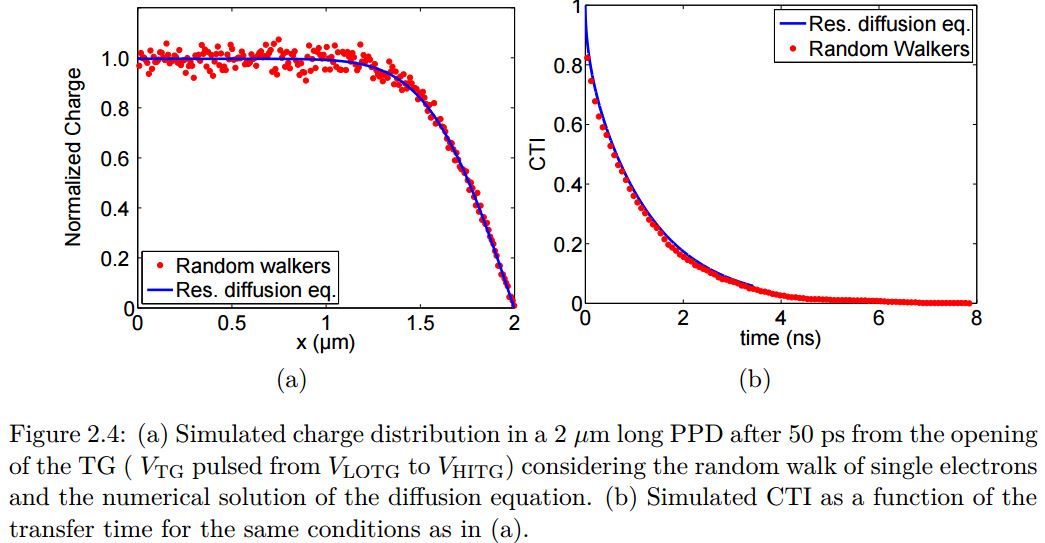
ISAE-SUPAERO publishes PhD Thesis "Estimation and modeling of key design parameters of pinned photodiode CMOS image sensors for high temporal resolution applications" by Alice Pelamatti. The thesis presents a fairly detailed overview of PPD static and dynamic effects:


EPFL publishes PhD Thesis "Ultra Low Noise CMOS Image Sensors" by Assim Boukhayma presenting a detailed description of the noises sources and techniques to achieve 0.4e- noise:


KTH Royal Institute of Technology, Sweden, publishes Thesis "Design considerations for a high temperature image sensor in 4H-SiC" by Marco Cristiano. The thesis discusses the approach to create a sensor for Venus Mission, capable to capture images at temperature of 460 degC at Venus surface.

1:52 PM

HiScene, Inuitive, Heptagon Team on AR Glasses

...
Shoot: HiScene (not HiSense!), Inuitive and Heptagon have teamed to roll out AR Glasses, billed as HiScene’s next generation of Augmented Reality (AR )glasses. The companies worked together to develop a complete solution for advanced 3D depth sensing and AR/VR applications that delivers excellent performance even in changing light conditions and outdoors. HiAR Glasses incorporate Inuitive’s NU3000 Computer Vision Processor and Heptagon’s advanced illumination.

The glasses’ AR operating system provides stereoscopic interactivity, 3D gesture perception, intelligent speech recognition, natural image recognition, inertial measuring unit (IMU) displayed with an improved 3D graphical user interface.

“We are committed to providing the best possible user experience to our customers, and for this reason we have partnered with Inuitive and Heptagon to create the most intelligent AR glasses available on the market,” said Chris Liao, CEO of HiScene. “The technologies implemented provide a seamless experience in a robust and compact format, without compromising on battery life.”

Inuitive’s NU3000 serves AR Glasses by providing 3D depth sensing and computer vision capabilities. This solution acts also as a smart sensors hub to accurately time-stamp and synchronize multiple sensors in a manner that off-loads the application processor and shortens the development time. “Inuitive’s solution allows Hiscene to provide the reliability, latency and performance its customers expect,” said Shlomo Gadot, CEO of Inuitive. “With Inuitive technology, AR products and applications can now be used outdoors without the sunlight interfering or damaging their efficacy thanks to cameras featuring depth perception.”

The new HiScene AR glasses feature an impressive array of cameras under the hood:

11:51 AM

The Miracle Drug And Superbugs

...
In class this week we read an article called "The Miracle Drug And Superbugs," which was about antibiotics, why we need them, and why we don't. We've been learning about microbes this quarter- previously, we covered fungi, the "supreme recycler," and now we're learning about bacteria and moving into viruses. This article has made me want to learn even more about the history of antibiotics and other medicines - what are the great medical leaps and mistakes of history?

Microbes

The article we read this week was mainly about antibiotics and their effects. However, to understand how antibiotics work, we must also understand what they work against - and what they don't.

The two main types of microbe that cause people to get sick are bacteria and viruses. Aside from that, however, they are different in almost every way.

Image result for bacteria versus virusBacteria are tiny - single-celled organisms, in fact - but viruses are smaller still, minuscule enough to get inside a single-celled bacterium.  Bacteria can live anywhere they can find food (which is to say, almost everywhere), but viruses need a living organism - a host - to survive and reproduce.

Another key difference is that while bacteria are alive, bacteria aren't - they're basically just little pieces of genetic material wrapped in proteins. They can't grow or reproduce unless they've found a cell to use as a host.

As well, from a human perspective, bacteria can be both good and bad, but viruses, to us, are pretty much only bad.

Finally, bacteria can be recognized as invaders by antibiotics and be killed. Viruses, on the other hand, are unable to be detected by antibiotics once they're within a host, and are therefore completely immune to antibiotics.

How Antibiotics Work

So, we know that viruses resist antibiotics, and bacteria don't. But what is an antibiotic, anyway?

Penicillin, the first antibiotic, was discovered in 1928  by Alexander Fleming, and mass produced and put to use by 1940, thanks to Howard Florey and his team of researchers. It was discovered when Fleming left a petri dish of staphylococcus open, to be contaminated by a mold - called penicillium - growing on his windowsill. Fleming noticed that where the bacteria was affected by the mold, it had stopped growing and started dying. This was the beginning of his - and eventually Florey and co.'s - discovery of penicillin, which would lead to the development of a number of other antibiotics.

Image result for penicillinAn antibiotic is a substance that controls/terminates the growth of bacteria. It usually works by preventing the bacteria from reproducing and multiplying, but a few work by just killing the bacteria outright.

When You Don't Need Them

After antibiotics really hit the public in the 1940s, for a while, they became the solution to every problem, big or small, and, importantly, viral or bacterial. Antibiotics were administered even when people didn't need them - when their sickness was caused by a virus instead of bacteria,, when they'd get over it without medicine (strengthening their immune system), or both.

And unfortunately, taking antibiotics is one of the cases for which"you can have too much of a good thing" applies, and we, as a species, have had too much of that good thing.

Taking antibiotics when you don't need them leads to bacterial resistance, also known as antibiotic resistance or just plain "resistance." It's basically when certain bacteria, who've been previously exposed and adapted to an antibiotic, are able to resist it. When the resistance bacteria are among a population, natural selection takes over and eventually the entire population is made up of these resistant bacteria, called superbugs.

Friend or Foe?

When penicillin and other antibiotics first hit the market during World War II, they were lauded as "the miracle drug." Millions of soldiers (in addition to, of course, normal citizens)had been dying due to bacterial infections in the tiniest of cuts. Penicillin perfectly solved the problem, and many people, at the time, found it miraculous.

Now, however, they are no longer known as the miracle drug. While once they were presumed to cure everything, we now know that they sometimes even hurt instead of help, such as with bacterial resistance.

Image result for prescriptionBecause of this, antibiotics are now sometimes labeled "bad medicine." Not only does overuse of antibiotics lead to bacterial resistance, but recent research shows that too much exposure to antibiotics and antibacterials can actually stunt your immune system and, as I mentioned last week, antibiotics kill the good bacteria in your gut too, and if you overuse antibiotics even probiotics can only do so much.

Prescribing Medicine

This knowledge of bacteria and viruses and overuse of antibiotics is very applicable to real life situations. For instance, every year, my family gets our share of colds, sore throats, and stomach bugs. We rarely go to the doctor for these illnesses - for that type of sickness, we tend to proceed on the assumption we'll get over it given enough time - but when we do, it's usually because said sickness is much worse than usual, in which case I do expect a prescription for some type of medicine - perhaps antibiotics.

In my case,it's because I believe we shouldn't even go to the doctor unless the cold or virus is bad enough to require treatment, but in general, I think it's a result of our society's tendency to automatically expect a medical/scientific/artificial solutions to our health problems (like I explained last week in terms of probiotics) and tend to undervalue our bodies' built-in protection and natural remedies.

Natural Remedies

Natural remedies are one of the most promoted alternatives to antibiotics.These remedies include compounds found in natural foods, such as Chilean avocados (lowers amount of antibiotics needed when fighting off bacterial infections) and Manuka honey (powerful antibiotic properties, especially against staphylococcus aureus)  as well as the broader category of vitamins, such as vitamin C (antiviral and cancer therapy) and vitamin D (fights colds and the flu), or even simple herbs such as garlic, which is antibacterial and antifungal.

Image result for natural remediesThese remedies, among others, are advocated as the better, hidden alternative to antibiotics. As I said before, in our society, we tend to expect artificial solutions to our problems - hence our consistent leaning towards antibiotics over natural remedies, even when they appear to have many of the same benefits. However, while the article we read wholeheartedly suggests natural remedies as the perfect alternative to antibiotics, I find that I am slightly skeptical.

I believe the science proving the benefits and effectiveness of natural remedies just as I believe the science that showed first the benefits and then the downsides of using antibiotics.I think that the natural remedies the article professed as "not only the safest, but... also far more effective" are just as effective and perhaps safer than our current antibiotics, however I believe that depending as completely on natural remedies now as we did on antibiotics in the past would be a mistake.

Some natural remedies, such as the Chilean avocado, might, with overuse, face the same issues as antibiotics - after all, isn't it plausible that the bacteria could learn to resist the compound in those avocados as they are learning to resist the chemicals in our antibiotics? Other remedies, such as vitamins C and D, might be too general a solution to work completely in specific cases of bacterial infection. In fact, it seems to me that that type of vitamin is really less of a remedy and more of a preventative measure against such infections

My point is that neither antibiotics nor natural remedies are humankind's perfect solution to bacterial illnesses and infections. However, I do believe that the use of both demonstrates humanity's unique way of adapting in response to bacteria's adaptations - that our own adaptations are actually the only real solution to the bacteria causing illness and adapting to thwart our cures. Antibiotics and natural remedies can both be used in moderation or, in the case of natural remedies, in addition to the new cures and remedies I'm confident our species will find/create in our latest move in the long chain of adaptations that represents our interaction with bacteria and the world around us as a whole.

Image result for change
When microbes like bacteria are metaphorically the very glue that holds our web of life together, we can't expect that just killing as many as we can or eating our vegetables will be our permanent solution. The fact is, when dealing with creatures that are so integral to our ecosystem, there just isn't a permanent solution when some of these creatures harm you instead of help you. We must simply accept that we live in a universe built on change, and that, to survive, we must accept and thrive on that change.