Analog Devices Adds Pipelined Vision Processor to its Blackfin DSPs

online engineering degree/engineering degree online/online engineering courses/engineering technology online/engineering courses online/engineering technician degree online/online engineering technology/electronic engineering online
Analog Devices introduces ADSP-BF608 and ADSP-BF609 Blackfin DSPs featuring a high performance video analytics accelerator, the Pipelined Vision Processor (PVP). The PVP is comprised of a set of configurable processing blocks designed to accelerate up to five concurrent image algorithms, enabling a very high level of analytics performance. These processors are ideal for many applications such as automotive advanced driver assistance systems (ADAS), industrial machine vision, and security/surveillance systems.

BF609 PVP supports HD resolution, while BF608 PVP only supports VGA.

11:51 PM

Omnivision's Oslo Center Grows

online engineering degree/engineering degree online/online engineering courses/engineering technology online/engineering courses online/engineering technician degree online/online engineering technology/electronic engineering online
LinkedIn records show that Omnivision's Oslo, Norway center grew to 9 employees. All employees are from Aptina's design center in Oslo, according to LinkedIn.
12:53 AM

Caeleste Whitepaper on X-Ray Photon Counting

online engineering degree/engineering degree online/online engineering courses/engineering technology online/engineering courses online/engineering technician degree online/online engineering technology/electronic engineering online
Caeleste published a white paper on "Photon counting and color X-ray imaging in standard CIS technology".

The 100x100um color X-ray pixel has quite complex functionality:


The counters are charge-based analog ones and the pixel layout is quite compact with 80% metal limited fill factor:
9:02 AM

Method for Autonomous picking of Paper Reels (Electronics Project)

online engineering degree/engineering degree online/online engineering courses/engineering technology online/engineering courses online/engineering technician degree online/online engineering technology/electronic engineering online

Autonomous forklift handling systems is one of the most interesting research in the last decades. While research fields such as path planning and map building are taking the most significant work for other type of autonomous vehicles, detecting objects that need to move and picking it up becomes one of the most important research fields in autonomous forklifts field.
We in this research had provided an algorithm for detecting paper reels accurate position in paper reels warehouses giving a map of the warehouse itself. Another algorithm is provided for giving the priority of papers that want to be picked up. Finally two algorithms for choosing the most appropriate direction for picking the target reel and for choosing the safest path to reach the target reel without damage it are provided.
While working on the last two algorithms shows very nice results, building map for unknown stake of papers by accumulating maps over time still tricky. In the following pages we will go in detail by the steps that we followed to provide these algorithms started from giving an over view to the problem background and moving through the method that we used or we developed and ending by result and the conclusion that we got from this work.

Aptina Announces 3 New Security Sensors, Janus Reference Design

online engineering degree/engineering degree online/online engineering courses/engineering technology online/engineering courses online/engineering technician degree online/online engineering technology/electronic engineering online
Business Wire: Aptina announces MT9M031 and MT9M021 image sensors integrating its smallest, high performance global shutter technology into a 1/3-inch optical format HD device. The 3.75 um global shutter pixel is said to have exceptional low light performance hand has no artifacts typically associated with rolling shutter pixels.

"With over a decade of research on optimizing and shrinking global shutter pixels we are proud to unveil our latest advances in high performance global shutter technology," said David Zimpfer, GM of Aptina’s Automotive Industrial Business Unit. "By shrinking the global shutter pixel to 3.75-microns we are able to provide high-speed motion capture capability in stunning HD resolution in the standard 1/3-inch optical format."

The 1.2MP sensors can operate at 45 fps at full 1280x960 pixel resolution or at 60fps speed at 720pHD resolution (reduced FOV). The power consumption is 270mW in 720p60 mode. The dynamic range is 83.5dB - quite big for the global shutter sensor. The responsivity at 550nm is 8.5 V/lux-sec.

The only difference between MT9M031 and MT9M021 sensors appears to the the package type. Both sensors are currently sampling with full production start expected in Q2 2012.

Business Wire: Another Aptina sensor announced today is 1/3-inch 1.2MP AR0130CS made with conventional rolling shutter. The sensor features extended IR performance in 850-900nm range. Its QE at 830nm is 26.80%. The responsivity at 550nm is 5.5V/lux-sec. SNRmax is 44dB.

Other than the pixel parameters and the rolling shutter, the AR0130CS appears to be identical to the newly announced global shutter counterparts. The same 83.5dB DR is stated, same power of 270mW in 720p60 mode, same speed of 45 fps at full 1280x960 resolution.

"The AR0130CS provides the surveillance market with a path to upgrade legacy CCTV cameras to high resolution 600-1000 TV line CCTV, or move directly to an HD IP camera solution," says David Zimpfer.

Business Wire: GEO Semiconductor announces the availability of its new security camera reference design jointly created by GEO and Aptina. Code-named Janus, the reference design features GEO’s AnyView technology.

Janus is a complete 1080p60 camera system uses Aptina’s AR0331 HDR sensor and Image Co-Processor ICP-HD with GEO’s sxW2 IC. Janus enables designers to implement advanced capabilities and features collectively referred to as AnyView:

  • Elimination of multiple cameras by the selection and display of multiple (1-8) views of any size from the fish eye input view while performing real-time full HD De-warping with independent dynamic pan tilt and zoom capabilities in each of the windows;
  • “Zero Pixel Loss” panoramic views of the fish eye input at full HD (1080p60) resolution;
  • Ability to auto calibrate and correct for lens distortions;
  • Stitching together of multiple sensor image streams, to provide ultra-wide panoramic views;
  • Reduction of system cost by use of inexpensive optics and plastic lenses; and
  • Maximization of image capture area through the use of elliptical and custom lenses.
12:45 PM

Sensors and Beer

online engineering degree/engineering degree online/online engineering courses/engineering technology online/engineering courses online/engineering technician degree online/online engineering technology/electronic engineering online
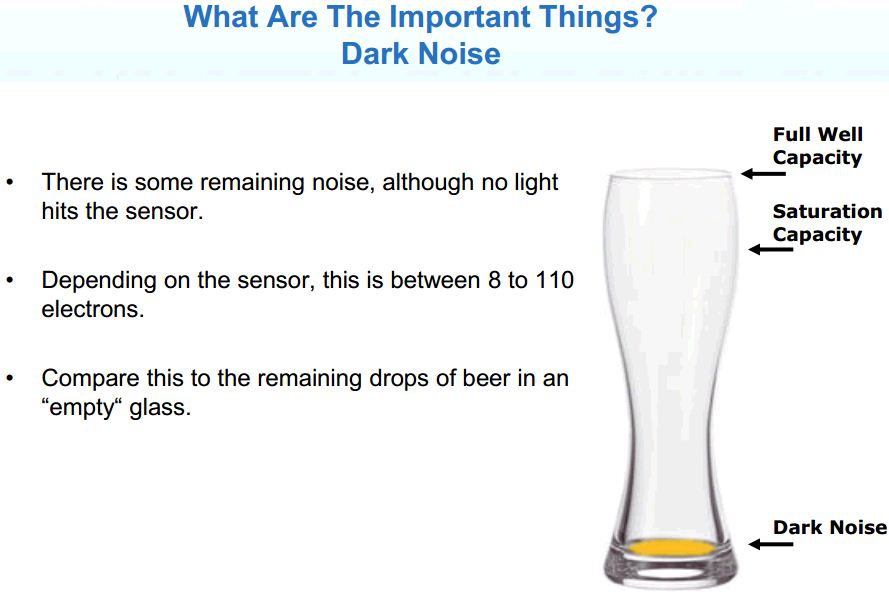
Joachim Linkemann from Basler AG, Germany came with a nice presentation comparing pixels with a glass of beer:


While we are at Basler, it recently published a whitepaper on "Are More Pixels Better?" in security cameras.
1:57 PM

Micron Italy Presentation on Small Pixels

online engineering degree/engineering degree online/online engineering courses/engineering technology online/engineering courses online/engineering technician degree online/online engineering technology/electronic engineering online
Gianluca Testa from Micron Italian fab presented "Moving to next generation sub-micron
CMOS image sensor devices
" at Sapienza Università di Roma Micro and Nano-Electronics workshop on Sept. 29-30, 2011.

1:23 PM

Himax Expands Wafer-Level Optics Capacity

online engineering degree/engineering degree online/online engineering courses/engineering technology online/engineering courses online/engineering technician degree online/online engineering technology/electronic engineering online
PR Newswire: Himax has placed a repeat order for EV Group's (EVG) IQ Aligner UV nanoimprint lithography (UV-NIL) system. The IQ Aligner will be used to support Himax's capacity increase in the production of wafer-level cameras for mobile phones, notebooks and other consumer electronic devices, as well as to support the increasingly stringent manufacturing requirements for wafer-level cameras demanded by Himax's customer base. The IQ Aligner will be shipped and installed at Himax's manufacturing facility in Tainan, Taiwan.

"This repeat order from Himax further extends our market and technology leadership in lens molding, with nearly every major wafer-level optics manufacturer having adopted our suite of solutions," stated Paul Lindner, executive technology director, EV Group.

"This adds to our already advanced manufacturing capabilities for CMOS image sensors, and provides us with a key competitive edge by enabling us to offer a complete manufacturing solution to the mobile handset market", said HC Chen, fab director at Himax.
6:54 AM

SK Hynix to Invest More in Image Sensors

online engineering degree/engineering degree online/online engineering courses/engineering technology online/engineering courses online/engineering technician degree online/online engineering technology/electronic engineering online
Hynix got an investment from South Korean SK Group, changed its name to SK Hynix, and declared its "plans to further strengthen its mobile business such as ... CMOS Image Sensor following the new IT trend in view of the application shift from PC-based to the mobile-centered".
2:10 AM

Google doodles Ludwig Mies van der Rohe's 126th birthday

online engineering degree/engineering degree online/online engineering courses/engineering technology online/engineering courses online/engineering technician degree online/online engineering technology/electronic engineering online
New Delhi: The doodle on March 27 is the 27th Google doodle in the month of March. This marks the 126th birth anniversary of the German-born American architect Ludwig Mies van der Rohe.
Popularly known as Ludwig Mies, he was born Maria Ludwig Michael Mies on March 27, 1886 in Aachen, Germany. After Ludwig Mies had established himself as an architect and his marriage failed he added his maternal surname van der Rohe to his name.
Google doodles Ludwig Mies van der Rohe's 126th birthdayThe building in the Google doodle in honour of Ludwig Mies is the Crown Hall at the Illinois Institute of Technology in Chicago that houses its College of Architecture.
The Crown Hall, constructed between 1950-56, is considered to be one of Mies' masterpieces. The building made of glass, expressed steel frames is said to be a significant example of the 20th Century Modernist movement.
Regarded as one of the pioneers of modern architechture Mies never received any formal architectural training. He apprenticed with several architects and soon developed a style of his own.
A few years after Adolf Hitler came to power in Germany and the Nazis closed down the school he was heading, a disillussioned Mies emigrated to the United States. In the US he headed department of architecture at the Armour Institute of Technology that later came to be known as the Illinois Institute of Technology, Chicago. The popular idom, God is in the details, is often attributed to Ludwig Mies.
In addition to the Crown Hall, other prominent buildings designed by Mies include Farnsworth House (Plano, Illinois), 860-880 Lake Shore Drive Apartments (Chicago), Seagram Building (New York City), Museum of Fine Arts (Houston) and Neue Nationalgalerie (Berlin). Ludwig Mies died on August 17, 1969 in Chicago. He was 83.
Ludwig Mies van der Rohe's 126th birthday Google doodle is the the 1341st Google doodle since the first ever on for the Burning Man Festival back on August 30, 1998.
10:30 PM

QIS Presentation Slides On-Line

online engineering degree/engineering degree online/online engineering courses/engineering technology online/engineering courses online/engineering technician degree online/online engineering technology/electronic engineering online
As Eric Fossum mentioned in comments, his presentation from Image Sensors 2012 Conference is available on-line here. The presentation talks about possible paradigm shifts in image sensors, including QIS idea:

1:52 PM

Image Sensor Tutorials

online engineering degree/engineering degree online/online engineering courses/engineering technology online/engineering courses online/engineering technician degree online/online engineering technology/electronic engineering online
Blake Jacquot published a series of image sensor video tutorials at Youtube: Image Sensors Introduction and Image Sensor Noise Sources. Here is a small subset of them:

Noise of single pixel 1 (Old version):


Noise Single Pixel 2 (Old version):


Noise in an array of pixels:

8:27 AM

Image Sensor 2012 Conference Report, Part 4

online engineering degree/engineering degree online/online engineering courses/engineering technology online/engineering courses online/engineering technician degree online/online engineering technology/electronic engineering online
Albert Theuwissen concludes his excellent reports from London, UK Image Sensor 2012 Conference. The last part covers Sony presentation on 1.12um pixel generation and a presentation on Quanta Image Sensor by Eric Fossum.
7:59 AM

Lattice Extends Sony, Panasonic Sensors Support

online engineering degree/engineering degree online/online engineering courses/engineering technology online/engineering courses online/engineering technician degree online/online engineering technology/electronic engineering online
MarketWire: Lattice announces that it has released a bridge design to interface Sony IMX036/IMX136 image sensor to parallel input ISPs.
The Lattice MachXO2-1200 FPGA interfaces directly to the subLVDS I/Os of the Sony IMX136, and no external discrete components are required. The image sensor bridge application can support full HD 1080p resolution at 60fps with a 12-bit ISP interface. The design code in the MachXO2 device can also be modified easily to accommodate support for the full 1080p120 capability of the Sony IMX136 for customers who need this functionality.

Sony Sub-LVDS-to-Parallel Sensor Interface Bridging

MarketWire: Some time ago Lattice announced Panasonic MN34041 1080p support in its HDR-60 Video Camera Development Kit. The sensor is fully supported with a 60 fps color ISP pipeline implemented on a LatticeECP3 FPGA within the Lattice HDR-60 Kit.

The integrated ISP IP pipeline provides end-to-end ISP support from sensor to displayable image and incorporates sensor interfacing, defective pixel correction and 2D noise reduction. Other features include high-quality DeBayer - Color Correction Matrix, Fast Auto Exposure, Auto White Balance, Gamma Correction and Overlay for both character and graphics. Lattice HDMI PHY IP enables output to HDMI/DVI monitors.
1:27 AM

Sony UK Comments on Nokia 41MP Camera, Nokia Responds

online engineering degree/engineering degree online/online engineering courses/engineering technology online/engineering courses online/engineering technician degree online/online engineering technology/electronic engineering online
TechRadar published Sony UK's Paul Genge comments on Nokia 808 camera-phone announcement:

"It's quite clear it's a development announcement more than a retailable proposition, the technology is not new, it's only what our cameras have done for about a year now."

Sony cameras use "pixel digital zoom", which groups pixels together for increased sensitivity.

"In that respect, it's not especially stand out, but within the mobile sector, yes it is, so I can understand why it's drawn an awful lot of attention," Genge said. "But, it is still only a technological announcement, it's not a plausible retail solution yet."

Nokia camera group leader Damian Dinning responds in comments:

"1. I am delighted to say (as per previous the information we disclosed during the 808s announcement) the Nokia 808 PureView IS a product that will be available during Q2 of this year.

2. The algorithms we needed to develop to provide the incredible detail the 808 PureView captures and creates in just 5mpix easy to share images were developed by Nokia and are the basis of Nokia proprietary technology.

3. We know of no other camera that uses a high resolution [41mpix] sensor in the unique ways we do to provide the following benefits:

i) 5mpix images which contain far higher levels of detail than cameras with far higher [than 5mpix] resolution sensors.

ii) despite the high levels of detail, file sizes are far smaller (because the pixels are purer) and therefore faster and easier to upload straight from the device. Which of course our devices have had the capability to do for many years.

iii) LOSSLESS zoom in full HD video and stills. There is NO upscaling used in ANY way in the 808 PureView. Unlike many digital cameras which rely on upscaling for digital zoom. Whilst some digital zoom implementations simply crop the sensor to provide a feeling of zoom. In our case when we are cropping (unless at full zoom) we have an abundance of pixels. We put those pixels to extremely effective use by oversampling the data from those pixels.

iv) One of the most important benefits of Nokia's proprietary pixel oversampling is that it retains the information you want (the detail), whilst filtering out most of the information you dont (noise). This is most noticeable in low light. Pixel oversampling is NOT the same as pixel binning. Others may be using binning but Nokia is not in the case of pixel oversampling. We are also NOT interpolating to create pixels that represent completely false information. As said we only oversample information originally captured by our super high resolution sensor and optics. The level of oversampling is as high as 16:1 in the case of full HD video. No other device I know of has such capability.

v) Using this method of zoom not only provides high image quality in a compact device but it also provides a silent zoom as well as allows the maximum aperture to be used even at full zoom.
"
12:43 AM

General alarm and loudspeaker system

online engineering degree/engineering degree online/online engineering courses/engineering technology online/engineering courses online/engineering technician degree online/online engineering technology/electronic engineering online

Annex 3 (cf. section 20)

General alarm and loudspeaker system


1. The general alarm system

1.1    The general emergency alarm system should be capable of sounding the general alarm signal consisting of seven or more short blasts followed by one long blast on the vessel's whistle or siren and additionally on an electrically operated bell or klaxon or other equivalent warning system, which should be powered from the vessel's main supply and the emergency source of electrical power. The system shall be capable of operation from the navigating bridge. The system shall be audible throughout all the accommodation and normal crew working spaces. The alarm shall continue to sound after it has been triggered until it is turned off manually.


1.2    The minimum sound pressure levels for the emergency alarm tone in interior and exterior spaces must be 80 dB(A) and at least 10 dB(A) above ambient noise levels existing during normal equipment operation with the vessel underway in moderate weather. In cabins without a loudspeaker installation, an electronic alarm transducer, e.g. an acoustic alarm (a buzzer) or similar, is to be installed, cf. section 20, sub-section 5.


1.3    The sound pressure level at the sleeping position in cabins and in cabin bathrooms is to be at least 75 dB (A) and at least 10 dB (A) above ambient noise levels.


2.1 Public address system


2.1    The public address system is to be a loudspeaker installation that makes it possible to broadcast messages to all spaces where crew members or passengers are normally found and to muster stations. The system shall make it possible to broadcast messages from the navigating bridge. The public address system must be installed with regard to acoustically marginal conditions and is not to require any action from the addressee. It must be protected against unauthorised usage.


2.2    With the ship underway in normal conditions, the minimum sound pressure level for broadcasting emergency announcements is to be:


2.2.1    in interior spaces 75 dB (A) and at least 20 dB (A) above the speech interference level, and

2.2.2    in exterior spaces 80 dB (A) and at least 15 dB (A) above the speech interference level.


--


1:35 AM

International Convention for the Safety of Life at Sea (SOLAS), 1974 The current SOLAS Convention followed by an Annex divided into 12 Chapters.

online engineering degree/engineering degree online/online engineering courses/engineering technology online/engineering courses online/engineering technician degree online/online engineering technology/electronic engineering online

International Convention for the Safety of Life at Sea (SOLAS), 1974

Adoption: 1 November 1974; Entry into force: 25 May 1980

The SOLAS Convention in its successive forms is generally regarded as the most important of all international treaties concerning the safety of merchant ships. The first version was adopted in 1914, in response to the Titanic disaster, the second in 1929, the third in 1948, and the fourth in 1960. The 1974 version includes the tacit acceptance procedure - which provides that an amendment shall enter into force on a specified date unless, before that date, objections to the amendment are received from an agreed number of Parties.

As a result the 1974 Convention has been updated and amended on numerous occasions. The Convention in force today is sometimes referred to as SOLAS, 1974, as amended.

Technical provisions
The main objective of the SOLAS Convention is to specify minimum standards for the construction, equipment and operation of ships, compatible with their safety. Flag States are responsible for ensuring that ships under their flag comply with its requirements, and a number of certificates are prescribed in the Convention as proof that this has been done. Control provisions also allow Contracting Governments to inspect ships of other Contracting States if there are clear grounds for believing that the ship and its equipment do not substantially comply with the requirements of the Convention - this procedure is known as port State control.The current SOLAS Convention includes Articles setting out general obligations, amendment procedure and so on, followed by an Annex divided into 12 Chapters.
 
Chapter I - General Provisions
Includes regulations concerning the survey of the various types of ships and the issuing of documents signifying that the ship meets the requirements of the Convention. The Chapter also includes provisions for the control of ships in ports of other Contracting Governments.

Chapter II-1 - Construction - Subdivision and stability, machinery and electrical installations 
The subdivision of passenger ships into watertight compartments must be such that after assumed damage to the ship's hull the vessel will remain afloat and stable. Requirements for watertight integrity and bilge pumping arrangements for passenger ships are also laid down as well as stability requirements for both passenger and cargo ships.
 
The degree of subdivision - measured by the maximum permissible distance between two adjacent bulkheads - varies with ship's length and the service in which it is engaged. The highest degree of subdivision applies to passenger ships.
 
Requirements covering machinery and electrical installations are designed to ensure that services which are essential for the safety of the ship, passengers and crew are maintained under various emergency conditions.
 
"Goal-based standards" for oil tankers and bulk carriers were adopted in 2010,  requiring new ships to be designed and constructed for a specified design life and to be safe and environmentally friendly, in intact and specified damage conditions, throughout their life. Under the regulation, ships should have adequate strength, integrity and stability to minimize the risk of loss of the ship or pollution to the marine environment due to structural failure, including collapse, resulting in flooding or loss of watertight integrity.
 
Chapter II-2 - Fire protection, fire detection and fire extinction
Includes detailed fire safety provisions for all ships and specific measures for passenger ships, cargo ships and tankers.
 
They include the following principles: division of the ship into main and vertical zones by thermal and structural boundaries; separation of accommodation spaces from the remainder of the ship by thermal and structural boundaries; restricted use of combustible materials; detection of any fire in the zone of origin; containment and extinction of any fire in the space of origin; protection of the means of escape or of access for fire-fighting purposes; ready availability of fire-extinguishing appliances; minimization of the possibility of ignition of flammable cargo vapour.

Chapter III - Life-saving appliances and arrangements
The Chapter includes requirements for life-saving appliances and arrangements, including requirements for life boats, rescue boats and life jackets according to type of ship. The International Life-Saving Appliance (LSA) Code gives specific technical requirements for LSAs and is mandatory under Regulation 34, which states that all life-saving appliances and arrangements shall comply with the applicable requirements of the LSA Code.

Chapter IV - Radiocommunications
The Chapter incorporates the Global Maritime Distress and Safety System (GMDSS). All passenger ships and all cargo ships of 300 gross tonnage and upwards on international voyages are required to carry equipment designed to improve the chances of rescue following an accident, including satellite emergency position indicating radio beacons (EPIRBs) and search and rescue transponders (SARTs) for the location of the ship or survival craft.
Regulations in Chapter IV cover undertakings by contracting governments to provide radiocommunication services as well as ship requirements for carriage of radiocommunications equipment. The Chapter is closely linked to the Radio Regulations of the International Telecommunication Union.

Chapter V - Safety of navigation 
Chapter V identifies certain navigation safety services which should be provided by Contracting Governments and sets forth provisions of an operational nature applicable in general to all ships on all voyages. This is in contrast to the Convention as a whole, which only applies to certain classes of ship engaged on international voyages.
 
The subjects covered include the maintenance of meteorological services for ships; the ice patrol service; routeing of ships; and the maintenance of search and rescue services.
 
This Chapter also includes a general obligation for masters to proceed to the assistance of those in distress and for Contracting Governments to ensure that all ships shall be sufficiently and efficiently manned from a safety point of view.
 
The chapter makes mandatory the carriage of voyage data recorders (VDRs) and automatic ship identification systems (AIS).

Chapter VI - Carriage of Cargoes 
The Chapter covers all types of cargo (except liquids and gases in bulk) "which, owing to their particular hazards to ships or persons on board, may require special precautions". The regulations include requirements for stowage and securing of cargo or cargo units (such as containers). The Chapter requires cargo ships carrying grain to comply with the International Grain Code.
 
Chapter VII - Carriage of dangerous goods
The regulations are contained in three parts:
Part A - Carriage of dangerous goods in packaged form - includes provisions for the classification, packing, marking, labelling and placarding, documentation and stowage of dangerous goods. Contracting Governments are required to issue instructions at the national level and the Chapter makes mandatory the International Maritime Dangerous Goods (IMDG) Code, developed by IMO, which is constantly updated to accommodate new dangerous goods and to supplement or revise existing provisions.
 
Part A-1 - Carriage of dangerous goods in solid form in bulk - covers the documentation, stowage and segregation requirements for these goods and requires reporting of incidents involving such goods.
 
Part B covers Construction and equipment of ships carrying dangerous liquid chemicals in bulk and requires chemical tankers to comply with the International Bulk Chemical Code (IBC Code).
 
Part C covers Construction and equipment of ships carrying liquefied gases in bulk and gas carriers to comply with the requirements of the International Gas Carrier Code (IGC Code).
 
Part D includes special requirements for the carriage of packaged irradiated nuclear fuel, plutonium and high-level radioactive wastes on board ships and requires ships carrying such products to comply with the International Code for the Safe Carriage of Packaged Irradiated Nuclear Fuel, Plutonium and High-Level Radioactive Wastes on Board Ships (INF Code).
 
The chapter requires carriage of dangerous goods to be in compliance with the relevant provisions of the International Maritime Dangerous Goods Code (IMDG Code).

Chapter VIII - Nuclear ships
Gives basic requirements for nuclear-powered ships and is particularly concerned with radiation hazards. It refers to detailed and comprehensive Code of Safety for Nuclear Merchant Ships which was adopted by the IMO Assembly in 1981.
 
Chapter IX - Management for the Safe Operation of Ships
The Chapter makes mandatory the International Safety Management (ISM) Code, which requires a safety management system to be established by the shipowner or any person who has assumed responsibility for the ship (the "Company").
 
Chapter X - Safety measures for high-speed craft 
The Chapter makes mandatory the International Code of Safety for High-Speed Craft (HSC Code).
 
Chapter XI-1 - Special measures to enhance maritime safety
The Chapter clarifies requirements relating to authorization of recognized organizations (responsible for carrying out surveys and inspections on Administrations' behalves); enhanced surveys; ship identification number scheme; and port State control on operational requirements.

Chapter XI-2 - Special measures to enhance maritime security
Regulation XI-2/3 of the  chapter enshrines the International Ship and Port Facilities Security Code (ISPS Code). Part A of the Code is mandatory and part B contains guidance as to how best to comply with the mandatory requirements. Regulation XI-2/8 confirms the role of the Master in exercising his professional judgement over decisions necessary to maintain the security of the ship. It says he shall not be constrained by the Company, the charterer or any other person in this respect.
 
Regulation XI-2/5 requires all ships to be provided with a ship security alert system. ,Regulation XI-2/6 covers requirements for port facilities, providing among other things for Contracting Governments to ensure that port facility security assessments are carried out and that port facility security plans are developed, implemented and reviewed in accordance with the ISPS Code.Other regulations in this chapter cover the provision of information to IMO, the control of ships in port, (including measures such as the delay, detention, restriction of operations including movement within the port, or expulsion of a ship from port), and the specific responsibility of Companies.

Chapter XII - Additional safety measures for bulk carriers
The Chapter includes structural requirements for bulk carriers over 150 metres in length.


Amendments

The 1974 Convention has been amended many times to keep it up to date.

Amendments adopted by the Maritime Safety Committee  (MSC) are listed in MSC Resolutions. 

Source: IMO

--


1:23 AM

DxOMark Prizes Nikon D800 Sensor

online engineering degree/engineering degree online/online engineering courses/engineering technology online/engineering courses online/engineering technician degree online/online engineering technology/electronic engineering online
DxOMark, possibly the biggest sensor database in the world, proclaimed Nikon D800 sensor being the best one that DxOMark ever analysed. The 4.7um-pixel, 36.8MP full-frame sensor has shown 14.4 stops DR, color reproduction comparable with medium-format sensors and won score of 95 - the highest ever score in the database.

Comparing with Canon's older generation 6.4um pixel 5D Mark II, the 4.7um D800 shows notably higher SNR:

1:32 PM

Difference between safety valve and relief valve

online engineering degree/engineering degree online/online engineering courses/engineering technology online/engineering courses online/engineering technician degree online/online engineering technology/electronic engineering online

Difference bw safety valve and relief valve


Relief Valve is the term used to describe relief device on a filled vessel. For such a valve the opening is proportional to increase in the vessel pressure. Hence the opening of valve is not sudden, but gradual if the pressure is increased gradually.


Safety Valve is the term used to describe relief device on a compressible filled vessel. For such a valve the opening is sudden. When the set pressure of the valve is reached, the valve opens almost fully.


The difference is generally in capacity and setpoint.  A relief valve is ment to relieve pressure to prevent an over pressure condition.  A relief valve may have an operator on it to assist in opening the valve in response to a control signal.  A safety valve is ment to relieve pressure without operator assistance and a safety valve, or combination of safety valves, must be have a capacity to relieve more than the energy input to the volume being protected.  


For example, a thermal relief valveis used to bleed off pressure in a heat exchanger if the heat exchanger is isolated but the possibility of thermal expansion of the fluid could cause over pressure conditions.  The capacity of thermal reliefs are generally small.


A safey valve on a boiler or other types of fired pressure vessels must be capable of removing more energy that is possible to be put into the vessel.  110 percent of boiler rated capacity may be acceptable.  The ASME Boiler & Pressure Vessel Code would be the source to check for adaquatley sizing safety valves.

-- 


8:52 AM

SOME OF THE MAIN ENGINE SAFETY DEVICES FITTED IN THE MAIN ENGINE

online engineering degree/engineering degree online/online engineering courses/engineering technology online/engineering courses online/engineering technician degree online/online engineering technology/electronic engineering online

Engine Safety devices


The main engine safety devices are provided in the system to safe gaurd the main engine in case of any damage in the system Mainly are fitted in engine when all the alarm and trips fails to work then the last means for safe gaurding the engine and components is these safety devices fitted in the main engine .These are mainly of the type of pressure relief valve which release the excess pressure built in case of malfunctioning of the engine and no action is will in advance to rectify or to avoid the situation


SOME OF THE MAIN ENGINE SAFETY DEVICES FITTED IN THE MAIN ENGINE :


  • Crank case Relief Door
  • Scavenge Space Relief Door
  • The Starting Air LIne Relief valve .
  • Cylinder head Relief valve
  • Flame trap.
  • Oil mist detector.
  • Running Direction Interlock
  • Turning gear Interlock.


--

7:58 AM

Training at HIMT when i went for Advanced Courses for my class iv.

online engineering degree/engineering degree online/online engineering courses/engineering technology online/engineering courses online/engineering technician degree online/online engineering technology/electronic engineering online

It's My own experience at the HIMT chennai in my training for class iv exams.


AFF

You will be attending for the 2 days of the theory and the other day going to kalpakam for the practicals.

At kalpakam its very good explanation by the faculty over there. Especially Mr.Muttu swamy and so on.

They shared all the experience with the coming batches and there are perfect in there fields of respective explanation.

You will learn the how to carry an casualty away from the hazardous place and different types of carrying the casualty when you are alone and more persons.

Next we will be entering in to the real smoke compartment  and the usage of the scaba and searching for casualty and bringing him through the escape route.

Next comes the command and party teams where to restrict the fire in the compartment and taking necessary steps in order not to spread the fire more.

And the last is the using the portable extinguishers on the real fire and we will be using all the extinguishers to put off the different fires.


This makes complete the practical's of the Advanced Fire Fighting.

In the last day you will be having an small exam and need to clear the exam and at last the issuing of the certificate.


MFA

Well this I found to be one of the best among all the courses which I did. Here comes an Dr…….. And he is so good in making us understand that you will get the thorough knowledge of what to do and when. Even if you come with many questionnaires he says most welcome and if he knows the answer he will give it if not he will find it and say.

I like the fact of that bcoz no one can remember everything all the time. But accepting the truth and saying I will find it and say you that sounds very good.

His explanation on 80% of the concept is very good and next comes another Dr….. Who is excellent in putting his experience in words.

At last it too completes with an exam and certificate.


ERS

This is most cool system which makes you to put your efforts in finding and tracing all the lines to start the entire system. I was little bit sad at last as Mr.Janaka didn't come for the rest of the days. He said that he will ask some oral questions which making the recovery of the system.

But in the last day Mr.Shekar has come and who is more practical about everything. He asked very few and simple questions and I just got the idea how surveyors  ask the orals and what they expect from an engineer. In the last I come to know is that he is the surveyor who gave me the Part A exemption. I was surprised to see him and I was happy.


PSCRB

This we had two days practical one is done at the kalapakam ie launching of the life boat and rescue boat and paddling it. The other is the swimming at the YMCA swimming pool.

At ymca the only one thing which I was not happy is the life raft as it is already inflated and filled the hot gas. Rest of all the things are very good the explanation part and making us understand about the life raft everything is very good.


--

7:56 AM

Why 2-stroke Engines are Used More commonly than 4-stroke on Ships?

online engineering degree/engineering degree online/online engineering courses/engineering technology online/engineering courses online/engineering technician degree online/online engineering technology/electronic engineering online

Why 2-stroke Engines are Used More commonly than 4-stroke on Ships?


When a ship is being constructed in a shipyard, the most important machinery that is to be selected is the main propulsion machinery. Both 2 stroke and 4 stroke engines are widely available in the market but for large ocean going merchant vessel, a 2 stroke engine is more commonly used as main engine and has much better market.


Even with wide variety of advantages that 4 stroke engine offers like compact size of plant, much more RPM or speed etc, a 2 stroke engine outshines with few but vital advantages.


Some of the important reasons why 2 stroke engines are more popular than 4 stroke engines as main propulsion engine on ships


    Fuel Selection: The fuel prices have gone sky high and better grade fuel is adding higher costs to vessel operation. A two stroke engine can burn low grade fuel oil and hence reduce running cost of the ship.


    Efficiency: The thermal and engine efficiency of 2 stroke engine is much better than that of a 4 stroke engine.


    Power: Most of the 2 stroke engines are now large stroke engines that produce more power. Hence they have high power to weight ration as compare to 4 stroke engine.


    More Cargo: Ship can carry more weight and hence more cargo with 2 stroke engines because of high power to weight ratio.


    Reliability: Two stroke engines are more reliable in operation as compare to 4 stroke engine.


    Less Maintenance: The maintenance requirement of two stroke engine is much lesser than 4 stroke engine.


    Direction control: Direct starting and reversing is easier with two stroke engine.


    No reduction attachments: As two stroke engines are low speed engine, there are no requirement of reduction gear or speed reduction arrangement as required for high speed four stroke engine.


However, the ease-of-manoeuvring a two stroke engine is less than that of a four stroke engine and the initial cost of installation of a two stroke propulsion plant is also much higher than running and maintenance cost of a 4 stroke engine. In 2 stroke engine, the amount saved on high grade fuel can compensate all other disadvantages and also reduce the whole operating cost of a ship.


--

7:52 AM

Request for question papers

online engineering degree/engineering degree online/online engineering courses/engineering technology online/engineering courses online/engineering technician degree online/online engineering technology/electronic engineering online
Welcome to the marine notes ! My dear friends lets share the questions papers which we had with everyone..kindly send me email of questions papers which you would like to share with everyone email to: marinenotes4u@gmail.com
                     It's the best way to prepare for marine exams which i understood little late. i used to prepare the text books and some various notes which i collected but my friends who prepared from the previous question papers cleared very easily before me. They mugged the questions and answers so perfect that even in sleep they are able to answer those.
                Well i just request everyone to share the questions papers as many users are requesting for question papers.
                lets share the papers which we had for the upcoming batches. This is my small request to do so for one and all.
Just by an email you can send me the papers and your information too. Email me at :  marinenotes4u@gmail.com


some papers of mmd are here.
Let's share the knowledge about the MMD INDIA...!

MEO Class IV possessing Certificate of Competency

online engineering degree/engineering degree online/online engineering courses/engineering technology online/engineering courses online/engineering technician degree online/online engineering technology/electronic engineering online

Class IV

MEO Class IV possessing Certificate of Competency issued under the 'old' Rules are eligible to obtain Certificate of Competency of the same grade issued under the 'new' Rules after passing the examination to obtain such 'new' certificate. An examination result (EXN 45) shall be issued indicating the status in the subjects. This EXN 45 will be required to be produced to examination centre before appearing in examination leading to issuance of 'new' M.E.O. Class II Certificate of Competency.

MEO Class IV possessing Certificate of Competency issued under the 'old' Rules are also eligible to obtain Certificate of Competency of the same grade issued under the 'new' Rules, provided the candidates possess the following certificates:

1) Proficiency in Survival Craft

2) Advance Fire Fighting

3) First Aid at Sea, and

i) Should have done 3 days of "Engine Room Simulator" training, and

ii) Documentary evidence of having attended the course for MEO Class II of three months duration at an approved institute as per the 'old' rules, and

iii) Successful completion of an Upgradation Course as detailed in Appendix M-I/10.10 of META Manual Volume II as revised and appended herewith.

OR

Documentary evidence of having attended the course for 'new' MEO Class IV of three months duration at an approved institute as per the 'new' rules, in lieu of ii) and iii) above. An examination result (EXN 45) shall be issued indicating the status in the subjects. This EXN 45 will be required to be produced to examination centre before appearing in examinations leading to issuance of M.E.O. Class II Certificate of Competency. It is mandatory to pass in all the subjects of the 'new' MEO Class IV Examination, if the candidate aspires to obtain a 'new' MEO Class II Certificate of Competency.

http://www.dgshipping.com/dgship/final/notices/note6_2000.htm

=-=-=--=-=-=
Regard's
M&K.
marian ryan

5:41 AM

Image Sensors 2012 Report, Part 3

online engineering degree/engineering degree online/online engineering courses/engineering technology online/engineering courses online/engineering technician degree online/online engineering technology/electronic engineering online
Albert Theuwissen published third part of his report on IS2012 presentations. NHK, Rutherford Labs and ESO presentations are covered.
9:36 AM

Pixpolar Presents MIG Pixel Simulations and Measurements

online engineering degree/engineering degree online/online engineering courses/engineering technology online/engineering courses online/engineering technician degree online/online engineering technology/electronic engineering online
Pixpolar presented its MIG pixel simulation and measurement results. In this Youtube video the y-axis is the measured voltage and the x-axis is time:

11:14 PM

Image Sensors 2012 Report, Day 2

online engineering degree/engineering degree online/online engineering courses/engineering technology online/engineering courses online/engineering technician degree online/online engineering technology/electronic engineering online
Albert Theuwissen continues reporting from from London, UK Image Sensors 2012 Conference. The report covers CEA-LETI, Aptina and Sony[-Ericsson] presentations.
12:24 PM

Research and Markets Updates its Global and Chinese CMOS Camera Module Industry Report

online engineering degree/engineering degree online/online engineering courses/engineering technology online/engineering courses online/engineering technician degree online/online engineering technology/electronic engineering online
Research and Markets' updated Global and Chinese CMOS Camera Module Industry Report, 2011-2012 is composed of four parts: image sensor, Lens, Camera module and VCM.

Image sensor offers the highest price among the four parts, with the cost roughly accounting for 30-50% of the entire CMOS camera module.

In the lens domain, all manufacturers are confronted with profit straits. This is a labor-intensive industry and veteran employees are more than ever in shortage, which is especially obvious in the production bases located in Chinese mainland. On the one hand, the labor cost is increasing; and on the other hand, the raw materials upstream saw price hike in 2011. By contrast, the lens below 8MP witnessed drop in price because of tough competition.

In 2011, the revenue of medium-and small-scale lens manufacturers fell to varied extent, with their profits plummeting. But it was not the case for Taiwan-based Largan Precision and Genius Electronics Optical, both of which saw soaring increase in revenue. The two firms contracted all the lens business for Apple’s camera module. In particular, Largan Precision dominated the high-end market, while Genius Electronics Optical occupied middle-and low-end market. Genius Electronics Optical, the revenue of which grew by 136% in 2011, is the leading iPad camera module lens provider and the only supplier of iPhone VGA camera module lens. Nonetheless, the gross margin of the two declined.

In the camera module field, benefiting from “Apple effect”, the business of LG Innotek, as the major provider of camera module for Apple, grew by more than 100% compared to less than 10% in the entire industry in 2011. The three camera module suppliers approved by Apple include LG Innotek, Sharp, and Primax.

Sharp, also as the major supplier of Nokia, is the second supplier of Apple. For the Taiwan-based Primax Electronics Ltd focuses on low-end products. Furthermore, Vistapoint under Flextronics once served as Apple’s supplier. But the rising wages in Chinese Mainland forced it to sell its plant located in Zhuhai and narrow the business scale in March 2012. Vistapoint has been excluded in the supplier list published by Apple in 2012.
11:54 AM

Cambridge Mechatronics Presents Smart Metal OIS Lens Barrel Shift (SOS)

online engineering degree/engineering degree online/online engineering courses/engineering technology online/engineering courses online/engineering technician degree online/online engineering technology/electronic engineering online
Cambridge Mechatronics Ltd (CML) announced that it has made working prototypes of its latest Optical Image Stabilisation (OIS) and Continuous Autofocus (CAF) lens actuator design.

CML's first OIS related announcement unveiled its Smart metal OIS camera module Tilt or SOT architecture. That approach, which the company (with its partners) has developed to the point whereby it is scheduled for mass production later this year, enables the standard 8.5mm square camera footprint and is optimised for camera performance and time-to-market.

The most recent prototypes are based on an architecture called Smart metal OIS lens barrel Shift or SOS, also ensure the 8.5mm square footprint but are optimised for low camera z-height and cost. CML sees SOS entering mass production in late 2013.

The benefits of this new Barrel Shift OIS camera are:

  1. OIS functionality adds nothing to AF camera footprint – remains at 8.5mm smartphone standard. Supports M6.5 lens and 1/3.2” image sensor
  2. OIS functionality adds nothing to camera z-height. New Barrel Shift OIS actuator is 2.5mm in height which easily supports a 4mm overall camera height Camera z-height only depends on the lens choice
  3. The actuator structure is simplified and camera integration process is straightforward. This will result in a lower cost OIS camera
  4. All the above means that CML is targeting this OIS camera for mainstream smartphones

Both architectures facilitate devices that provide high quality rapid CAF allowing for point and click image capture at 13 MPixels and above. Smart metal technology also consumes significantly less power than the VCM most often found moving lenses in today's smartphone AF cameras.

CML believes that its two architectures will co-exist. SOT will always provide the best OIS performance across the whole image, as much as 4 optical stops of handshake suppression even in the corners. However it will add 0.3mm of z-height to the camera. Alternatively, SOS will add nothing to the overall z-height of the camera. This means that with the latest wide field of view lenses a camera height of 4.0mm can be achieved, almost 2.0mm lower than current smartphone cameras. At this dimension the camera will no longer be dictating the thickness of the handset. As SOS is mechanically simpler than SOT, the manufacturing cost of the camera will be lower.

CML built the SOS prototypes using parts injection moulded by one of its manufacturing licensees, Actuator Solutions GmbH (ASG). CML is currently optimizing the micro-electronic control of the SOS actuators and building fully functional SOS camera systems. ASG and Seiko Instruments Inc (SII) (another publicly announced manufacturing licensee of CML) are working with multiple major camera module makers, including Foxconn, to deliver SOT and rapid CAF cameras into mass production before the end of 2012.

VCM OIS 12 MPixel (left) v SOS 13 MPixel (right)

Thanks to DW for sending me the link!
9:39 AM

Sony Announces IPELA - New HD + HDR ISP for Security Applications

online engineering degree/engineering degree online/online engineering courses/engineering technology online/engineering courses online/engineering technician degree online/online engineering technology/electronic engineering online
Sony announces "IPELA ENGINE", capable of the industry’s first 130dB WDR in full HD quality at 30fps speed. The "IPELA Engine" is the general term of Sony's integrated signal processing system for high picture quality which combines the company's unique signal processing and video analytics technologies. The “IPELA Engine” is composed mainly of the four components below:

1. View-DR:

This is Sony name for locally tuning contrast and adaptively correcting tone for light and dark areas through the combination of images taken at varying shutter speeds within a single frame.

2. High Frame Rate:

Full HD (1920 x 1080) video is possible at 60fps.

3. DEPA Advanced:

The functions for detection of moving objects, humans and any objects blocking the view among others have been enhanced through an alarm detection function using image processing.

4. XDNR (Excellent Dynamic Noise Reduction):

The detection and removal of noise within a single frame is combined with the reduction of noise from differential signals in the consecutive frames.

The "IPELA ENGINE" will be equipped into new security camera products from Fall 2012.

1:27 AM

Yet Another Fast Sensor Application

online engineering degree/engineering degree online/online engineering courses/engineering technology online/engineering courses online/engineering technician degree online/online engineering technology/electronic engineering online
MIT Camera Culture group published a paper proposing a way to see around the corners. MIT 3D range camera is said to be able to look around a corner using diffusely reflected light that achieves sub-millimetre depth precision and centimeter lateral precision. Youtube video shows its principle:

1:00 AM

Fujifilm Redesigns Sensors Due to Excessive Blooming

online engineering degree/engineering degree online/online engineering courses/engineering technology online/engineering courses online/engineering technician degree online/online engineering technology/electronic engineering online
Imaging Resource reports that Fujifilm intends to re-design its latest sensors due to excessive blooming. The sensors are used in Fujifilm X10 and Fujifilm X-S1 cameras. Fujifilm USA said that this redesigned sensor should arrive in late May. A nice picture below shows 33-pixel sized blooming orbs in some conditions:

A real-world example (100 pct. crop) of the
'white orbs' problem, from Imaging Resource's
upcoming Fuji X10 review. IR also encountered
the problem in the preliminary testing of the
Fuji X-S1. Copyright Imaging Resource.

Thanks to KP for sending me the link!
9:43 AM

Image Sensors 2012 Conference Report, Day 1

online engineering degree/engineering degree online/online engineering courses/engineering technology online/engineering courses online/engineering technician degree online/online engineering technology/electronic engineering online
Albert Theuwissen reports from Intertech-Pira Image Sensors 2012 conference being held these days in London, UK.

Nobukazu Teranishi of Panasonic talked about "Dark Current and White Blemishes" in sensors. After talking about different gettering techniques : internal gettering, external gettering and proximity gettering, Nobukazu-san presented a new dark current generation model for the pinned photodiodes. His conclusion was that the best dark current is achieved by using channel-stop diffusions in place of LOCOS and STI isolation.
8:36 AM

e2v Increases Sensors Production at TowerJazz

online engineering degree/engineering degree online/online engineering courses/engineering technology online/engineering courses online/engineering technician degree online/online engineering technology/electronic engineering online
PR Newswire: e2v and TowerJazz announce the increased production of e2v's Ruby low light CMOS image sensors and the ELiiXA+ high speed multi-line scan camera using TowerJazz's CIS technology.

Officially introduced in Q4 2011, the ELiiXA+ camera range and the Ruby image sensor family are demonstrating the successful relationship between e2v and TowerJazz. The new product families join several of e2v's products already running in volume production at TowerJazz's Fab 2, including sensors for industrial, medical, scientific and space applications. With a strong relationship of over six years, e2v has been progressively increasing production at TowerJazz to match demand for these advanced sensor solutions.

According to Yole Development's Image Sensor market research, the machine vision market is expected to be $88M by 2015 with a CAGR of 23%.

Globes' market source told: "The increase in production by this customer will boost Tower's revenue by $10 million a year within two years."

Thanks to JG for sending me the news!
7:25 AM

e-con Launches Stereo Camera Reference Design with TI OMAP and Aptina WVGA

online engineering degree/engineering degree online/online engineering courses/engineering technology online/engineering courses online/engineering technician degree online/online engineering technology/electronic engineering online
PRWeb: e-con Systems an embedded design services company specializing in development of advanced camera solutions announces what is says to be the world’s first Stereo Vision camera reference design based on TI’s OMAP/DM37x family of processors and Aptina's 1/3-inch Global Shutter monochrome WVGA image sensors MT9V024. The Capella reference design aims to machine vision, robotics, 3D object recognition and other applications.


Youtube demo tells more about the reference design:

6:47 AM

Structural Analysis of a Washing Machine through its Loading Cases (Mechanical Project)

online engineering degree/engineering degree online/online engineering courses/engineering technology online/engineering courses online/engineering technician degree online/online engineering technology/electronic engineering online

This project is focused in the determination of different loading cases and the application of their results to the optimization of two parts of a washing machine, the tripod and the front cover.
The first step in this report is to obtain a numerical model of a washing machine. It includes the assembly in a mechanical software program (Abaqus), and the assignment of the specific boundary conditions and material properties for the problem. Simulation parameters such as mesh size; types of elements, and number of iterations used in the calculations will also be decided.
A study of the different loading cases is carried out with the intention of having a general view of the problem and selecting four specific cases for its application to the reconstruction of the aimed parts (tripod and front cover). This study includes the calculation of the worst relative angle between the tripod and the resultant force for two opposite loads inside the drum. This angle results to be 35º between the arm and the direction of the resultant force.
Through the application of these different loading conditions to this model, the mechanical behaviour of the parts will be obtained and this information will be used in the reconstruction. By mechanical behaviour it is meant to know the maximum level of stress (tension, compression and shear), and deformation (displacement and strain).
Once it is well known which are the most suffering points of the tripod and in the front cover, several different new shapes are created. The parameters considered in this reconstruction were the decrease of volume, the reduction of the level of stress and the deformations. Two of these shapes are chosen and tested in the numerical model, as a checkout.
Source: University of Skövde

8:55 AM