NIT Announces Gated SWIR Sensor

...
New Imaging Technologies' latest logarithmic InGaAs offers short gating mode in QVGA and VGA resolution. The new version of its WiDy SWIR cameras allows low exposure time (down to 200ns) and low jitter (10ns) with minimum trigger delay of 200ns for pulsed illumination. The new cameras have 3 in-pixel memories for true CDS or in VGA - current highest resolution on the market - they come with dedicated software offering programmable trigger delay with customizable very short steps for trigger in or out synchronization.

Measured Shutter Efficiency with a phase shifted 4ns laser pulse
12:07 PM

Assorted News

...
1. Open source Sensors Journal publishes a paper on 75ps gated pixel "A 75-ps Gated CMOS Image Sensor with Low Parasitic Light Sensitivity" by Fan Zhang and Hanben Niu, Shenzhen University, China. Their pixel is mostly circuit-based:


2. Another paper "Quantum Random Number Generation Using a Quanta Image Sensor" by Emna Amri, Yacine Felk, Damien Stucki, Jiaju Ma, and Eric R. Fossum from ID Quantique, Switzerland and Dartmouth College, USA, presents an improvement on the image sensor based random number generators:


3. Guillaume Renault publishes a Youtube video presentation of Invisage's Quantum Film sensor.
12:56 PM

Sony Reduces Image Sensor Sales and Margins Forecast

...
Sony President and CEO, Kazuo Hirai, provides an update on the progress of its mid-range corporate plan covering the fiscal year ended March 31, 2016 ("FY2015") through the fiscal year ending March 31, 2018 ("FY2017"). Few image sensor-related points:
  • Sony announced a significant downward revision to its full year results forecast in FY2015 due to lower than expected sales in the core image sensor business, caused in particular by slowing growth within the smartphone market.
  • The rate of profit growth in this business is expected to continue to decline through FY2017.
  • Sony plans to take an approach to management that prioritizes speed of response to changes in the market environment, and focuses on Sony's areas of strength.
  • At the same time, in terms of image sensors for mobile products, while the smartphone market itself is slowing, the shift to dual-lens cameras and the requirement for higher pixel density is expected to lead to increased demand in the future. With its technological expertise in these areas, these could be favorable market trends for Sony. By taking advantage of these shifts in the business landscape and also by continuing its existing efforts to expand sales volume, Sony is aiming to revitalize the profitability of this business from the second half of FY2016 and into FY2017.
  • From a mid-to-long-term perspective, Sony continues to expect significant future growth for the image sensor-business. This business accordingly continues to be positioned as a growth driver.
  • In terms of new image sensor applications, Sony sees potential growth in surveillance cameras, as well as in factory automation, IoT (Internet of Things) including drones, and automotive applications. While it is expected to be some time before Sony's image sensor business for automotive applications is fully established, it is an area where Sony anticipates growth and is investing in R&D aggressively.

Also today, Sony has held its "Sony IR Day 2016." The semiconductors business presentation by Terushi Shimizu revises down the previous forecasts of sales and margins:


Other slides about image sensors:

10:22 AM

Mobileye Autonomous Driving Lecture

...
Mobileye's CTO Amnon Shashua delivers a keynote on Autonomous Driving, Computer Vision and Machine Learning at CVPR 2016:


Thanks to DS for the link!
9:46 PM

Almalence Interview

...
Huffington Post publishes an interview with Almalence CEO Eugene Panich. His response on the question "Where are mobile phone cameras headed in the next five years?"

These are a handful of ideas that may be tested in the coming years:
  • Array cameras, from many small cameras placed in a small array, to an array of big (normal mobile size) cameras occupying large part of phone.
  • Mobile phones with four cameras placed at considerable distances (like in the corners) to achieve good 3D performance
  • Pop-up and other mechanically transforming cameras implementing either optical zoom feature or accommodating large sensors
  • Additional wide-angle, 180 or even 360 degree cameras
  • Attachable camera modules (making the device bigger but allowing better imaging)
11:55 AM

IEEE Standards Association Automotive Image Quality Working Group

...
IEEE Standards Association (IEEE-SA) forms Automotive Image Quality Working Group. IEEE P2020 standard addresses the fundamental attributes that contribute to image quality for automotive Advanced Driver Assistance Systems (ADAS) applications, as well as identifying existing metrics and other useful information relating to these attributes.

Those who want to join the project should contact the Working Group Chair, Robert Stead.
11:30 AM

SMIC - LFoundry Deal Details

...
SMIC publishes a webcast on LFoundry acquisition with few details on LFoundry business:
  • Aptina remains a bulk of the business
  • The utilization rate was 60% in the last few months, or 70% averaged over the last year
  • The drop in utilization is explained by too much "concentration on one customer"
  • SMIC copper process might be ported to LFoundry
  • No commitment on capacity expansion or R&D investment
  • All employees are retained
11:35 AM

Take the Moral Limits Test

...

Every once in a great while I raise a philosophical issue in this space.  Most people who have tried teaching engineering ethics know that a little philosophy goes a long way, at least with undergraduates.  The subject has a reputation of being dry, abstract, and far removed from everyday considerations.  And another count against it is that it never seems to go anywhere—philosophers today argue about some of the same things that Plato and his students argued about in the garden called the Akademeia near Athens around 400 B. C. 

Nevertheless, I find that philosophers can clarify and put names to things that most of us deal with a lot, but have trouble thinking clearly about.  One such philosopher I came across lately is George Parkin Grant, and a question he asks in his book Philosophy in the Mass Age is one I'd like to raise here.

Writing in 1960, Grant was worried about many of the same things that bother us today:  whether the products and effects of our technological smarts will carry us over the brink to extinction, for example.  Back then, the big concern was nuclear war between the old USSR and the United States.  Nowadays it's climate change, but while the subject of the fear is different, the anxieties are similar. 

Grant saw two worldviews or states of mind that were locked in a complex struggle—a struggle that continues today.  He stated the terms of the struggle succinctly in this way:  "To put this issue simply:  are we truly and finally responsible for shaping what happens in the world, or do we live in an order for which we are not ultimately responsible, so that the purpose of our lives is to discover and serve that order?" 

If we are truly in charge—if there's no higher authority or source of guidance than our own wits and ability to work together—then you are likely to take a different view of the world and a different approach to life, than if you think otherwise.  Later in the book, he poses a question, which I'm calling the Moral Limits Test.  It's not a question to be answered lightly or quickly.  But your answer to it could tell you something about yourself and where you stand on the issue that Grant raised in the quotation above.

The question is this: "Is there anything that we should never under any circumstances do to another human being?"

Now we can get all tangled up in details—"Define 'human being,'" you might say, or "What if the circumstances are unlikely and extreme, such as whether torturing one person will save the lives of millions?"  Let's not get too technical here.  The intent of the question is to probe your own beliefs about one's ultimate responsibilities to other humans, and whether there is some rock-bottom limit below which it is always forbidden to go.  Not knowing what you'll answer, I'll take each of the two possible responses in turn.

Let's say you answer in the negative.  No, you say, I can't think of anything I would absolutely rule out.  You may argue that at any rate, they've all been tried over the bloody course of history, and you would not be far from the truth there.  From genocides authorized by religious prophecies to the Nazi death camps, man's inhumanity to man seems to know no bounds.  That doesn't make these acts right, of course, but despite all the terrible things that have been done, the species has survived.  Other things being equal, you wouldn't choose to torment two-year-olds with hot branding irons, but who knows what urgent technical or societal need will come up in the future? 

I realize that the question is a little bit like trying to find out how many bigots there are in a population by sending out a survey that asks, "Are you a bigot?  Answer yes or no."  Even if you are, you don't want to admit it.  So there's a strong social pressure to agree that yes, there must be something that we shouldn't do to other people, even though you may not be able to think of anything at the moment.  The same bloody history I referred to a minute ago tells me, though, that a lot of people have answered that question to themselves in the negative, at least judging by their heinous behavior.

Now let's say you honestly answered yes—there are things we should never under any circumstances do to someone else.  You may even be able to think of a few—running death camps, or keeping slaves, or performing abortions, for example.  Whatever your example, or even if you can't think of one, by saying "yes" to that question, Grant believes you have admitted that, in his words, "we live in an order for which we are not ultimately responsible."  And in his view, this means that God has entered the picture:  ". . . the idea of limit is unavoidably the idea of God," as he puts it.

This is a problem for modern people, he admits, because the whole thrust of civilization since the scientific and industrial revolutions has been to pretend there are no limits, and to use nature as raw material for making the Earth into a place that satisfies our desires.  One of the paradoxes of modern life is that in trying to make ourselves happy, we often cause tremendous distress and harm to others, which is really the problem of evil.  And we're not going to solve that one in a thousand-word blog. 

But the point I would like to leave you with is this:  if you really think there are some things that are "categorically wrong"—forbidden to do under any circumstances—then Grant thinks you have admitted that there is something, or Someone, higher than just humankind.  And that limitation, that absolute of the moral realm, did not come from us, but from outside. 

Working out the implications of that thought will be left as an exercise for the reader, as annoying textbooks sometimes say.  But the implications are not trivial, and if you are honest with yourself, you may find out something about yourself and your beliefs that you had not suspected.

Sources:  George Parkin Grant (1918-1988) was a Canadian philosopher, who according to the Wikipedia article on him was heavily influenced in his early work by G. W. F. Hegel.  (We don't talk about Hegel in this blog, as I don't want to lose the readers I have.)  The quotations from his book Philosophy in the Mass Age (New York:  Hill and Wang, 1960) are taken from p. 51 ("To put this issue. . ."), p. 91 ("Is there anything. . ."), and p. 93 (". . . the idea of limit . . .").  I learned about Grant from comments by Ken Myers, who produces the admirable Mars Hill Audio Journal, a periodic interview series on Christianity and culture (www.marshillaudio.org).

Samsung Proposes Different Readout Order to Reduce Column-to-Column ADC Coupling

...
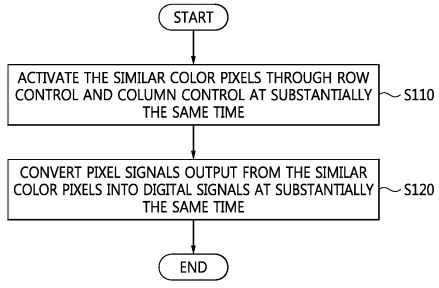
Samsung Patent application US20160173800 "Image sensor for performing coupling-free readout, and device having the same" by Kyoung Min Koh, Ju Ha Kim, and Jae Cheol Yun talks about the coupling between the column-parallel ADCs:

"A coupling effect is generated between adjacent analog-to-digital converters by parasitic capacitance that is present between the adjacent analog-to-digital converters. In particular, the coupling effect which is increased as a difference between pixels signals becomes large increases non-linearity of each of analog-to-digital converters. The non-linearity is one of sources of errors of an analog-to-digital converter."

Samsung team proposes to change the pixel readout order so that the pixels with similar values read simultaneously:

1:25 PM

Climate Feebacks Start To Kick In More

...
Droughts and heatwaves are putting vegetation under devastating pressure while also causing wildfires resulting in deforestation and loss of peat at massive scale, contributing to the rapid recent rise in carbon dioxide levels. 


It will take a decade before these high recent carbon dioxide emissions will reach their full warming impact. Furthermore, as the world makes progress with the necessary cuts in greenhouse gas emissions, this will also remove aerosols that have until now masked the full wrath of global warming. By implication, without geoengineering occurring over the coming decade, temperatures will keep rising, resulting in further increases in abundance and intensity of droughts and wildfires.

Temperatures in the Arctic are rising faster than elsewhere. The image below shows that Arctic waters are now much warmer than in 2015. On June 22, 2016, sea surface near Svalbard was as warm as 13.8°C or 56.9°F (green circle), i.e. 11.6°C or 20.9°F warmer than 1981-2011.


High temperatures, as high as 34.1°C or 93.3°F at green circle, were recorded on July 1, 2016, over the Lena River which flows into the Laptev Sea, as illustrated by the image on the right [click on images to enlarge them].

Wildfires can release huge amounts of carbon dioxide (CO2), carbon monoxide (CO), methane and soot. The image below shows that on June 23, 2016, wildfires north of Lake Baikal caused emissions as high as 22,953 ppb CO and 549 ppm CO2 at the location marked by the green circle.

[ click on image to enlarge ]
The video below, created by Jim Reeve, shows an animation with carbon monoxide levels in May 2016.


As increasing amounts of soot from wildfires settle on its ice and snow cover, albedo decline in the Arctic will accelerate. In addition, heatwaves are causing rapid warming of rivers ending in the Arctic Ocean, further speeding up its warming and increasing the danger of methane releases from the seafloor of the Arctic Ocean.

As more energy stays in the biosphere, storms can be expected to strike with greater intensity. Rising temperatures will result in more water vapor in the atmosphere (7% more water vapor for every 1°C warming), further amplifying warming and resulting in more intense precipitation events, i.e. rainfall, flooding and lightning.
Record-breaking daily rainfall events around the world. From Lehmann et al. 
Recently, West Virginia got hit by devastating flooding, killing at least 26 people and causing evacuation of thousands of people and a huge amount of damage. Flooding can also cause rapid decomposition of vegetation, resulting in strong methane releases, as illustrated by the image below showing strong methane presence (magenta color) at 39,025 ft or 11.9 km on June 26 (left panel), as well as at 44,690 ft or 13.6 km on June 27 (right panel).
[ click on image to enlarge ]
Furthermore, plumes above the anvils of severe storms can bring water vapor up into the stratosphere, contributing to the formation of cirrus clouds that trap a lot of heat that would otherwise be radiated away, from Earth into space. The number of lightning strikes can be expected to increase by about 12% for every 1°C of rise in global average air temperature. At 3-8 miles hight, during the summer months, lightning activity increases NOx by as much as 90% and ozone by more than 30%.

In conclusion, feedbacks are threatening to cause runaway warming, potentially making temperatures rise by more than 10°C or 18°F within a decade. Already now, melting ice sheets are changing the way the Earth wobbles on its axis, Nasa says. As Paul Beckwith discusses in the video below, changes are also taking place to the jet streams.


The danger is that changes to the planet's wobble will trigger massive earthquakes that will destabilize methane hydrates and result in huge amounts of methane abruptly entering the atmosphere, as illustrated by the image below.

Have we lost the Arctic? It looks like Earth no longer has two poles, but instead has turned into a Monopole, with only one pole at Antarctica. On June 29, 2016, Arctic water (sea surface) was as warm as 15.8°C (60.5°F), or 13°C (23.4°F) warmer than 1981-2011. Meanwhile, surface temperatures over Antarctica that day were as low as -66.6°C (-87.8°F).
The situation is dire and calls for comprehensive and effective action as described in the Climate Plan.


Links

- Feedbacks in the Arctic
http://arctic-news.blogspot.com/p/feedbacks.html

- Wildfire Danger Increasing
http://arctic-news.blogspot.com/2016/05/wildfire-danger-increasing.html

- Arctic Climate Records Melting
http://arctic-news.blogspot.com/2016/05/arctic-climate-records-melting.html

- Ten Degrees Warmer In A Decade?
http://arctic-news.blogspot.com/2016/03/ten-degrees-warmer-in-a-decade.html

- Arctic Sea Ice gone by September 2016?
http://arctic-news.blogspot.com/2016/05/arctic-sea-ice-gone-by-september-2016.html

- February Temperature
http://arctic-news.blogspot.com/2016/03/february-temperature.html

- International Energy Agency (IEA)
http://www.iea.org/

- National Oceanic and Atmospheric Administration (NOAA)
http://www.noaa.gov/

- Projected increase in lightning strikes in the United States due to global warming, by Romps et al. (2014)
http://science.sciencemag.org/content/346/6211/851

- Impacts of anthropogenic and natural NOx sources over the U.S. on tropospheric chemistry, by Zhang et al. (2003)
http://www.pnas.org/content/100/4/1505.abstract

- Wildfires Rage in Siberia, NASA June 30, 2016, images acquired June 29, 2016
http://earthobservatory.nasa.gov/IOTD/view.php?id=88284

- Melting ice sheets changing the way the Earth wobbles on its axis, says Nasa
https://www.theguardian.com/environment/2016/apr/09/melting-ice-sheets-changing-the-way-the-earth-wobbles-on-its-axis-says-nasa

- Record-breaking heavy rainfall events increased under global warming, by Lehmann et al. (2015)
https://www.pik-potsdam.de/news/press-releases/record-breaking-heavy-rainfall-events-increased-under-global-warming

- 'Thousand-year' downpour led to deadly West Virginia floods (July 8, 2016)
https://www.climate.gov/news-features/event-tracker/thousand-year-downpour-led-deadly-west-virginia-floods


SMIC Buys 70% of LFoundry for 49M Euros

...
BusinessWire: LFoundry (Italy) and its investor Marsica Innovation S.p.A. (MI) announce the agreement to sell to SMIC a 70% stake of LFoundry for 49M Euros. At the closing, SMIC, LFoundry and MI will own 70%, 15% and 15% of the corporate capital of the target respectively.

In fiscal year 2015, LFoundry revenue was 218M EUR. LFoundry’s capacity is 40,000 8-inch wafers per month. LFoundry used to be Micron's fab manufacturing image sensors for Aptina and continues it now as an independent foundry. At the same time, LFoundry offers 110nm CIS process on the foundry basis.

Sergio Galbiati, the Managing Director of MI and Chairman of LFoundry srl, said, “This is the beginning of a new era for LFoundry and our Italian fab. We are pleased to become part of a very strong worldwide player, SMIC. Together we can further improve LFoundry’s strength on optical sensor related technology, which is well recognized worldwide, and continue to contribute to the growth of technology in Europe, thanks to our partnerships with many relevant players. The agreement with SMIC will enable us to have a stronger level playing field in Europe.”

LFoundry, Avezzano, Italy

Thanks to ESG for the link!
1:22 PM

SensL Interview

...
Yole Développement publishes an interview with SensL CTO Carl Jackson and VP Marketing Wade Appelman. These days, SensL is focusing primarily on LiDAR for ADAS and consumer robotics and drones. Few quotes:

"Our core product is the Silicon Photomultiplier (SiPM). The SiPM is a solid-state sensor that is closely related to SPADs (single photon avalanche diode). A simplistic description of SPAD is a binary photon-activated ‘switch’. An SiPM is formed of a close-packed array of SPADs with a summed output. This summed-matrix of SPADs, that forms the SiPM, acts as a quasi-analog sensor that retains single-photon sensitivity upon a large surface area.

SiPMs have very high internal gain and therefore do not require external amplification that would contribute additional noise to the signal. Therefore the SiPM will have a better SNR than the APD in many use cases.

The histogramming ToF approach reveals the time-correlated photons that would otherwise be lost in the background noise of the ambient light and is used to extract the distance measurement.
"

12:34 PM

Softkinetic CARlib

...
Softkinetic publishes its automotive gesture control promotion video:

4:14 AM

Noise Reduction in Multi-Aperture Cameras

...
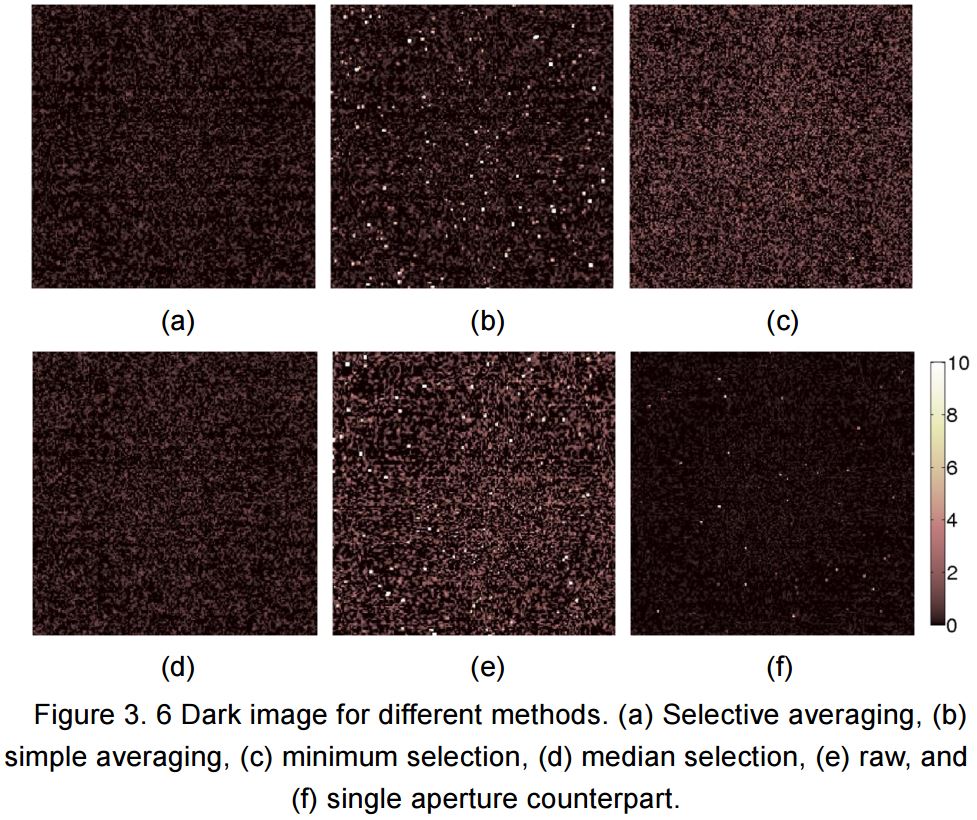
Shizuoka University publishes PhD Thesis "A study on low-noise high-sensitivity multiaperture camera with selective averaging" by Bo Zhang. From the abstract: "a prototype 3×3-aperture camera is developed. Under a low-light condition, in which the maximum average signal per aperture is 11e-, the RTS noise and dark current white defects are removed and the peak signal-to-noise ratio (PSNR) of the image is increased by 6.3dB."

12:17 PM

e2v Announces Gated NIR Imaging Optimized Sensor

...
e2v announces the Onyx EV76C664 1.3MP global shutter CMOS sensor. The new sensor features an embedded active imaging system which synchronises external illumination and internal electronic shuttering. This allows discernible color images to be produced at extremely low light levels and through diffusing environments (e.g. fog and smoke) by range-gating, making it ideal for Intelligent Traffic Systems (ITS) and security cameras.

The sensor has an innovative 10um-large pixel with extended sensitivity and performance in NIR, and can also cater for ‘all-light’ environments (typical of outdoor camera applications) where wide dynamic range is also needed. The new sensor is available in sparse colour and monochrome filter (EV76C664ACT) and black and white (EV76C664ABT).

11:17 AM

2016 Harvest Imaging Forum Registration Opens

...
Albert Theuwissen announces a start of registration for 2016 Harvest Imaging Forum "Robustness of CMOS Technology and Circuitry outside the Imaging Core : integrity, variability, reliability."

The Imaging forum is split into two parts, divided over two days:
  1. The basic required knowledge to understand the robustness of CMOS integrated circuits. This first part of the forum will include physics, state-of-the-art CMOS processes and related design issues,
  2. The robustness of advanced CMOS integrated circuits. The second part of the forum includes:

    Signal integrity issues: cross talk, signal propagation, interference between ICs, current peaks, supply noise, substrate and ground bounce, on-chip decoupling capacitors and design consequences,

    Variability issues: difference between random variations and systematic variations, causes of process parameter spread, proximity effects, random dopant fluctuations, transistor matching and design consequences,

    Reliability issues and topics: electro-migration, latch-up, hot-carrier effect, NBTI, soft-errors (by cosmic rays and alpha-particles), electro-static discharge, etc.
11:03 AM

Rambus Presents Lens-Less Eye Tracking Sensor

...
EETimes: Rambus presented a poster "Lensless Smart Sensors: Optical and Thermal Sensing for the Internet of Things" at VLSI Symposia 2016. The sensor utilizes a phase anti-symmetric diffraction grating on top of a conventional pixel array and computational algorithms that extract the relevant information from the image.

"In some applications such as range-finding or eye-tracking, it may not even be necessary to reconstruct a full image. Instead, extracting distance measurements may suffice and the particular phase anti-symmetric diffraction structure makes it very simple, explains the poster.

The ultra-low power 2x2mm2 image sensor with a 128x128 pixel array and integrated image change detection circuitry on the same die was enough to measure distances up to 50cm with an error of less than 8%, they reported.
"

"We do see this as a better, more accurate replacement for head-mounted eye tracking systems like those found in Virtual and Augmented Reality systems. We don’t target the LSS product for remote eye tracking, such as PC display or television based implementations", said Paul Karazuba, Director of Product Marketing for Imaging at Rambus.

10:56 AM

Toshiba Proposes Single-Lens RGB-Depth Camera

...
Toshiba presented an imaging technique that can simultaneously acquire a color image and a depth map from a single image taken by a monocular camera at The 22nd Symposium on Sensing via Image Information (SSII2016) held at Pacifico Yokohama on June 8, 2016. The approach is based on color aperture in the lens:

10:44 AM