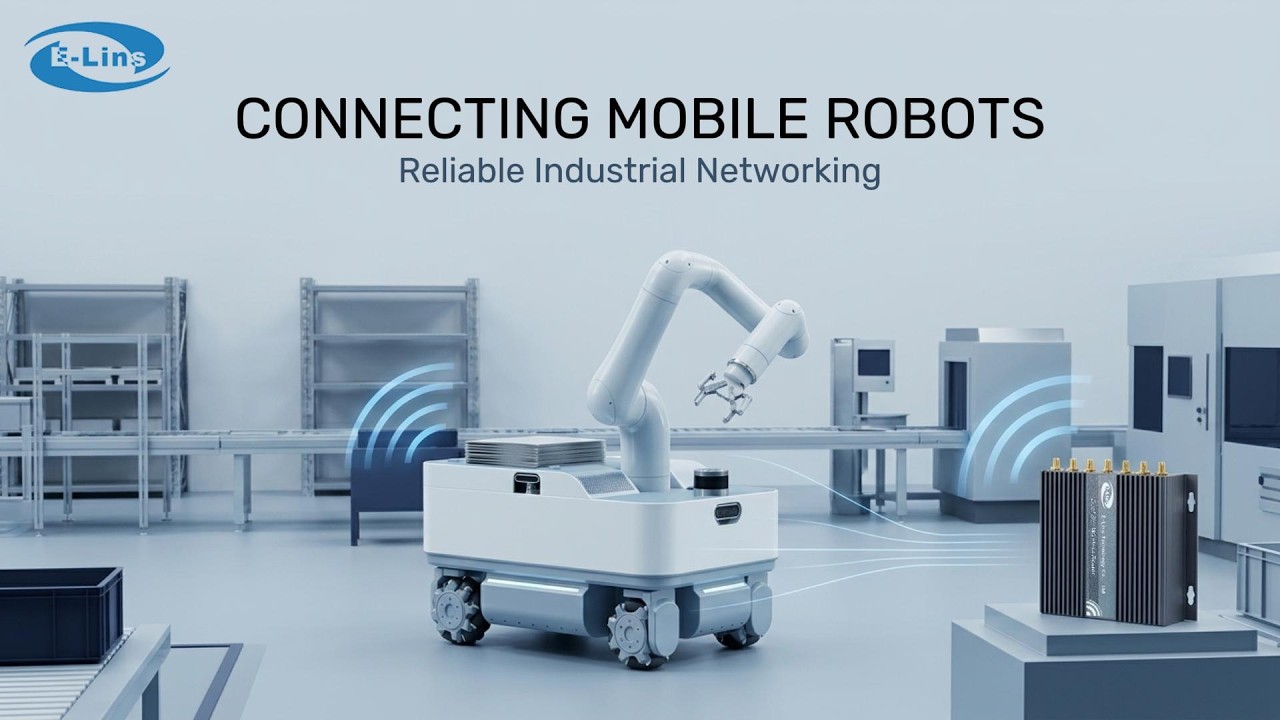
Connected Automation: How Industrial Routers Drive Mobile Robots in the Smart Factory
This article provides an in-depth exploration of Smart factory, covering foundational concepts, practical applications, and engineering insights.
In the era of Industry 4.0, the concept of a smart factory is no longer just a futuristic vision—it is today's operational standard. At the heart of this transformation are Autonomous Mobile Robots (AMRs), which transport materials, manage inventory, and streamline workflows without human intervention. However, to operate efficiently and safely, these intelligent machines require unbroken, real-time communication. This is where high-performance industrial routers become essential.
The Connectivity Challenge for Autonomous Mobile Robots
AMRs navigate complex indoor environments filled with metal structures, heavy machinery, and constant radio interference. Standard commercial Wi-Fi systems often suffer from dead zones and signal drops when robots move between coverage areas. In a dynamic smart factory ecosystem, even a brief drop in connection can cause costly operational delays, safety hazards, or system halts. AMRs must constantly transmit location data, telemetry, and payload information back to central control servers without latency.
How Industrial Routers Ensure Continuous Fleet Mobility
Industrial-grade routers are built specifically to handle the harsh environmental conditions and high communication demands of automated facilities. Here is how they empower mobile robotics:
- Seamless Roaming: Industrial routers support fast-handover protocols, allowing AMRs to switch smoothly between wireless access points or cellular bands without losing connection.
- Rugged Durability: Designed to withstand extreme temperatures, vibrations, and electromagnetic interference commonly found on manufacturing floors.
- Low Latency & High Security: Advanced encryption protocols safeguard critical operational data while ensuring split-second response times for collision avoidance and real-time navigation.
Building the Infrastructure for Tomorrow
As automated fleets scale up, investing in robust wireless connectivity becomes the backbone of modern industrial success. By integrating specialized routers into mobile units, facility managers can optimize fleet performance, reduce downtime, and fully realize the potential of their smart factory investment. Reliable connectivity is not just an upgrade; it is the vital link that keeps automated operations moving forward seamlessly.


