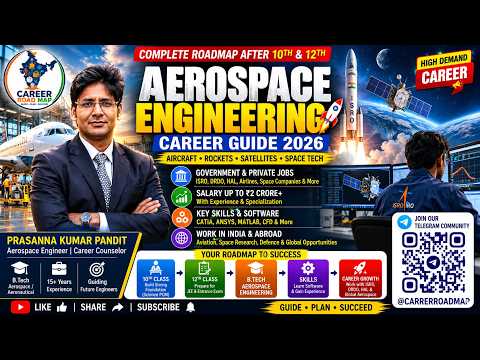
Have you ever dreamed of designing futuristic aircraft, high-speed rockets, or interplanetary satellites? Aerospace engineering is one of the most dynamic, high-tech, and rewarding fields in the world today. As technology accelerates toward deeper space exploration and sustainable aviation, mastering aerospace engineering design has become a vital gateway to an extraordinary career.
If you are looking to turn your passion for flight and technology into a reality, here is a comprehensive guide on how to become an aerospace engineer, along with the courses, salary expectations, and career scope for 2026 and beyond.
What is Aerospace Engineering?
Aerospace engineering is the primary branch of engineering concerned with the development, testing, and production of aircraft, spacecraft, and related systems. It is divided into two overlapping branches:
- Aeronautical Engineering: Focuses on aircraft operating within Earth's atmosphere (airplanes, helicopters, drones).
- Astronautical Engineering: Focuses on spacecraft operating outside Earth's atmosphere (rockets, satellites, space stations).
At its core, expertise in aerospace engineering design enables professionals to build safer, more aerodynamic, and fuel-efficient vehicles that push the boundaries of human reach.
Required Qualifications and Top Courses
To start your journey in this field, you must follow a structured educational path:
- High School Foundation: Focus heavily on Physics, Chemistry, and Advanced Mathematics during your secondary education.
- Undergraduate Degree: Pursue a Bachelor’s degree (B.Tech / B.E. / B.S.) in Aerospace Engineering, Aeronautical Engineering, or Mechanical Engineering.
- Specialized Skills: Develop proficiency in programming languages (like Python or MATLAB) and industry-standard modeling software. Hands-on exposure to 3D modeling and computational fluid dynamics (CFD) is critical for modern aerospace engineering design projects.
- Postgraduate Studies (Optional): A Master's degree (M.Tech / M.S.) or Ph.D. allows you to specialize in propulsion, avionics, structural analysis, or space robotics.
Career Scope and Salary Insights
The global demand for skilled aerospace engineers is rising fast. Major space agencies (like NASA and ISRO), private space giants (like SpaceX and Blue Origin), and commercial aviation leaders (like Boeing and Airbus) are actively hiring top talent.
- Entry-Level Salary: Fresh graduates can expect lucrative starting salaries, depending on the location, university prestige, and practical technical skills.
- Mid to Senior-Level Salary: Experienced professionals specializing in system design, propulsion, or flight software command top-tier compensation packages worldwide.
Conclusion
A career in aerospace engineering offers more than just a good paycheck—it provides the opportunity to shape the future of transportation and human exploration. By building a strong academic foundation and mastering technical design tools today, you can position yourself at the forefront of aerospace innovation.


