Data Lake vs. Data Warehouse: A Complete Guide for Modern Data Engineering
This article provides an in-depth exploration of Data engineering, covering foundational concepts, practical applications, and engineering insights.
As organizations generate unprecedented amounts of information daily, choosing the right storage architecture becomes crucial. If you are navigating the realm of modern data engineering, you have undoubtedly encountered two central concepts: Data Lakes and Data Warehouses. While both serve as centralized storage repositories, they are designed with fundamental differences in structure, purpose, and processing capabilities.
Understanding the Data Lake
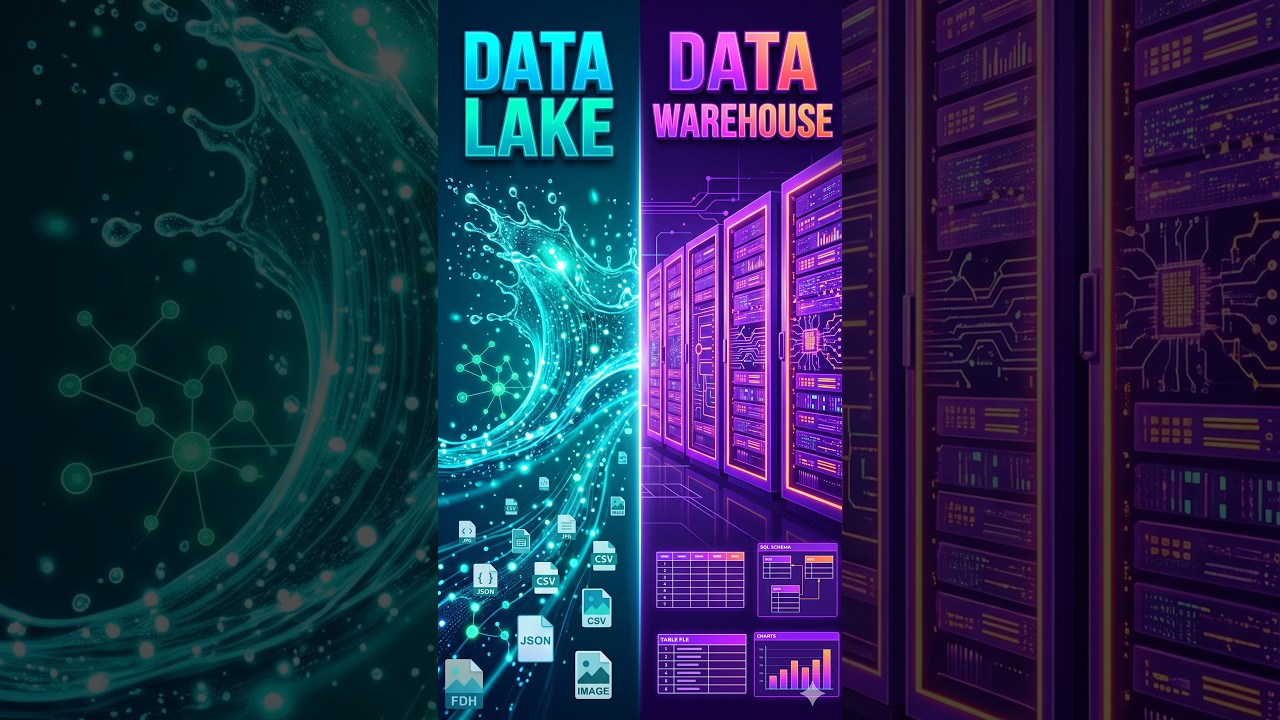
A Data Lake is a vast, centralized repository designed to store raw data in its natural format—whether structured, semi-structured, or unstructured (such as images, logs, and JSON files).
Data flows into a lake without requiring immediate transformation or strict formatting, a method known as "schema-on-read." Because Data Lakes offer highly scalable and cost-effective storage, they are ideal for big data processing, advanced analytics, and training machine learning models. Data scientists frequently rely on Data Lakes to explore unrefined datasets without being limited by rigid database rules.
Understanding the Data Warehouse
In contrast, a Data Warehouse is a highly structured database system optimized for high-speed SQL queries and business intelligence (BI) reporting. Data entering a warehouse undergoes a meticulous Extract, Transform, and Load (ETL) process, adhering to a strict "schema-on-write" model.
Cloud solutions like Google Cloud BigQuery exemplify modern data warehousing by providing rapid query execution on curated, cleansed data. Business analysts and executive dashboards depend heavily on Data Warehouses because the stored information is reliable, consistent, and instantly ready for operational reporting.
Key Differences: Which One Do You Need?
To summarize the core distinctions:
- Data Structure: Data Lakes store raw, multi-format data; Data Warehouses store processed, structured data.
- Schema Management: Data Lakes apply schema upon reading the data, while Data Warehouses apply schema before writing the data.
- Primary Users: Data Lakes cater primarily to data scientists and developers, whereas Data Warehouses serve business analysts and executive teams.
Ultimately, deciding whether to deploy a Data Lake, a Data Warehouse, or a hybrid "lakehouse" model depends on your specific data engineering workflows and analytical goals.
Final Thoughts
Understanding the distinct roles of Data Lakes and Data Warehouses allows organizations to build efficient, scalable data pipelines. Mastering these architectural choices is essential for creating an agile analytics infrastructure and advancing overall data engineering practices within your business.


