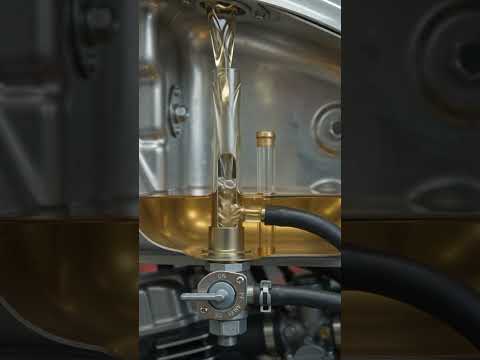
Every motorcycle rider has experienced that heart-sinking moment when the engine begins to sputter and cough in the middle of a cruise. Instinctively, you reach down to the fuel tap, flip the switch to "Reserve," and the engine roars back to life. But have you ever wondered about the actual mechanics behind this lifesaver? It isn't magic, nor is it a secondary hidden tank. It is a brilliant example of how simple physical design paves the way for modern Engineering IT and fuel management systems.
The Myth of the Second Tank
A common misconception among new riders is that motorcycles carry a small, separate backup tank for emergencies. In reality, there is only one fuel tank. The secret lies in a component called the "petcock" or fuel valve. Inside the tank, the petcock features two different intake pipes: a primary tall tube and a secondary shorter tube (or a hole at the very base).
When your valve is set to "ON," the fuel is drawn through the taller tube. Once the fuel level drops below the top of that tube, the flow stops, acting as a manual warning that you are running low. Switching to "RESERVE" simply opens the intake for the shorter tube at the bottom, allowing you to use the remaining gallon or two left at the base of the tank.
From Manual Valves to Engineering IT
While vintage bikes rely on this gravity-fed mechanical solution, the evolution of the industry has shifted toward digital precision. In the contemporary landscape, Engineering IT has transformed how we interact with our machines. Modern fuel-injected motorcycles often bypass the manual petcock entirely, utilizing electronic sensors and advanced software algorithms to calculate "Distance to Empty" (DTE).
These digital systems are prime examples of Engineering IT in action, where hardware sensors communicate with an On-Board Diagnostic (OBD) system to provide real-time data to the rider’s dashboard. Instead of feeling the bike sputter, a light flashes or a digital gauge provides a precise countdown.
Why This Simple Design Still Matters
Even as we move toward more complex digital solutions, the logic of the manual reserve remains a fundamental study in fail-safe engineering. It requires no electricity and has very few moving parts, making it incredibly reliable. Whether you are a fan of old-school mechanical grit or the high-tech world of digital monitoring, understanding these systems helps you become a more informed and safer rider. Next time you flip that switch, remember: you’re interacting with a legacy of design that perfectly bridges the gap between basic physics and modern technical innovation.


