The Essential Guide to Low Point Drains: How Industrial IT Enhances Pipeline Efficiency
This article provides an in-depth exploration of Industrial IT, covering foundational concepts, practical applications, and engineering insights.
In the world of industrial infrastructure, the efficiency of a piping system is often determined by how well it handles unwanted fluid accumulation. One of the most critical, yet sometimes overlooked, components of this system is the Low Point Drain. Whether you are dealing with steam, gas, or chemical transport, understanding the mechanics of drainage is vital for operational safety and longevity.
What is a Low Point Drain?
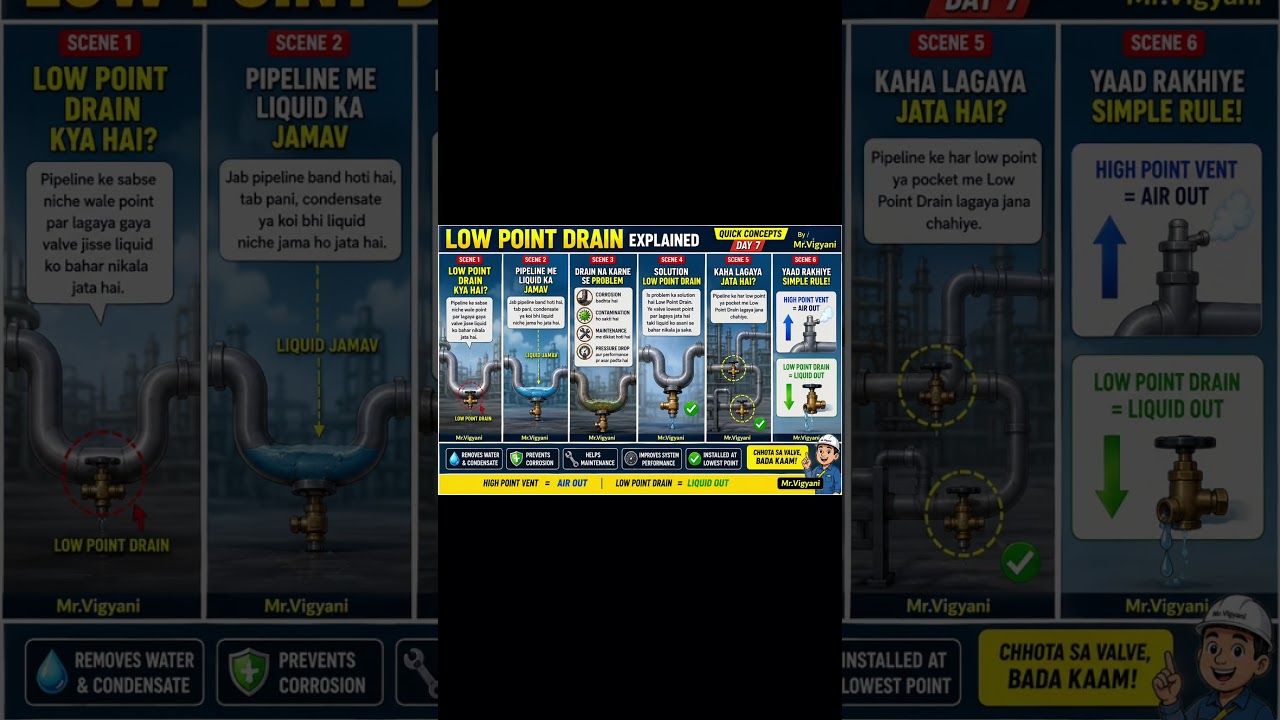
As the name suggests, a low point drain is a valve or outlet located at the lowest geographical point of a pipeline segment. Due to gravity, liquids—such as condensate in steam lines or moisture in gas lines—naturally settle at these points. If left unmanaged, this accumulation can lead to severe issues like internal corrosion, "water hammer" effects, or reduced flow efficiency.
By installing a dedicated drain at these junctions, operators can effectively remove trapped liquids and debris, ensuring the pipeline remains clear and functional.
The Evolution of Drainage with Industrial IT
Traditionally, low point drains were operated manually based on a set schedule. However, the integration of Industrial IT has revolutionized how these systems are monitored. Modern industrial facilities now use smart sensors and automated actuators to manage drainage.
With the rise of Industrial IT, real-time data from the pipeline—such as moisture levels, pressure drops, and temperature fluctuations—is transmitted to a central control room. This allows for predictive maintenance, where the system identifies exactly when a drain needs to be opened, reducing manual labor and preventing potential system failures before they occur.
Why Are Low Point Drains Critical?
- Preventing Corrosion: Standing water or chemicals can eat away at the pipe walls. Regular drainage extends the lifespan of the infrastructure.
- Eliminating Water Hammer: In steam systems, slugs of condensate can travel at high speeds, causing violent impacts that can rupture pipes.
- Optimizing Flow: Removing liquid pockets ensures that the intended medium (gas or air) moves without resistance.
Implementing Smart Drainage Solutions
To stay competitive in today’s market, many companies are upgrading their legacy systems. By leveraging Industrial IT solutions, facilities can automate the "blowdown" process. Automated valves can be programmed to trigger based on liquid level sensors, ensuring that the low point drain only operates when necessary, thereby saving energy and reducing fluid loss.
In conclusion, while the low point drain is a simple mechanical necessity, its role in modern industry is massive. When combined with smart monitoring and digital infrastructure, it becomes a cornerstone of a high-performing, safe, and cost-effective industrial operation.


