Showing posts with label Product Design. Show all posts

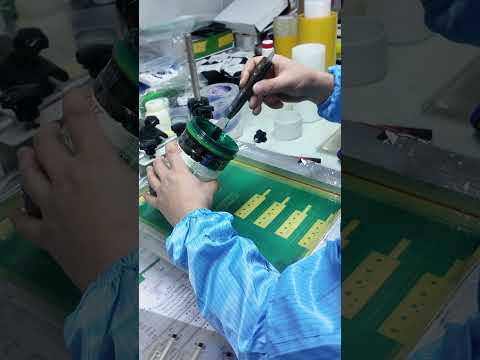
Rapid Prototyping Excellence: Delivering High-Quality Engineering Prototype Samples In-House

...

In today’s fast-paced hardware development landscape, speed and accuracy can make or break a product launch. When bringing custom user interfaces, control panels, or membrane switches to life, producing high-quality engineering prototype samples quickly is critical to validating both design aesthetics and functional reliability.

Why In-House Rapid Prototyping Matters

Transitioning from a digital schematic to a tactile, physical product requires rigorous testing. Having a dedicated in-house prototyping team allows manufacturers to bridge the gap between initial concepts and full-scale production smoothly.

By creating custom engineering prototype samples directly on-site, engineering teams can thoroughly evaluate tactile feedback, circuit connectivity, and graphic overlay alignment under real-world conditions. This rapid feedback loop enables immediate design adjustments, drastically reducing development cycles and eliminating costly mistakes long before mass manufacturing begins.

Precision Craftsmanship Behind Custom Switches

Developing membrane switch prototypes involves intricate, high-precision processes. From precision laser cutting and printing conductive inks to meticulously layering circuit assemblies, master sample makers turn complex engineering specs into functional reality.

Dedicated prototyping technicians utilize specialized equipment to ensure that every sample meets exact technical tolerances. Whether your project demands custom metal domes, integrated LEDs, backlighting solutions, or harsh-environment protection, having functional physical prototypes gives hardware designers the clarity needed to make confident production decisions.

Accelerate Your Path to Market

Partnering with an experienced manufacturer capable of delivering reliable engineering prototype samples accelerates your entire product development cycle. By combining skilled craftsmanship with rapid prototyping technology, you can refine your designs faster, protect your investment, and launch market-ready products with complete confidence.

How to Build a Job-Winning Engineering Design Portfolio in Just One Week

...

Landing a high-profile role at a cutting-edge company like Sarvam AI often feels like a marathon. Many designers and engineers spend months agonizing over every pixel and case study. However, I managed to build my entire portfolio from scratch in just seven days—and it landed me the job. If you are looking to accelerate your career, the secret lies in speed, clarity, and demonstrating your problem-solving process.

The "MVP" Approach to Portfolio Design

When time is of the essence, you cannot afford to build a monument to your ego. Instead, you must treat your portfolio as a Minimum Viable Product (MVP). The goal of a successful engineering design portfolio is to communicate your value proposition to recruiters as quickly as possible.

I focused on selecting my top three projects that showcased a diverse range of skills. Rather than documenting every minor detail, I highlighted the core engineering challenges I faced and the specific solutions I implemented. This focused approach ensures that a hiring manager can understand your technical depth within a two-minute skim.

Structure Over Aesthetics

While visual appeal is important, the narrative structure is what truly converts an interview invite into a job offer. Every project in your engineering design portfolio should follow a logical flow: 1. The Problem: What specific technical or user challenge were you solving? 2. The Constraints: What were the limitations (time, budget, or tech stack)? 3. The Iteration: Show your "messy" middle—the prototypes that failed and the adjustments you made. 4. The Result: Use data or testimonials to prove the project was a success.

Speed is a Competitive Advantage

Designing a portfolio in a week forces you to make executive decisions. It prevents the "perfectionism paralysis" that keeps many talented creators unemployed. By using streamlined tools and focused case studies, I was able to present a clean, professional, and functional engineering design portfolio to Sarvam AI before the competition even finished their first drafts.

If you are ready to stop procrastinating and start getting hired, follow this walkthrough of my one-week sprint. Your dream job is waiting—you just need the right framework to show them what you’re capable of.