Structural analysis is often considered one of the most challenging aspects of civil engineering, primarily because one small oversight can lead to a significant error in the final design. Among the various steps involved, mastering the moment equation is critical. Many students and junior engineers struggle with a recurring question: "Which forces actually belong in my equation?"
If you have ever stared at a free-body diagram and felt overwhelmed by the number of arrows, this guide is for you. Mastering this specific structural engineering calculation is about understanding the relationship between force, distance, and the point of rotation.
Identify Your Pivot Point
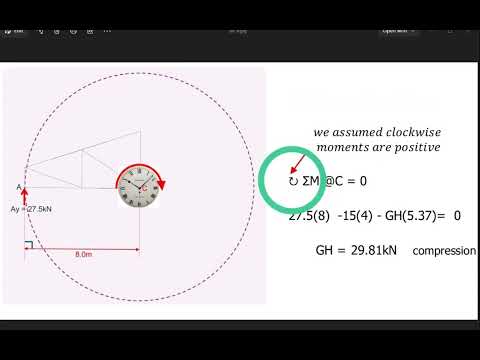
The first step in any moment equation is selecting a reference point, often called the pivot or point of rotation. This is the most strategic part of your structural engineering calculation. By choosing a point where one or more unknown forces act, you can simplify your math. Remember, if a force passes directly through your chosen pivot point, its perpendicular distance is zero. Since a moment is Force multiplied by Distance ($M = F \times d$), these forces do not enter the equation.
The Rule of Perpendicular Distance
A common mistake is simply multiplying any force by any distance. To determine if a force belongs in your equation, look for its "lever arm." You must identify the perpendicular distance from the line of action of the force to the pivot point. If a force is parallel to the lever arm or points directly at the pivot, it generates zero moment and should be excluded.
Consistent Sign Conventions
Once you have identified the forces that create rotation, you must apply a consistent sign convention. Whether you choose clockwise as positive or counter-clockwise as positive doesn't matter, as long as you remain consistent throughout the entire structural engineering calculation. This ensures that opposing forces are balanced correctly, leading to a stable and accurate structural model.
Practice Makes Perfect
Deciding what belongs in a moment equation becomes intuitive with practice. Start by isolating each force and asking: "Does this force want to rotate the structure around my chosen point?" If the answer is yes, calculate the perpendicular distance and add it to your sum. By following these logical steps, you will eliminate guesswork and approach your structural analysis problems with newfound confidence.
