Showing posts with label IoT Gateway. Show all posts

How to Configure Your Modem as an IoT Gateway: Step-by-Step Guide

...
engineering information technology
How to Configure Your Modem as an IoT Gateway: Step-by-Step Guide

How to Configure Your Modem as an IoT Gateway: Step-by-Step Guide

This article provides an in-depth exploration of IoT gateway, covering foundational concepts, practical applications, and engineering insights.

Taking full control of your home network is essential for achieving fast internet speeds, robust security, and seamless automation. Whether you want to optimize your default internet modem, split your Wi-Fi bands, or integrate smart devices, configuring your router correctly can transform your home network performance.

Accessing Your Modem Settings

To begin configuring your router, connect your computer or smartphone to your Wi-Fi network or directly via an Ethernet cable. Open your web browser and enter your modem's default IP address (typically 192.168.0.1 or 192.168.1.1). Log in using the credentials located on the back of your physical device. Once logged in, your first priority should be changing the default admin password to secure your network against unauthorized access.

Managing Wi-Fi Bands and Bridge Mode

Most modern internet modems offer dual-band Wi-Fi operating on 2.4 GHz and 5 GHz frequencies. For high-bandwidth activities like gaming or 4K streaming, keep your primary devices connected to the faster 5 GHz band. For smart hardware located further away, the 2.4 GHz band provides better signal range through walls.

If your standard provider-issued modem lacks advanced management features, consider enabling Bridge Mode. Switching your device to bridge mode disables its internal router and Wi-Fi features, allowing you to pass the internet signal directly to a high-performance main router or a dedicated IoT gateway. This configuration eliminates double NAT issues and allows specialized hardware to manage your traffic more effectively.

Optimizing for Smart Home Automation

As smart homes expand, dozens of connected devices—such as smart bulbs, security cameras, and voice assistants—can easily overload a basic home network. Utilizing a dedicated IoT gateway ensures your smart home hardware communicates smoothly while keeping high-traffic data isolated from primary devices for maximum security and network efficiency.

If you are managing everything through a single modem, create a dedicated guest network or a secondary 2.4 GHz network specifically for smart gear. This simple tweak prevents smart devices from consuming bandwidth reserved for your laptops and smartphones.

Final Thoughts

Mastering your modem settings unlocks the true potential of your home connection. By exploring advanced features like Bridge Mode and deploying a centralized IoT gateway, you can build a faster, safer, and completely automated smart home ecosystem.


🎬 Related Video Reference

How to Choose the Best LoRaWAN IoT Gateway for Your Project

...
engineering information technology
How to Choose the Best LoRaWAN IoT Gateway for Your Project

How to Choose the Best LoRaWAN IoT Gateway for Your Project

This article provides an in-depth exploration of IoT gateway, covering foundational concepts, practical applications, and engineering insights.

Deploying a successful Internet of Things network requires selecting the right hardware architecture from day one. At the heart of any reliable, long-range wireless network is a robust IoT gateway, acting as the essential bridge between end-node sensors and your cloud application server.

If you are building a LoRaWAN-based solution, choosing the correct hardware can mean the difference between seamless coverage and persistent connectivity issues. Here is a definitive guide to selecting the best hardware for your specific project needs.

1. Indoor vs. Outdoor Deployment

The first step in your evaluation process is determining where your hardware will operate.

  • Indoor Gateways: Designed for smart buildings, office environments, and home automation. They are cost-effective, compact, and typically feature internal antennas.
  • Outdoor Gateways: Built to withstand harsh weather conditions with IP67 or higher enclosure ratings. They feature ruggedized casings, lightning protection, and high-gain external antennas designed for long-range coverage across agriculture or industrial sites.

2. Backhaul Connectivity Options

An IoT gateway receives radio frequency data packets from local sensors and forwards them to the cloud. To do this, it needs a stable internet connection (backhaul). Evaluate your installation site to choose the right backhaul method:

  • Ethernet (PoE): Ideal for fixed installations, providing power and data through a single cable.
  • Wi-Fi: Great for indoor setups where running network cables is impractical.
  • Cellular (4G/LTE/5G): Crucial for remote outdoor locations where wired or Wi-Fi infrastructure is unavailable.

3. Channel Capacity and Network Processing

LoRaWAN gateways come in various channel configurations, typically ranging from 8 to 64 channels. An 8-channel gateway is usually sufficient for small to medium setups with hundreds of end devices. However, for large-scale smart cities or high-density industrial deployments, selecting a gateway with higher channel capacity prevents packet collision and network congestion.

Final Thoughts

Investing time into choosing the right IoT gateway will set your entire deployment up for long-term scalability and operational reliability. By assessing your environment, backhaul needs, and device density upfront, you can build a high-performing LoRaWAN ecosystem tailored to your goals.


🎬 Related Video Reference

GL.iNet GL-XE300 Puli Review: The Ultimate Portable IoT Gateway

...

Finding a reliable networking solution for remote operations, outdoor setups, or industrial deployments can be a significant challenge. Enter the GL.iNet GL-XE300 (Puli), a robust 4G LTE hardware solution engineered to deliver secure, seamless connectivity wherever you need it. Designed with performance and flexibility in mind, this compact IoT gateway bridges the gap between enterprise-grade security and consumer-friendly portability.

Key Features and Portability

The GL-XE300 Puli stands out immediately with its compact, durable enclosure and a built-in 5000mAh rechargeable battery, making it ideal for mobile work environments and off-grid remote monitoring. Powered by the open-source OpenWrt operating system, the device offers network administrators unmatched control over routing protocols, firewall rules, and VPN configurations (supporting both WireGuard and OpenVPN out of the box). Equipped with a cellular modem optimized for networks like T-Mobile, setting up a secure hotspot or bridge is fast and straightforward.

Industrial Performance and Top-Tier Security

When managing connected sensors, smart machinery, or remote telemetry, data protection is paramount. The GL-XE300 acts as a highly secure IoT gateway, featuring DNS-over-HTTPS, Cloudflare encryption, and advanced traffic management to safeguard sensitive communications against potential threats. Whether you are running smart agriculture hardware, automated fleet tracking systems, or remote security cameras, the Puli ensures continuous data transmission with low latency and maximum uptime.

Who Should Buy the GL.iNet Puli?

While built to handle the demands of industrial automation, the GL.iNet Puli is equally suited for remote workers, digital nomads, and IT managers who need a dependable backup internet connection (failover). Its ability to seamlessly switch between cellular data, Wi-Fi, and Ethernet while functioning as both a router and an access point makes it an exceptionally versatile tool.

Final Verdict

If you require a customizable, feature-packed IoT gateway that doesn't compromise on battery life or cybersecurity, the GL.iNet GL-XE300 (Puli) is a top-tier contender. It delivers an excellent balance of open-source freedom, rugged portability, and rock-solid 4G LTE performance.

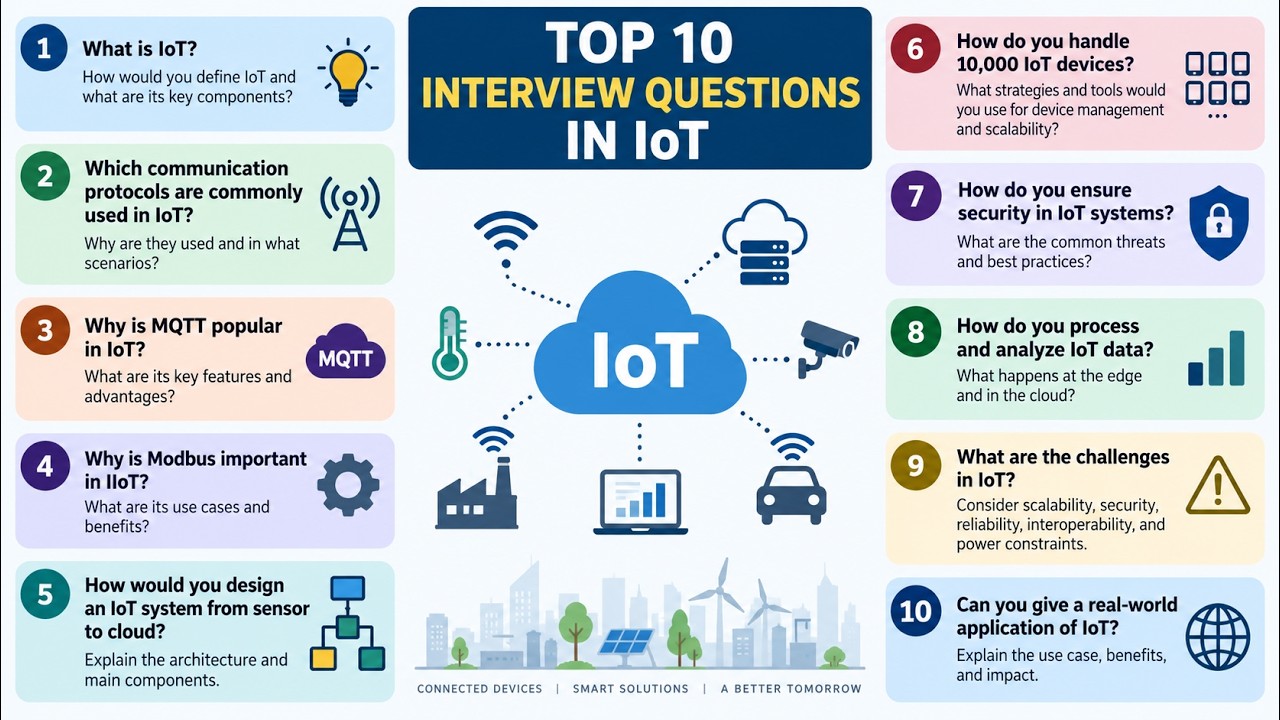
Top IoT Interview Questions for Placement Success: Core Concepts and the Essential IoT Gateway

...
engineering information technology
Top IoT Interview Questions for Placement Success: Core Concepts and the Essential IoT Gateway

Top IoT Interview Questions for Placement Success: Core Concepts and the Essential IoT Gateway

This article provides an in-depth exploration of IoT gateway, covering foundational concepts, practical applications, and engineering insights.

Preparing for Your IoT Placement Interview

The Internet of Things (IoT) and Industrial IoT (IIoT) sectors are expanding rapidly, opening up lucrative career opportunities for engineering students and tech enthusiasts. If you are preparing for a placement interview, mastering the core concepts of IoT architecture, security, and networking is essential to land your dream job.

Essential IoT Concepts You Must Know

Interviewers evaluate both your theoretical knowledge and your practical understanding of modern connected systems. To excel in your technical interview, focus on these critical topic areas:

1. Fundamental IoT Architecture

You must be ready to explain the multi-layered IoT framework, spanning physical sensors, microcontrollers, and cloud databases. A key point of discussion during technical rounds is network topology—specifically how an IoT gateway acts as a critical bridge between local sensor nodes and cloud servers by translating protocols and managing data flow.

2. Communication Protocols

Expect questions comparing lightweight communication protocols such as MQTT, CoAP, HTTP, and BLE. Be prepared to discuss trade-offs regarding bandwidth efficiency, power consumption, and latency in resource-constrained environments.

3. Edge Computing and Data Processing

As network bandwidth becomes a bottleneck, processing telemetry near the source has become vital. Interviewers frequently ask about edge intelligence. In modern industrial setups, a smart IoT gateway handles preliminary data filtering, local analytics, and security encryption before sending essential insights to the cloud.

4. Security and IIoT Integration

Security remains a top concern in enterprise IoT. You should be prepared to discuss device authentication, end-to-end encryption, secure boot processes, and strategies for protecting hardware from common cyber vulnerabilities.

How to Ace Your Placement Interview

To stand out during placement drives, avoid simply memorizing textbook definitions. Instead, highlight hands-on projects you have built, discuss real-world IIoT use cases, and demonstrate a complete system-level understanding. Showing interviewers that you know how hardware components, protocols, and an IoT gateway work together in an end-to-end architecture will prove your readiness for real-world engineering roles.


🎬 Related Video Reference

Mastering IoT Architecture: The Crucial Role of an IoT Gateway

...
engineering information technology
Mastering IoT Architecture: The Crucial Role of an IoT Gateway

Mastering IoT Architecture: The Crucial Role of an IoT Gateway

This article provides an in-depth exploration of IoT gateway, covering foundational concepts, practical applications, and engineering insights.

The Internet of Things (IoT) is rapidly reshaping how devices communicate, collect data, and automate daily processes. Whether you are studying for the NIELIT O Level M4.R5 module or building smart systems from scratch, understanding how different devices interact is crucial. At the center of this complex network lies a critical hardware and software component: the IoT gateway.

What is an IoT Gateway?

In any IoT ecosystem, smart sensors and edge devices continuously gather real-world data. However, these low-power devices often speak different communication protocols and lack the computing power to send data directly to the cloud. This is where an IoT gateway comes into play. Serving as a central hub or bridge, it connects smart devices, sensors, and actuators to cloud services or local servers.

By acting as an intermediary, it ensures seamless data exchange while managing protocol conversion, enabling devices using Zigbee, Bluetooth, or Z-Wave to communicate smoothly over standard IP networks.

Key Functions of Gateways in IoT Systems

To fully grasp how IoT networks function, it helps to break down the primary responsibilities of this central component:

  • Protocol Translation: Bridges the gap between different communication standards used by legacy devices and modern cloud systems.
  • Data Pre-processing & Filtering: Instead of sending massive streams of raw data to the cloud, smart gateways analyze, filter, and summarize data locally to conserve network bandwidth.
  • Enhanced Security: Acting as the first line of defense, a secure IoT gateway prevents unauthorized access by encrypting data streams and managing device authentication.
  • Local Automation: Enables fast, real-time decision-making at the edge without waiting for cloud server responses.

Building a Strong Foundation in IoT

Mastering these foundational concepts is essential for students and professionals preparing for IT and IoT certification exams. Understanding how gateways connect edge hardware to cloud infrastructure opens the door to designing efficient, secure, and scalable smart environments for home and industrial applications.


🎬 Related Video Reference

Overcome Connectivity Challenges with the USR-N720 IoT Gateway

...
engineering information technology
Overcome Connectivity Challenges with the USR-N720 IoT Gateway

Overcome Connectivity Challenges with the USR-N720 IoT Gateway

This article provides an in-depth exploration of IoT gateway, covering foundational concepts, practical applications, and engineering insights.

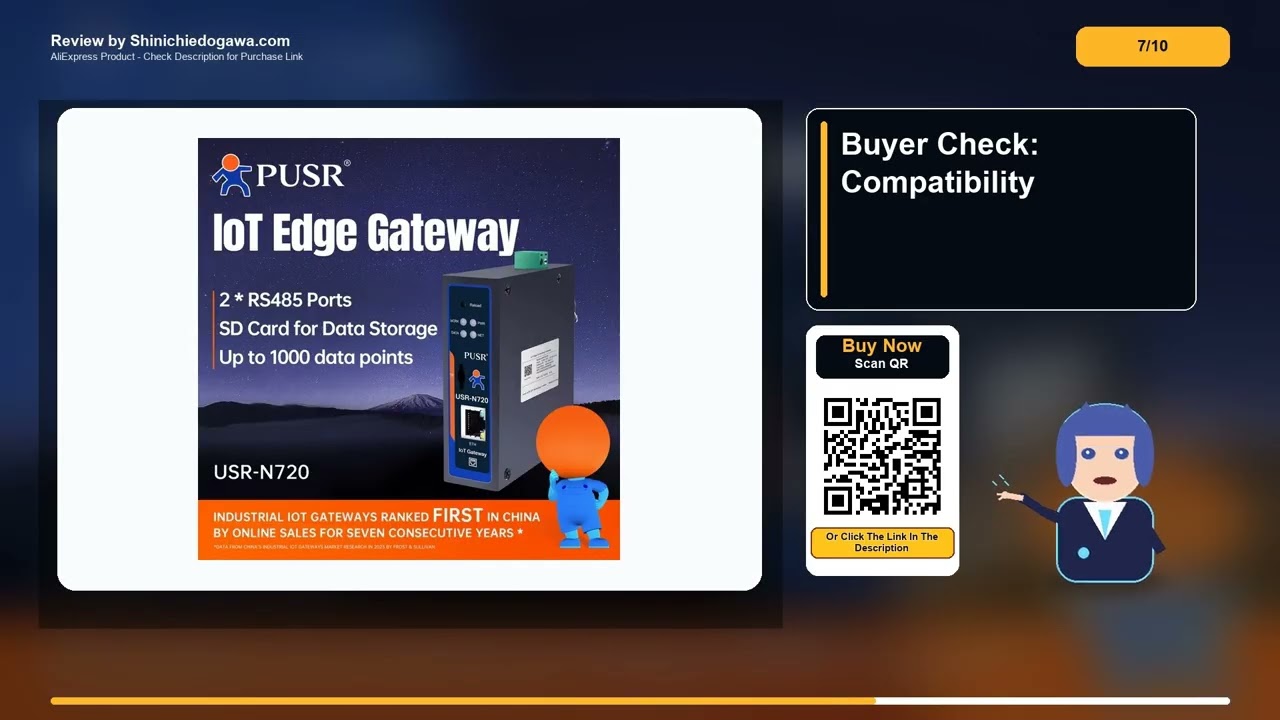
In today’s hyper-connected world, seamless communication between smart devices is crucial for operational efficiency. However, many developers and industrial automation managers frequently face frustrating network hurdles. If you are struggling with unstable connections, high latency, or data transmission drops, choosing the right IoT gateway can make all the difference.

The Problem with Fragmented IoT Connectivity

Managing a web of smart sensors, industrial controllers, and edge devices often leads to severe network bottlenecks. In harsh operating environments or legacy system setups, bridging the gap between hardware interfaces and cloud platforms is no simple task. Without a reliable communication hub, vital data fails to reach your system in real time, disrupting automated workflows and decision-making processes.

Discovering the Power of the USR-N720 Gateway

Enter the USR-N720, an advanced hardware solution designed specifically to solve complex networking challenges. Positioned as a versatile and high-performance IoT gateway, the USR-N720 provides stable, bi-directional data conversion between local devices and remote servers.

Key advantages of integrating the USR-N720 include:

  • High-Speed Data Transmission: Offers low-latency communication to ensure edge device data reaches the cloud instantly.
  • Industrial-Grade Durability: Built to withstand demanding physical environments, minimizing hardware failure and network interruptions.
  • Protocol Versatility: Effortlessly bridges serial communications with Ethernet or cellular protocols, making it easier to integrate legacy equipment into modern networks.

Transform Your Smart Network Architecture

Upgrading your network architecture with a reliable IoT gateway eliminates frequent disconnections and simplifies remote device management. By deploying the USR-N720, enterprise teams can gain full visibility over their operations, prevent costly downtime, and easily scale their IoT deployment as business needs grow.

Don't let poor device connectivity slow down your technological progress. Take control of your network and explore how the USR-N720 can streamline your smart infrastructure today.


🎬 Related Video Reference

Revolutionizing Smart Cities: How a LoRaWAN IoT Gateway Drives Modern Street Lighting Retrofits

...
engineering information technology
Revolutionizing Smart Cities: How a LoRaWAN IoT Gateway Drives Modern Street Lighting Retrofits

Revolutionizing Smart Cities: How a LoRaWAN IoT Gateway Drives Modern Street Lighting Retrofits

This article provides an in-depth exploration of IoT gateway, covering foundational concepts, practical applications, and engineering insights.

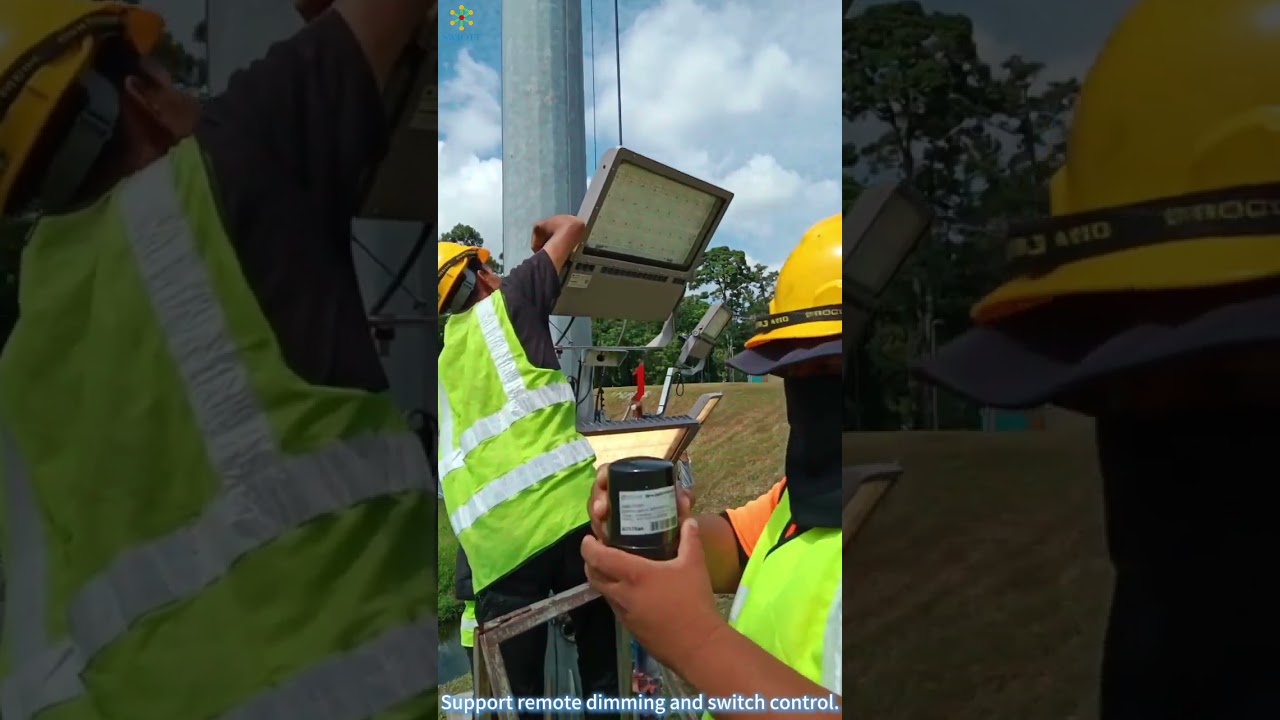
As municipalities around the globe strive to enhance energy efficiency and reduce operational costs, modernizing urban infrastructure has become a top priority. Street lighting retrofits present one of the most impactful opportunities for city-wide transformation. By combining SWIOTT NEMA smart street light controllers with cutting-edge wireless technology, cities can seamlessly upgrade traditional lighting grids into intelligent, automated management systems.

Streamlining Connectivity with a LoRaWAN IoT Gateway

At the heart of any successful smart lighting deployment lies robust, long-range connectivity. The integration of NEMA smart controllers with an industrial-grade IoT gateway enables cities to establish full-stack control over thousands of streetlights simultaneously. Using LoRaWAN (Long Range Wide Area Network) technology, these devices bridge the gap between individual light fixtures and cloud-based central management software, ensuring reliable communication across vast urban areas without heavy bandwidth costs.

Key Advantages of City-Wide Street Light Retrofits

Deploying an end-to-end IoT lighting solution offers distinct operational advantages for modern municipalities:

  • Automated Scheduling and Dimming: Dynamically adjust brightness levels based on traffic patterns, weather conditions, or time of day to drastically lower energy consumption.
  • Proactive Maintenance: Real-time fault detection alerts operators instantly when a fixture fails, reducing maintenance response times and eliminating manual street patrols.
  • Scalable Architecture: A single high-performance IoT gateway can connect thousands of smart controllers, making city-wide scaling simple and cost-effective.
  • Plug-and-Play Installation: Standard NEMA socket compatibility ensures that existing streetlights can be retrofitted quickly without complex rewiring.

Driving Sustainability and Economic Growth

Upgrading to smart street lighting is not just a technology refresh—it is a strategic investment in urban sustainability. Intelligent lighting networks significantly cut municipal carbon footprints while lowering electricity bills by up to 60%. Furthermore, establishing an integrated IoT gateway infrastructure creates a reliable backbone that can support future smart city initiatives, such as environmental monitoring, traffic management, and public safety sensors.

By leveraging full-stack IoT lighting solutions, municipal leaders can illuminate their streets smarter, lower operational overhead, and pave the way for a sustainable future.

Visual Insights & Illustrations

IoT gateway
IoT gateway
IoT gateway

Demystifying IoT Architecture: 3-Layer vs 5-Layer Models and the Role of the IoT Gateway

...
engineering information technology
Demystifying IoT Architecture: 3-Layer vs 5-Layer Models and the Role of the IoT Gateway

Demystifying IoT Architecture: 3-Layer vs 5-Layer Models and the Role of the IoT Gateway

This article provides an in-depth exploration of IoT gateway, covering foundational concepts, practical applications, and engineering insights.

The Internet of Things (IoT) is revolutionizing how devices interact, communicate, and process data across global networks. However, building a scalable and secure ecosystem requires a clear understanding of its structural framework. Whether you are designing a smart home system or an industrial network, choosing the right architecture and deploying a robust IoT gateway is essential for seamless connectivity.

The Basics: 3-Layer vs. 5-Layer IoT Architecture

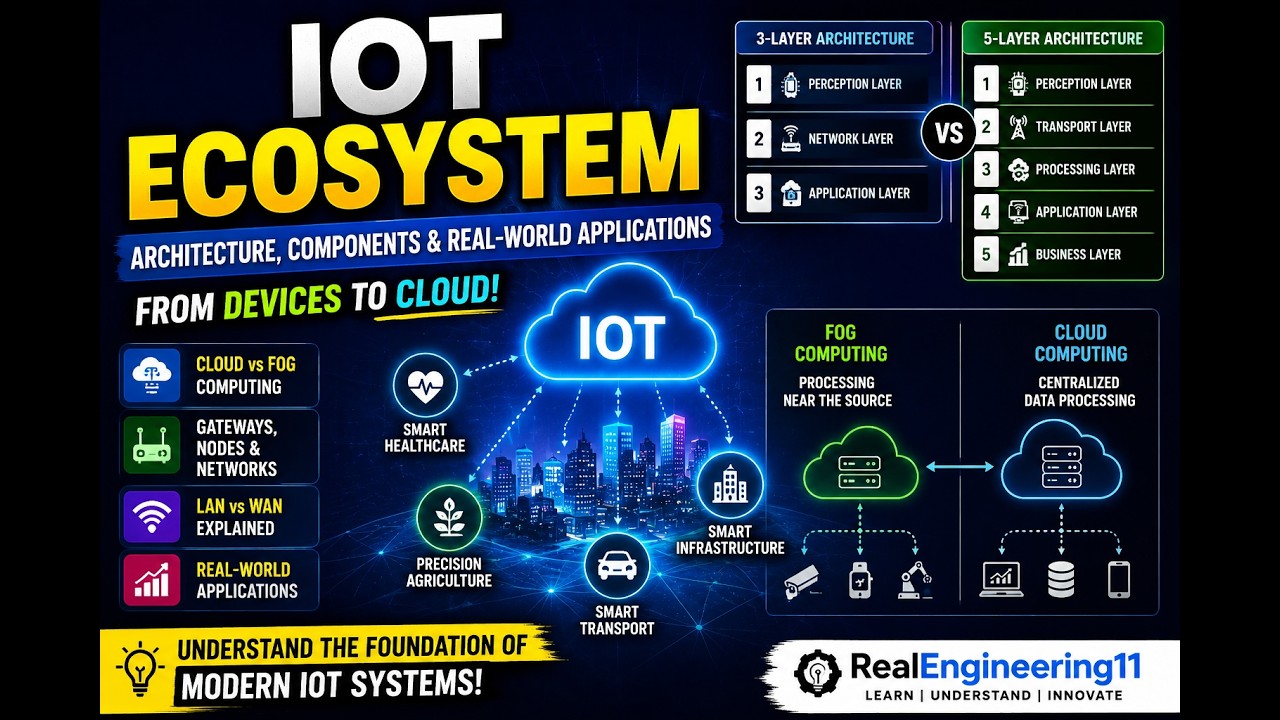
IoT architecture is generally divided into distinct layers depending on system complexity:

  1. 3-Layer Architecture: This foundational model consists of the Perception Layer (sensors capturing data), the Network Layer (transmitting data securely), and the Application Layer (delivering services to the user).
  2. 5-Layer Architecture: Designed for enterprise-level deployments, this expanded model adds a Transport Layer (moving data from perception to processing), a Processing Layer (analyzing and filtering data), and a Business Layer (managing overall application workflows and business logic).

Understanding these layers helps engineers decide where hardware components should sit to bridge physical sensors with complex network infrastructures.

Cloud Computing vs. Fog Computing

As data flows through these layers, architects must determine where processing should take place:

  • Cloud Computing: Uses centralized remote servers for massive data storage and heavy analytics. While powerful and scalable, relying exclusively on the cloud can introduce latency and bandwidth constraints for time-sensitive tasks.
  • Fog Computing: Extends cloud capabilities closer to the edge of the network. By decentralizing computation, fog nodes process critical data locally before transmitting summarized insights to the cloud.

Modern edge networks heavily leverage an intelligent IoT gateway to handle local filtering, protocol translation, and fog computing functions. This minimizes latency, conserves bandwidth, and ensures mission-critical operations remain active even if cloud connections drop.

Conclusion

Mastering 3-layer and 5-layer IoT architectures, alongside cloud and fog computing strategies, is key to building resilient networks. By integrating a high-performance IoT gateway into your framework, you can efficiently connect edge hardware to cloud analytics while optimizing speed, security, and scalability.

Visual Insights & Illustrations

IoT gateway
IoT gateway
IoT gateway

The Lantronix SGX 5150: Is This the Ultimate Industrial IoT Gateway for Your Business?

...
engineering information technology
The Lantronix SGX 5150: Is This the Ultimate Industrial IoT Gateway for Your Business?

The Lantronix SGX 5150: Is This the Ultimate Industrial IoT Gateway for Your Business?

This article provides an in-depth exploration of IoT gateway, covering foundational concepts, practical applications, and engineering insights.

In the rapidly evolving landscape of Industry 4.0, the biggest challenge for many businesses isn't just collecting data—it is finding a way to connect legacy hardware to modern cloud systems. Enter the Lantronix SGX 5150, a device designed to be more than just a bridge; it aims to be the central nervous system of your industrial operation.

Bridging the Gap Between Legacy and Modernity

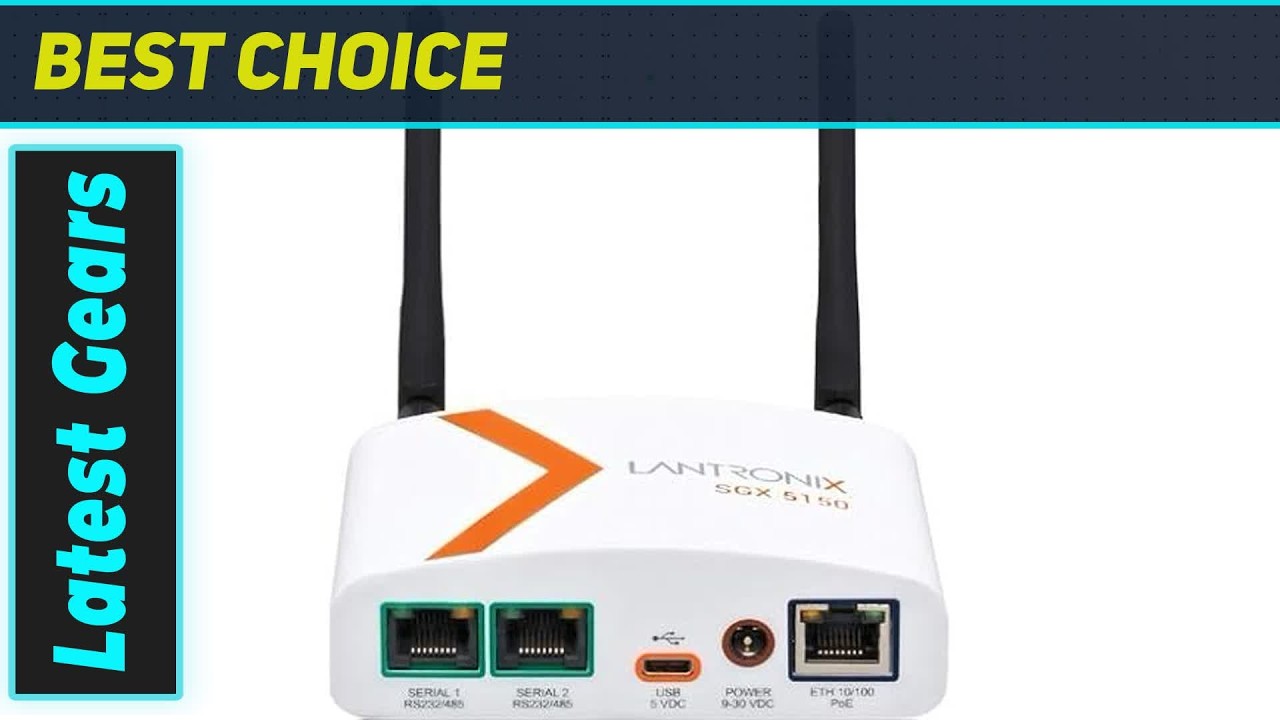
The Lantronix SGX 5150 stands out as a versatile IoT gateway because it supports a wide array of interfaces that many modern routers simply ignore. Whether you are dealing with older serial RS-232/485 equipment or high-speed Ethernet devices, this hub ensures that your legacy machines can finally communicate with your digital infrastructure. By providing high-performance Wi-Fi and Ethernet connectivity, it allows for seamless data transfer from the factory floor to the executive boardroom.

Enterprise-Grade Security for Industrial Environments

Security is often the primary concern when bringing industrial equipment online. A single vulnerability can lead to significant downtime or data breaches. Lantronix addresses this by incorporating high-level encryption, secure boot features, and enterprise-grade Wi-Fi security (WPA2-Enterprise). This makes the SGX 5150 a reliable IoT gateway for sensitive environments such as healthcare, manufacturing, and energy management, where data integrity is non-negotiable.

Rugged Design and Simple Deployment

Industrial environments are notoriously harsh, characterized by extreme temperatures and electromagnetic interference. The SGX 5150 is built to thrive in these conditions, featuring a ruggedized enclosure and a compact form factor that fits into tight cabinets.

Furthermore, the deployment process is streamlined through an intuitive web-based configuration and Lantronix’s management software. You don’t need to be a network engineering expert to get your system up and running. Setting up your IoT gateway is straightforward, allowing for rapid scaling across multiple locations without the headache of complex manual configurations.

The Verdict: A Connectivity Powerhouse

If you are looking to modernize your operations, the Lantronix SGX 5150 offers a compelling mix of durability, security, and versatility. It effectively removes the barriers to digital transformation, making it a top contender for any business looking to harness the power of industrial connectivity. Whether you are monitoring remote sensors or managing a complex manufacturing line, this gateway provides the stability and performance required for the modern age.

Visual Insights & Illustrations

IoT gateway
IoT gateway
IoT gateway

JT-EdgeLink Review: The Ultimate Industrial IoT Gateway for RS485 to 4G Connectivity

...
engineering information technology
JT-EdgeLink Review: The Ultimate Industrial IoT Gateway for RS485 to 4G Connectivity

JT-EdgeLink Review: The Ultimate Industrial IoT Gateway for RS485 to 4G Connectivity

This article provides an in-depth exploration of IoT gateway, covering foundational concepts, practical applications, and engineering insights.

In the rapidly evolving world of Industrial Internet of Things (IIoT), seamless communication between legacy field equipment and modern cloud platforms is essential. The JT-EdgeLink emerges as a powerful solution designed to bridge this gap, serving as an advanced IoT gateway that transforms how industrial data is collected, processed, and transmitted.

Unlocking Connectivity: RS485 to 4G Conversion

One of the standout features of the JT-EdgeLink is its ability to convert traditional RS485 serial communication directly into high-speed 4G cellular data. Many industrial facilities rely heavily on legacy sensors, meters, and machinery equipped with RS485 interfaces. By translating these signals into reliable wireless cellular networks, this smart IoT gateway eliminates the need for expensive, complex wired infrastructure, enabling real-time remote monitoring across vast operational areas.

Key Advantages of JT-EdgeLink

  • High-Speed Data Transmission: Powered by 4G LTE connectivity, it ensures continuous data flow even in remote or harsh industrial environments.
  • Edge Intelligence: Beyond simple data forwarding, the device processes critical telemetry locally, reducing latency and optimizing cloud bandwidth usage.
  • Versatile Protocol Support: Effortlessly connects with PLCs, smart meters, and various industrial sensors for comprehensive monitoring.
  • Robust and Reliable: Built specifically for industrial environments, ensuring uninterrupted uptime and high signal stability.

Why Upgrade Your Industrial Network?

Deploying a reliable IoT gateway like the JT-EdgeLink is a game-changer for smart factories, utility management, and remote asset tracking. By modernizing legacy equipment with 4G wireless capabilities, businesses can prevent costly downtime, optimize operational efficiency, and leverage real-time data for smarter decision-making.

Final Verdict

The JT-EdgeLink smart gateway is an indispensable asset for modern industrial operations. Whether you are scaling an existing IIoT architecture or modernizing legacy RS485 hardware, this device offers the performance, security, and flexibility needed to thrive in Industry 4.0.

Visual Insights & Illustrations

IoT gateway
IoT gateway
IoT gateway