Demystifying IoT Architecture: 3-Layer vs 5-Layer Models and the Role of the IoT Gateway
This article provides an in-depth exploration of IoT gateway, covering foundational concepts, practical applications, and engineering insights.
The Internet of Things (IoT) is revolutionizing how devices interact, communicate, and process data across global networks. However, building a scalable and secure ecosystem requires a clear understanding of its structural framework. Whether you are designing a smart home system or an industrial network, choosing the right architecture and deploying a robust IoT gateway is essential for seamless connectivity.
The Basics: 3-Layer vs. 5-Layer IoT Architecture
IoT architecture is generally divided into distinct layers depending on system complexity:
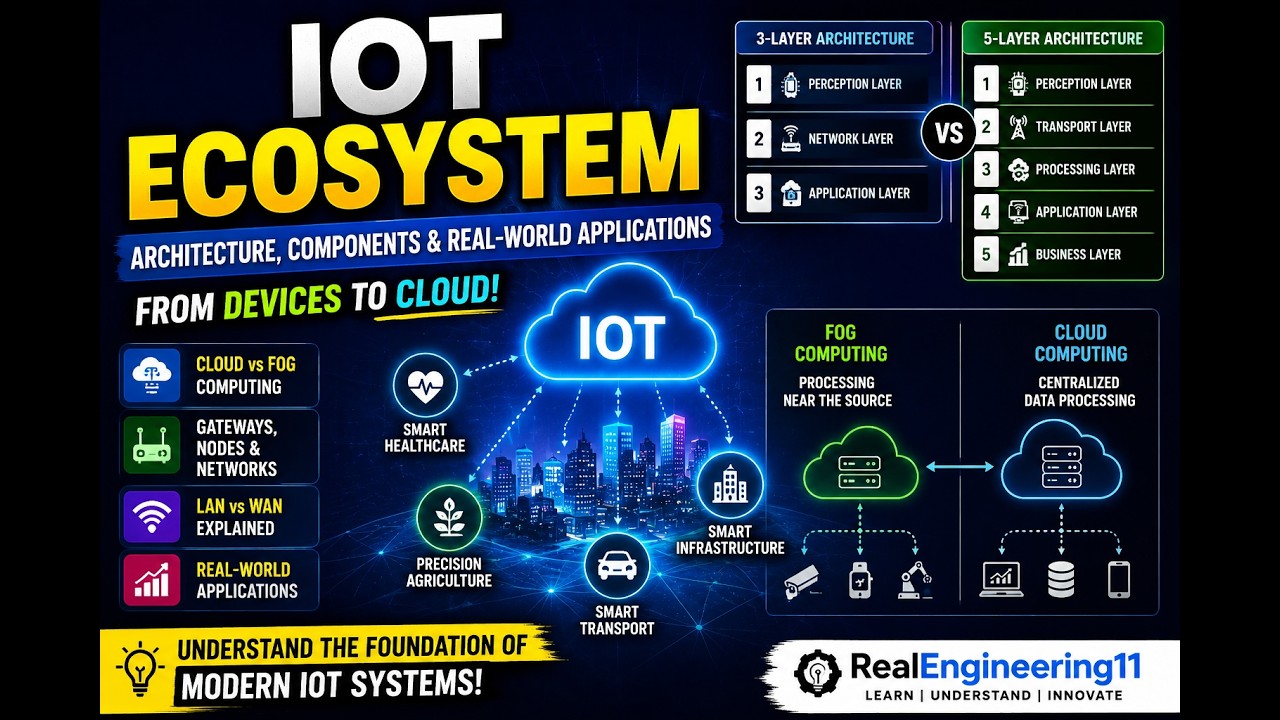
- 3-Layer Architecture: This foundational model consists of the Perception Layer (sensors capturing data), the Network Layer (transmitting data securely), and the Application Layer (delivering services to the user).
- 5-Layer Architecture: Designed for enterprise-level deployments, this expanded model adds a Transport Layer (moving data from perception to processing), a Processing Layer (analyzing and filtering data), and a Business Layer (managing overall application workflows and business logic).
Understanding these layers helps engineers decide where hardware components should sit to bridge physical sensors with complex network infrastructures.
Cloud Computing vs. Fog Computing
As data flows through these layers, architects must determine where processing should take place:
- Cloud Computing: Uses centralized remote servers for massive data storage and heavy analytics. While powerful and scalable, relying exclusively on the cloud can introduce latency and bandwidth constraints for time-sensitive tasks.
- Fog Computing: Extends cloud capabilities closer to the edge of the network. By decentralizing computation, fog nodes process critical data locally before transmitting summarized insights to the cloud.
Modern edge networks heavily leverage an intelligent IoT gateway to handle local filtering, protocol translation, and fog computing functions. This minimizes latency, conserves bandwidth, and ensures mission-critical operations remain active even if cloud connections drop.
Conclusion
Mastering 3-layer and 5-layer IoT architectures, alongside cloud and fog computing strategies, is key to building resilient networks. By integrating a high-performance IoT gateway into your framework, you can efficiently connect edge hardware to cloud analytics while optimizing speed, security, and scalability.
Visual Insights & Illustrations


