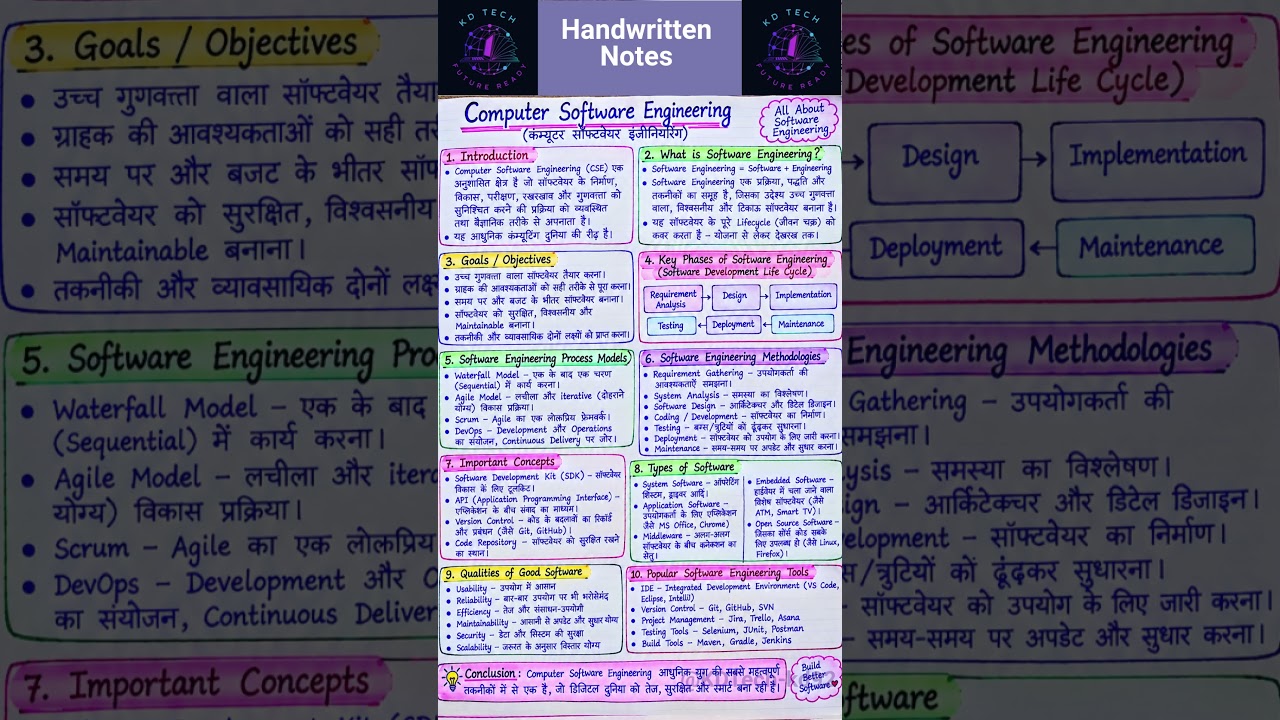
Ultimate Guide to Engineering Software: OOAD Notes and Practice MCQs
This article provides an in-depth exploration of Engineering software, covering foundational concepts, practical applications, and engineering insights.
Mastering the fundamentals of system design and architecture is essential for any aspiring developer or computer science student. When building complex, scalable applications, engineering software requires a deep understanding of core principles, particularly Object-Oriented Analysis and Design (OOAD). In this comprehensive Chapter 8 study guide, we break down essential concepts and provide high-yield Multiple Choice Questions (MCQs) to help you ace your upcoming exams.
Key Concepts in Object-Oriented Analysis and Design
Object-Oriented Analysis and Design serves as the backbone for modern application development. Rather than focusing purely on procedural code, OOAD emphasizes structuring systems around real-world objects, attributes, and behaviors. Key topics covered in Chapter 8 include:
- System Modeling with UML: Utilizing Unified Modeling Language diagrams (such as use case, class, and sequence diagrams) to visualize software flow before writing code.
- Core OOP Principles: Leveraging abstraction, encapsulation, inheritance, and polymorphism to construct modular and maintainable applications.
- Design Patterns: Applying standardized, proven solutions to structural and behavioral challenges encountered during system development.
By mastering these foundational elements, students and professionals can create resilient systems while significantly reducing future technical debt.
Why Practice MCQs for Exam Preparation?
Whether you are preparing for university tests or professional qualification assessments like the NEC exam, reviewing targeted practice questions is one of the most effective study strategies. Testing your knowledge on engineering software concepts through MCQs offers several distinct advantages:
- Quick Self-Assessment: Instantly identify gaps in your understanding of OOAD principles and software lifecycles.
- Enhanced Retention: Active recall through practice questions strengthens long-term memory far better than passive reading.
- Improved Speed and Accuracy: Familiarize yourself with exam-style formatting to build confidence and solve problems quickly under time constraints.
How to Maximize Your Study Session
To get the most out of Chapter 8, start by thoroughly reading the key theoretical notes to ensure a firm grasp of design methodologies. Next, work through practice MCQs without looking at the answer key to simulate realistic testing conditions. Analyzing both correct and incorrect choices will solidify your expertise in engineering software development and set you up for academic and professional success.