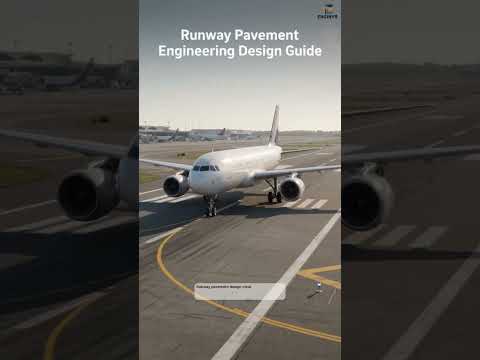
Have you ever wondered how an airport runway safely withstands the immense force of a 400-ton aircraft landing at high speeds thousands of times a year? The answer lies in sophisticated civil engineering and precise material layering. Modern airport construction relies heavily on modern sustainable engineering design to create durable, high-performance pavements capable of handling extreme loads while reducing long-term environmental impact.
Decoding Aircraft Loads and Layered Pavement Structures
Designing a resilient runway requires a deep understanding of aircraft loading dynamics. Engineers must evaluate critical operational parameters, including gross aircraft weight, gear configurations, tire inflation pressures, and annual traffic volume.
Unlike standard highway roads, runway pavements are complex, multi-layered systems engineered to distribute concentrated loads from aircraft tires down through successive layers to the natural earth foundation. A typical runway structural cross-section consists of:
- Surface Course: The top layer engineered to withstand high shear stresses, provide skid resistance, and prevent water infiltration.
- Base Course: The primary structural layer that distributes the heavy load away from the surface.
- Subbase Course: A drainage and support layer that prevents subgrade soil from penetrating the base.
- Subgrade: The prepared natural sub-soil foundation that ultimately supports the entire structure.
Integrating Sustainable Engineering Design in Runway Construction
As global air travel continues to expand, infrastructure must evolve to meet increased traffic demands without incurring continuous repair costs. Implementing sustainable engineering design principles into runway construction allows engineers to balance structural longevity with environmental responsibility.
This approach involves using recycled pavement materials, warm-mix asphalt technologies, and permeable base layers that enhance stormwater drainage. Furthermore, applying sustainable engineering design ensures that materials resist rutting, fatigue cracking, and severe weather degradation—substantially extending the runway’s operational lifespan and cutting down lifecycle maintenance emissions.
The Future of Airport Infrastructure
Runway pavement design is far more than pouring concrete or laying asphalt; it is a vital discipline combining material science, structural dynamics, and environmental stewardship. By prioritizing safety and smart material selection, engineers can build robust aviation networks that support heavy aircraft loads today while safeguarding the environment for tomorrow.


