ETL vs. ELT Explained: Choosing the Right Strategy for Modern Data Engineering
This article provides an in-depth exploration of Data engineering, covering foundational concepts, practical applications, and engineering insights.
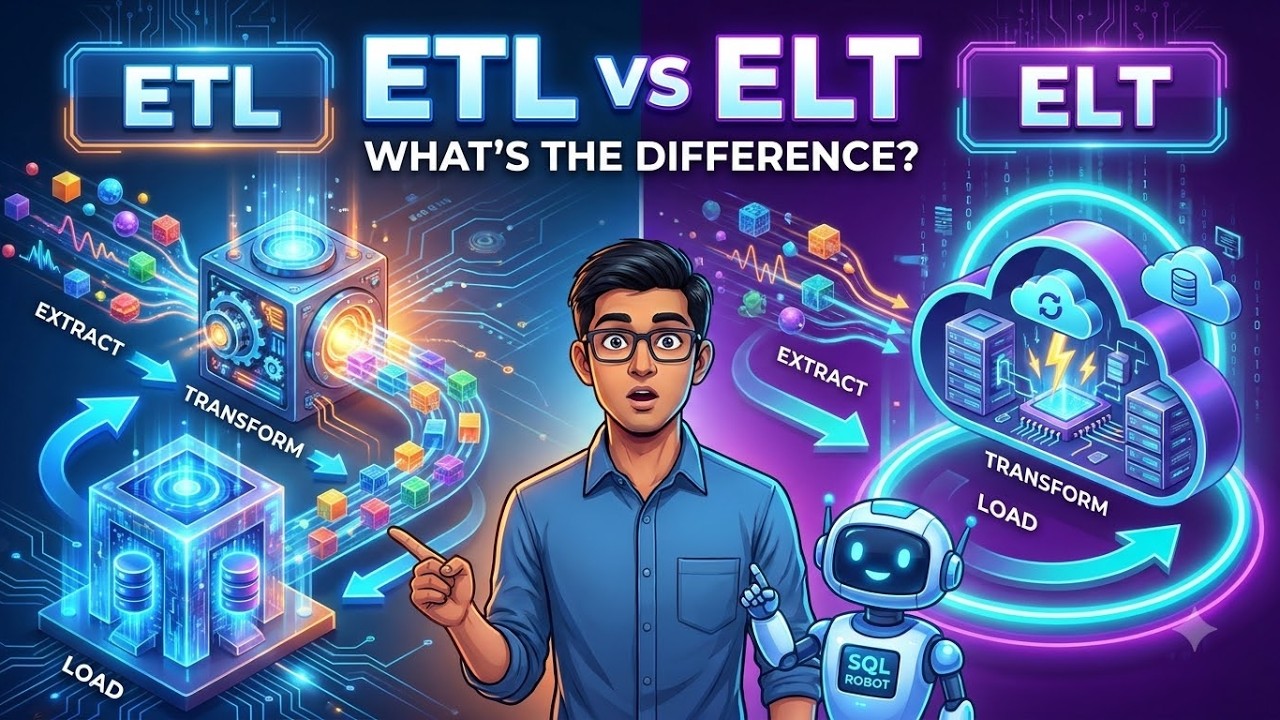
In the rapidly evolving landscape of data engineering, building efficient data pipelines is essential for turning raw information into actionable business insights. Two primary paradigms dominate the data integration space: ETL (Extract, Transform, Load) and ELT (Extract, Load, Transform). While they share similar stages, the sequence in which processing occurs fundamentally changes how data architecture is managed.
What is ETL (Extract, Transform, Load)?
ETL is the traditional approach to data integration. In an ETL pipeline, raw data is extracted from source systems, transformed on a separate staging server to match business logic and compliance standards, and finally loaded into the target data warehouse.
This method ensures high security and data privacy because sensitive information can be cleansed or masked before hitting storage. However, pre-transformation requires significant compute resources prior to loading, making ETL pipelines less flexible when business requirements change.
What is ELT (Extract, Load, Transform)?
ELT is a modern paradigm designed to leverage the immense processing power of cloud data warehouses like Snowflake, Google BigQuery, and AWS Redshift. In ELT, raw data is extracted and immediately loaded directly into the destination storage system. Transformations are performed afterwards using the cloud platform's native compute capabilities.
Because transformation happens on-demand within the warehouse, ELT offers faster ingestion speeds, near-unlimited scalability, and maximum flexibility for data analysts who need access to raw historical data.
Key Differences: Which Approach Should You Choose?
When designing robust pipelines, modern data engineering teams must evaluate three critical factors:
- Speed and Performance: ELT generally delivers faster data ingestion since raw data is loaded immediately without waiting for transformation steps.
- Data Flexibility: ELT preserves raw, untransformed data in the warehouse, allowing teams to apply new business logic retroactively without re-ingesting data.
- Security and Compliance: ETL provides tighter control over data privacy, as sensitive records can be filtered before reaching the destination warehouse.
Final Thoughts
Choosing between ETL and ELT depends on your organization's infrastructure, security requirements, and analytics needs. While legacy systems and strict privacy workflows often rely on traditional ETL, modern data engineering practices increasingly lean toward ELT to maximize cloud scalability and flexibility. Understanding these key differences ensures you can architect reliable data pipelines tailored to your organizational goals.


