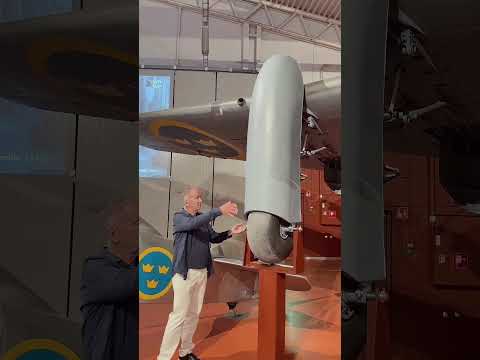
When analyzing historical military aircraft, few elements highlight the genius of aerospace engineering design quite like unconventional mechanical solutions. A standout example from 20th-century aviation is the Swedish Saab 17—a single-engine reconnaissance bomber renowned for its remarkably clever landing gear mechanism.
The Saab 17’s Dual-Purpose Landing Gear
First flown in 1940, the Saab 17 presented its design team with a classic challenge: creating a rugged, high-performing aircraft capable of executing precision dive-bombing missions. To meet these demands without compromising speed or adding excessive weight, Swedish engineers developed a unique main landing gear that retracted backward into large, streamlined fairings beneath the wings.
What made this design truly ingenious was its dual functionality. When extended during flight, the massive landing gear covers acted as highly effective dive brakes. By repurposing a necessary landing component into an aerodynamic decelerator, the engineers eliminated the need for a separate dive-brake system—saving critical weight and preserving valuable wing space.
Conceptual Trade-Offs in Aircraft Development
In classic aerospace engineering design, every component must justify its structural weight, drag penalty, and mechanical complexity. The Saab 17 illustrates a foundational principle often emphasized in classic texts like Daniel P. Raymer’s Aircraft Design: A Conceptual Approach: the most elegant solutions frequently come from multi-functional integration.
Key takeaways from this design approach include: - Weight Efficiency: Merging the landing gear and dive brake systems reduced total airframe weight. - Aerodynamic Balancing: Fully fairing the gear minimized parasitic drag in cruise flight while delivering necessary resistance during steep dives. - System Simplification: Fewer isolated actuators meant lower mechanical failure risks and easier field maintenance.
Why Historical Solutions Still Matter
While modern aviation relies heavily on advanced composites, stealth geometry, and automated fly-by-wire flight controls, the core trade-offs of performance, weight, and drag remain identical. Studying creative historical solutions like the Saab 17’s landing gear fairings provides timeless lessons in practical problem-solving. Decades later, it serves as a fascinating reference point for students and professionals looking to deepen their practical knowledge of aerospace engineering design.


