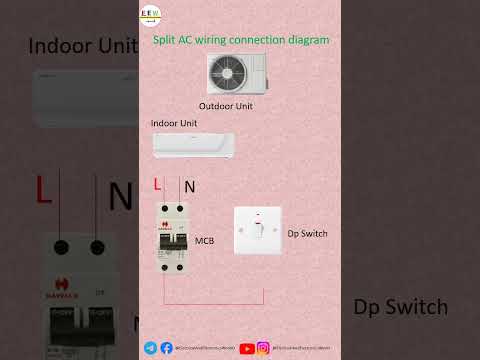
Installing a split air conditioner requires a clear understanding of electrical connections to ensure safety, efficiency, and system longevity. Whether you are a HVAC technician or a hands-on enthusiast, learning to read a proper electrical engineering schematic is the foundation of any successful installation. This step-by-step guide breaks down the essential wiring connections between the indoor and outdoor units of a split AC system.
Understanding the Split AC Electrical Layout
A split air conditioner consists of two primary components: the indoor evaporator unit and the outdoor condenser unit. These units must communicate seamlessly through interconnecting cables that transmit both control signals and electrical power.
Before touching any physical wires, referring to an accurate electrical engineering schematic helps you identify key components such as terminal blocks, contactors, capacitors, ground points, and main power inputs. Misconnecting phase or signal wires can cause equipment malfunction, short circuits, or irreversible damage to the inverter board.
Step-by-Step Wiring Process
1. Main Power Connection
The primary power supply connects directly to either the indoor or outdoor unit, depending on the manufacturer’s design. Ensure the circuit breaker is completely turned off before connecting the Line (L), Neutral (N), and Ground (G) wires to the dedicated main terminal block.
2. Interconnecting Indoor and Outdoor Units
A multi-core cable runs between the indoor and outdoor units. Terminals are typically numbered or color-coded (e.g., L, N, 1, 2, or 3). Match the terminals directly from the indoor unit to the corresponding terminals on the outdoor unit: * Terminal L & N: Supplies operational power. * Terminal 1/Communication Wire: Transmits signals between the indoor control board and the outdoor compressor/fan relay. * Ground Wire: Connects the metal chassis of both units to earth ground.
3. Safety and Grounding
Never skip the earthing connection. Proper grounding protects users from potential electrical shocks and shields sensitive electronic microcontrollers from voltage surges.
Crucial Safety Tips and Best Practices
- Always Cut the Power: Verify with a voltage tester that no live current is present before handling exposed wiring.
- Use Correct Wire Gauge: Ensure the wiring thickness matches the amperage requirements of your AC unit.
- Double-Check Your Connections: Always compare your physical wiring against the manufacturer's provided electrical engineering schematic prior to turning on the main power breaker.
By taking a systematic approach and carefully following the circuit diagram, you can ensure a reliable, safe, and efficient split AC installation every time.


