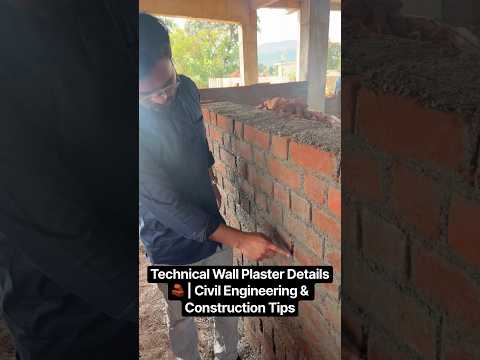
Wall plastering is often viewed merely as a cosmetic finish designed to make surfaces look presentable. However, in civil engineering, plastering serves a crucial functional purpose: protecting masonry from environmental wear, moisture ingress, and structural deterioration. When executing construction projects, relying on accurate engineering technical data is critical for achieving both long-term structural integrity and a flawless aesthetic finish.
Essential Mix Ratios and Layer Thickness
A successful plastering job begins with the correct material proportions and dimensional accuracy. For internal walls, a cement-to-sand ratio of 1:4 or 1:6 is typically specified, depending on the surface exposure and project specifications. External walls, which face harsher weather conditions, often require a two-coat system or waterproofing additives to prevent moisture infiltration.
Standard guidelines suggest a plaster thickness of 12 mm for smooth brick surfaces and 15 mm to 20 mm for uneven blockwork or rough concrete surfaces. Adhering to precise engineering technical data regarding mix design and layer thickness ensures the mortar maintains optimal bond strength, workability, and crack resistance.
Surface Preparation and Curing Protocols
The quality of plaster application depends heavily on proper site preparation and rigorous post-application care:
- Surface Hacking and Cleaning: Concrete columns and beams must be properly hacked (roughened) to create a strong mechanical bond. Dust, oil, and loose particles must be washed off before applying the mortar coat.
- Pre-Wetting the Substrate: Masonry units must be adequately saturated with water prior to plastering. This prevents the dry bricks from absorbing moisture from the fresh plaster, which can weaken the final strength.
- Controlled Curing: Curing is vital for hydration. Plastered surfaces should be kept continuously moist for a minimum of 7 to 10 days to reach maximum compressive strength and prevent surface crazing.
Conclusion
Neglecting technical details during the plastering phase often leads to costly defects such as efflorescence, hollowness, and shrinkage cracks. By leveraging reliable engineering technical data throughout the preparation, mixing, and curing stages, civil engineers and contractors can guarantee durable, high-quality walls that stand the test of time.


