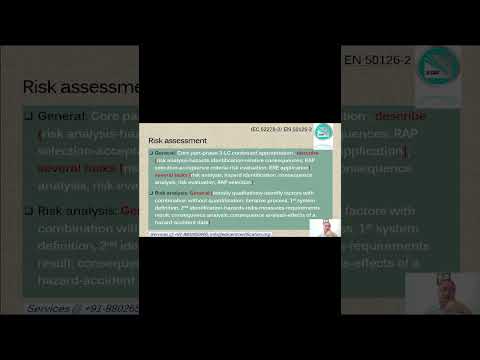
In modern infrastructure, few sectors demand as much precision and reliability as the railway industry. Whether designing complex signal networks or deploying high-speed rolling stock, adhering to rigorous quality engineering standards is essential for safeguarding passenger welfare and operational efficiency. Central to achieving this level of safety is a systematic approach to general risk assessment and analysis.
Understanding Risk Assessment in Railway Applications
Risk assessment is the cornerstone of system safety engineering. In the rail industry, international standard EN 50126 serves as the definitive framework for RAMS (Reliability, Availability, Maintainability, and Safety). It provides engineers and safety professionals with a structured methodology to identify hazards, estimate associated risks, and implement effective mitigations throughout the system lifecycle.
By embedding established quality engineering standards directly into early-stage risk analysis, engineering teams can detect potential failure modes long before they manifest in real-world operations. This proactive approach significantly reduces costly redesigns and ensures seamless compliance with international safety regulations.
Key Phases of General Risk Analysis
Executing a thorough risk assessment involves several critical steps:
- Hazard Identification: Pinpointing technical, operational, and environmental factors that could cause harm or system disruption.
- Risk Estimation: Analyzing the frequency of occurrence alongside the severity of potential consequences.
- Risk Evaluation: Determining whether estimated risk levels are acceptable or if safety interventions are required.
- Risk Mitigation & Hazard Control: Implementing physical safeguards, redundancy, or updated operational procedures to reduce risk to an acceptable level.
When these phases are aligned with proven quality engineering standards, organizations can build robust safety cases that satisfy both regulatory bodies and end-users.
Building Expertise Through Training and Certification
As railway systems become increasingly automated and complex, the demand for certified safety professionals continues to grow. Organization-wide commitment to continuous learning—through specialized training, advisory services, and certification—is crucial for maintaining high safety benchmarks.
Ultimately, mastering general risk assessment within standards like EN 50126 is not just a regulatory obligation; it is a strategic advantage. By prioritizing high-quality engineering methodologies, organizations can build resilient, safe, and future-ready railway networks.


