The Ultimate Motorcycle Fuse Guide: Bridging Electrical Systems and Engineering IT
This article provides an in-depth exploration of Engineering IT, covering foundational concepts, practical applications, and engineering insights.
Modern motorcycles are far more than mere mechanical machines; they are sophisticated networks of electronics, sensors, and computational units. Whether you are a dedicated rider, a hands-on mechanic, or an Engineering IT professional fascinated by smart automotive electronics, understanding your motorcycle's electrical protection system is crucial. At the heart of this intricate network lies a tiny yet indispensable component: the electrical fuse.
Why Fuse Ratings Matter
A fuse acts as the primary safety barrier against electrical overloads, short circuits, and potential fire hazards. Each electronic circuit in a motorcycle—ranging from simple headlights and turn signals to complex Engine Control Units (ECUs)—is designed to draw a specific amount of electrical current measured in Amperes (Amps). If a circuit draws more current than it can handle, the fuse filament melts, instantly cutting off power to prevent damage.
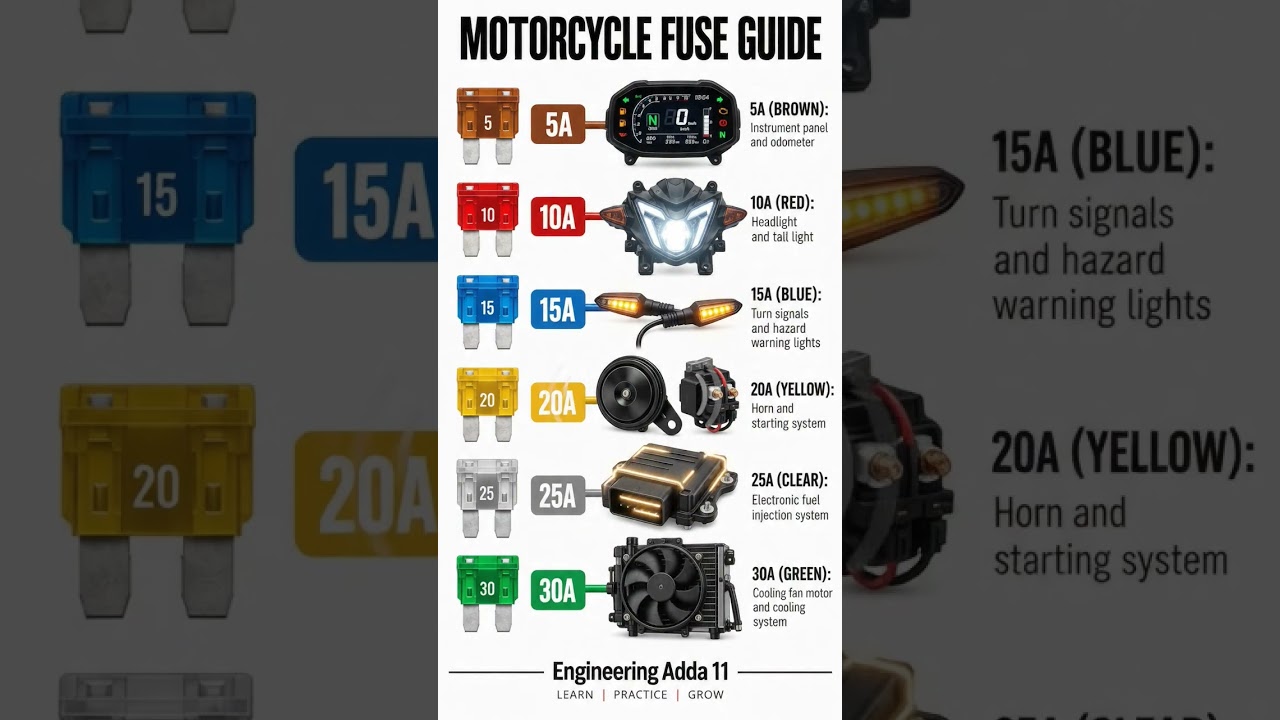
Fuses are standardized and color-coded based on their current capacities:
- 5A to 7.5A (Tan/Brown): Designed for low-power circuits such as LED indicators, tail lights, and delicate digital sensors.
- 10A to 15A (Red/Blue): Protects medium-draw components including main headlights, horns, and cooling fans.
- 20A to 30A (Yellow/Green): Reserved for high-draw systems like main power relays, charging circuits, and ignition modules.
Inserting a fuse with an incorrect rating can lead to catastrophic failures, potentially destroying sensitive hardware integrated with modern Engineering IT architecture.
Step-by-Step Fuse Troubleshooting
When an electronic component on your bike suddenly stops functioning, a blown fuse is usually the primary suspect. Here is how to handle it safely:
- Locate the Fuse Box: Consult your owner's manual. The main fuse box is typically positioned beneath the seat or behind side fairings.
- Inspect the Filament: Pull out the suspected fuse and hold it up to a light source. If the metal strip inside is broken or charred, the fuse is blown.
- Replace with Precision: Always replace the blown fuse with a new one that matches the exact recommended amperage rating. Never bypass a fuse or use a higher rating as a quick fix.
Final Thoughts
Mastering motorcycle fuse ratings and their respective functions ensures your bike remains safe, reliable, and road-ready. For enthusiasts bridging the gap between mechanical hardware and modern Engineering IT, understanding foundational electrical safety is essential for effective diagnostic work and long-term vehicle maintenance.


