Showing posts with label Aerospace Engineering. Show all posts

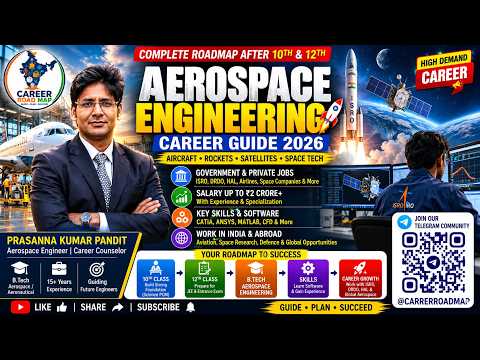
How to Build a Successful Career in Aerospace Engineering Design: Scope, Courses, and Salary Guide

...

Have you ever dreamed of designing futuristic aircraft, high-speed rockets, or interplanetary satellites? Aerospace engineering is one of the most dynamic, high-tech, and rewarding fields in the world today. As technology accelerates toward deeper space exploration and sustainable aviation, mastering aerospace engineering design has become a vital gateway to an extraordinary career.

If you are looking to turn your passion for flight and technology into a reality, here is a comprehensive guide on how to become an aerospace engineer, along with the courses, salary expectations, and career scope for 2026 and beyond.

What is Aerospace Engineering?

Aerospace engineering is the primary branch of engineering concerned with the development, testing, and production of aircraft, spacecraft, and related systems. It is divided into two overlapping branches:

  • Aeronautical Engineering: Focuses on aircraft operating within Earth's atmosphere (airplanes, helicopters, drones).
  • Astronautical Engineering: Focuses on spacecraft operating outside Earth's atmosphere (rockets, satellites, space stations).

At its core, expertise in aerospace engineering design enables professionals to build safer, more aerodynamic, and fuel-efficient vehicles that push the boundaries of human reach.

Required Qualifications and Top Courses

To start your journey in this field, you must follow a structured educational path:

  1. High School Foundation: Focus heavily on Physics, Chemistry, and Advanced Mathematics during your secondary education.
  2. Undergraduate Degree: Pursue a Bachelor’s degree (B.Tech / B.E. / B.S.) in Aerospace Engineering, Aeronautical Engineering, or Mechanical Engineering.
  3. Specialized Skills: Develop proficiency in programming languages (like Python or MATLAB) and industry-standard modeling software. Hands-on exposure to 3D modeling and computational fluid dynamics (CFD) is critical for modern aerospace engineering design projects.
  4. Postgraduate Studies (Optional): A Master's degree (M.Tech / M.S.) or Ph.D. allows you to specialize in propulsion, avionics, structural analysis, or space robotics.

Career Scope and Salary Insights

The global demand for skilled aerospace engineers is rising fast. Major space agencies (like NASA and ISRO), private space giants (like SpaceX and Blue Origin), and commercial aviation leaders (like Boeing and Airbus) are actively hiring top talent.

  • Entry-Level Salary: Fresh graduates can expect lucrative starting salaries, depending on the location, university prestige, and practical technical skills.
  • Mid to Senior-Level Salary: Experienced professionals specializing in system design, propulsion, or flight software command top-tier compensation packages worldwide.

Conclusion

A career in aerospace engineering offers more than just a good paycheck—it provides the opportunity to shape the future of transportation and human exploration. By building a strong academic foundation and mastering technical design tools today, you can position yourself at the forefront of aerospace innovation.

Streamlining Aerospace Engineering Design: Powerful Calculations in Your Pocket

...

In the fast-paced world of modern technology, efficiency and precision are paramount. Whether you are calculating structural load distribution or sizing complex wiring systems, aerospace engineering design requires absolute precision and rapid problem-solving capabilities. Traditional workflows often tie engineers to heavy, clutter-filled spreadsheets, but today's fast-moving industry demands faster, mobile-first solutions.

Precision Calculations Beyond Spreadsheets

Spreadsheets have long been the default standard for performing structural beam checks, material analysis, and circuit sizing. However, relying solely on desktop software can slow down real-time decision-making, especially during hangar inspections, test site visits, or rapid prototyping sessions. Moving away from clunky spreadsheets allows engineers to perform critical checks directly on-site, revolutionizing modern aerospace engineering design workflows.

By utilizing dedicated mobile calculation tools, professionals can instantly evaluate stress vectors, verify mix tolerances, and size electrical cables in seconds. Having these specialized formulas in your pocket ensures that preliminary validations are accurate, instantly accessible, and less prone to manual spreadsheet formatting errors.

Key Benefits for On-the-Go Engineering

Mobile-optimized engineering tools bring extreme versatility directly to your fingertips. Key advantages include:

  • Instant Structural Analysis: Quickly evaluate bending moments, load distributions, and beam deflections on the spot.
  • Circuit and Cable Sizing: Safely determine wire gauges, resistance levels, and power drops for complex onboard electrical systems.
  • Seamless Field Verification: Execute critical formula checks directly on the manufacturing floor or test rig without needing a laptop workstation.

Elevating Modern Engineering Workflows

As aerospace systems become more advanced, reducing friction in daily mathematical tasks is essential. Embracing smart, mobile engineering tools is the logical next step for modern aerospace engineering design professionals who want to maximize daily productivity without sacrificing mathematical accuracy. Ditch the cumbersome spreadsheets and empower your workflow with instant, dependable answers right from your mobile device.

Stopping a 60,000lb Jet: The Power of Engineering IT and Precision Mechanics

...

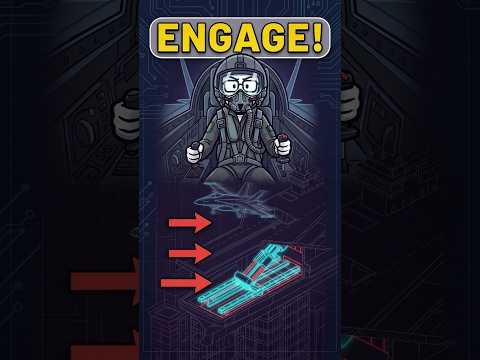
Imagine hurtling toward a steel deck in the middle of the ocean at 150 miles per hour. You are piloting a 30-ton fighter jet, and you have less than 300 feet to come to a complete dead stop. Under normal circumstances, a jet of this magnitude requires nearly 2,300 feet of runway to land safely. Reducing that distance by almost 90% isn't just a feat of bravery—it is a masterpiece of modern physics and sophisticated technology.

The Physics of the Impossible Stop

The primary challenge of landing on an aircraft carrier is the dissipation of kinetic energy. When a 60,000lb jet hits the deck, it carries a terrifying amount of momentum. To stop it, carriers utilize an "arresting gear" system. This consists of high-strength, braided steel wires stretched across the deck, connected to massive hydraulic engines below.

As the aircraft's tailhook snags one of these wires, the hydraulic system absorbs the energy, pulling the plane to a halt in approximately two seconds. However, the tension must be perfect. Too much tension and the hook rips off the plane; too little, and the jet plunges into the ocean.

The Role of Engineering IT in Modern Aviation

While the physical cables do the heavy lifting, the intelligence behind the system is driven by Engineering IT. In modern carrier operations, the transition from purely mechanical systems to digital oversight has revolutionized safety. Advanced software and sensor arrays now monitor the weight and approach speed of incoming aircraft in real-time.

By integrating Engineering IT into the flight deck’s infrastructure, crews can precisely calibrate the arresting gear for different aircraft types. This digital integration ensures that the mechanical components are under the exact amount of pressure required for each unique landing, significantly reducing the margin of error and hardware fatigue.

Where Code Meets Cables

The evolution of these systems continues with the Advanced Arresting Gear (AAG). Unlike the older hydraulic systems, the AAG uses electric motors and digital water brakes. This shift allows for a broader range of aircraft to be serviced, from light drones to heavy manned fighters. This level of versatility is made possible through dedicated Engineering IT frameworks that manage the complex algorithms required to control electromagnetic resistance.

Conclusion

Stopping a 60,000lb jet on a 300-foot runway is a symphony of mechanical strength and digital precision. It serves as a reminder that in the world of high-stakes engineering, the most impressive feats are often achieved where heavy-duty hardware meets intelligent software. Without the constant evolution of technology, the aircraft carrier would remain a theoretical impossibility rather than a cornerstone of modern naval power.