Showing posts with label Industrial Manufacturing. Show all posts

Modernizing Infrastructure: How Popular Pipes Group Integrates Engineering IT

...
engineering information technology
Modernizing Infrastructure: How Popular Pipes Group Integrates Engineering IT

Modernizing Infrastructure: How Popular Pipes Group Integrates Engineering IT

This article provides an in-depth exploration of Engineering IT, covering foundational concepts, practical applications, and engineering insights.

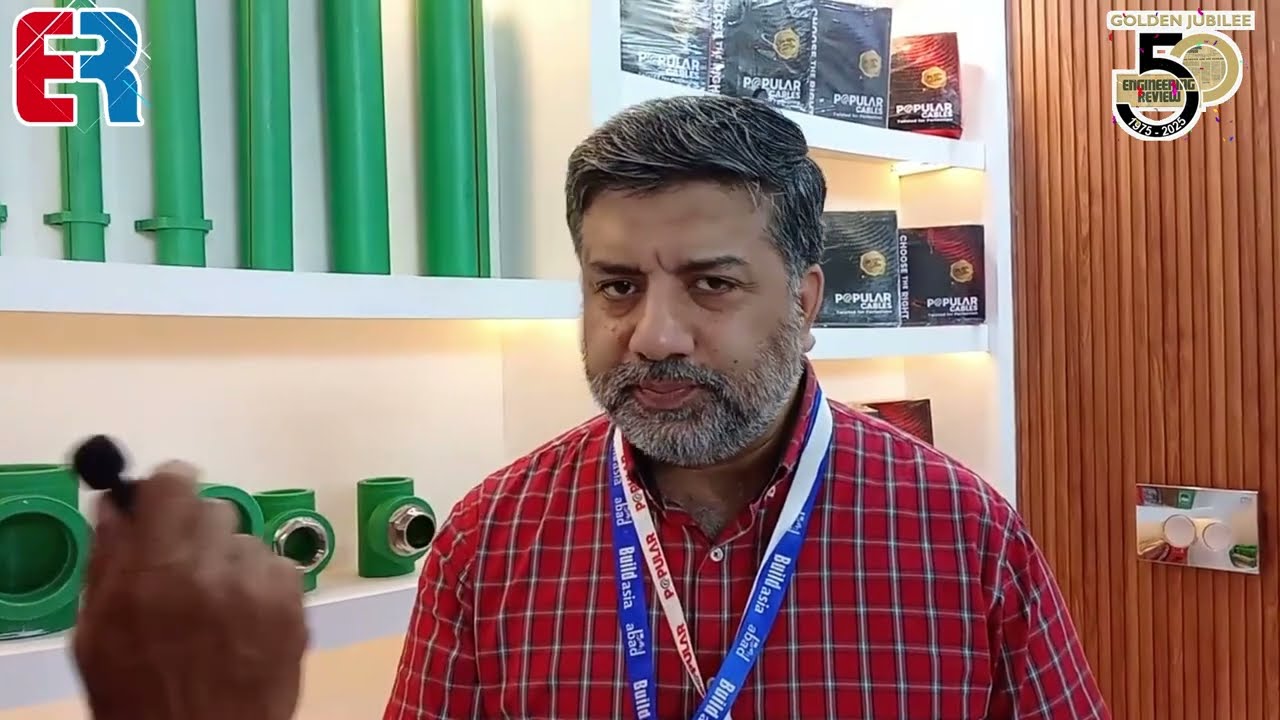
At the recent Build Asia exhibition in Lahore, industry leaders gathered to showcase the latest advancements shaping modern construction and industrial development. In an exclusive feature by Engineering Review, Ahmad Zeeshan from Popular Pipes Group of Industries shared key insights into how the company is driving innovation across the sector.

Innovating Pipe Manufacturing for Modern Needs

Popular Pipes Group of Industries has long been recognized as a trusted manufacturer delivering high-performance piping solutions for residential, commercial, and industrial applications. As urban infrastructure demands grow increasingly complex, the company continues to pioneer durable and cost-effective manufacturing processes. By modernizing production lines and maintaining stringent quality standards, Popular Pipes ensures that its product range meets exact industrial requirements.

Bridging Industrial Manufacturing and Technology

A major theme during the Build Asia showcase was the digital transformation of traditional manufacturing workflows. Today, the implementation of Engineering IT plays a vital role in streamlining factory operations, optimizing supply chain management, and ensuring precision quality control. Advanced digital systems allow engineers to analyze real-time data, improve structural durability, and minimize material waste during manufacturing.

By embedding smart Engineering IT frameworks into their daily processes, forward-thinking companies like Popular Pipes Group are not only improving internal operational efficiency but also elevating product safety and reliability for large-scale infrastructure projects.

Shaping the Future of Construction Excellence

As building standards evolve, the demand for high-spec, reliable piping solutions will continue to rise. Events like Build Asia highlight the critical need for industrial leaders to embrace modern technological strategies. Through visionary leadership and a ongoing commitment to digital integration, Popular Pipes Group of Industries remains at the forefront of the industry, proving that the future of construction lies in the seamless blending of robust engineering and smart technology.

Visual Insights & Illustrations

Engineering IT
Engineering IT
Engineering IT

How Welding Metallurgy Ensures Stronger Joints

...

In the world of construction and manufacturing, the strength of a structure is only as good as its weakest weld. Understanding welding metallurgy is not just for scientists; it is the fundamental key to creating joints that can withstand immense pressure and time.

The Science Behind the Spark

Welding is more than just melting two pieces of metal together. It is a complex metallurgical process that involves rapid heating, chemical reactions, and controlled cooling. When we talk about stronger joints, we are actually discussing the manipulation of the metal's internal microstructure.

1. The Heat Affected Zone (HAZ)

The HAZ is the area of the base metal that did not melt but had its microstructure altered by the heat. Proper metallurgy management ensures that this zone doesn't become brittle. By controlling the heat input, engineers can prevent "cold cracking" and ensure the area remains ductile and tough.

2. Grain Refinement for Maximum Strength

During the cooling phase, the atoms in the molten metal arrange themselves into crystalline structures called "grains." Metallurgical engineering focuses on achieving a fine grain structure. Generally, finer grains result in a higher yield strength and better impact resistance for the welded joint.

3. Matching Filler Metals

A critical part of welding metallurgy is selecting the right filler material. It must be chemically compatible with the base metals to avoid impurities or "inclusions" that could lead to structural failure. When the chemistry matches perfectly, the weld becomes an integral part of the metal, often stronger than the parent material itself.

Why It Matters for Your Projects

  • Durability: Prevents stress corrosion cracking over time.
  • Safety: Ensures the structural integrity of bridges, pressure vessels, and skyscrapers.
  • Cost-Efficiency: Reduces the need for expensive repairs or re-welding due to joint failure.
"Welding metallurgy is the bridge between a simple bond and an unbreakable connection."

Conclusion

By understanding the thermal cycles and chemical properties of metals, we can move beyond basic welding to precision metallurgical bonding. This ensures that every joint is optimized for maximum performance and long-term reliability.

Welding Metallurgy, Steel Structure, Engineering, Welding Tips, Material Science, Industrial Manufacturing, Stronger Joints

Industrial Riveting Technology in Modern Engineering

...

In the landscape of modern engineering, the strength and durability of structural joints are paramount. While welding and bolting are common, industrial riveting technology remains a cornerstone in sectors demanding high vibration resistance and permanent fastening solutions.

The Evolution of Riveting in Heavy Industry

Traditional hot riveting has paved the way for advanced cold riveting techniques and automated systems. Today, engineers prioritize riveting for its ability to join dissimilar materials—such as aluminum to carbon fiber—without the thermal stress associated with welding.

Key Benefits of Modern Riveting

  • Vibration Resistance: Unlike bolts, rivets do not loosen under constant mechanical stress.
  • Material Versatility: Ideal for bonding metals, plastics, and composite materials.
  • Structural Integrity: Provides a uniform clamping force across the entire joint.

Types of Rivets Used in Modern Manufacturing

Choosing the right fastener is critical for industrial efficiency. Here are the most prevalent types used today:

Rivet Type Primary Application
Solid Rivets Aircraft structures and bridge construction.
Blind (Pop) Rivets Applications with access to only one side of the workpiece.
Self-Piercing Rivets Automotive body-in-white assembly.

The Future: Automated Riveting Systems

The integration of Robotic Process Automation (RPA) in riveting has revolutionized assembly lines. High-speed, automated riveting tools ensure precision, reduce human error, and significantly increase production throughput in the aerospace and automotive industries.

Conclusion

As engineering demands become more complex, riveting technology continues to evolve. By combining traditional reliability with modern automation, it remains an essential process for creating the world’s most robust structures.

Engineering, Riveting Technology, Industrial Manufacturing, Fastening Solutions, Modern Construction, Aerospace Engineering, Automotive Assembly

Why Metallurgy Is the Backbone of Heavy Machinery

...

In the world of industrial manufacturing, the strength of any machine is only as good as the materials used to build it. Metallurgy, the science of extracting and processing metals, serves as the invisible foundation that allows heavy machinery to operate under extreme conditions. Without advanced metallurgical techniques, the massive excavators, turbines, and industrial presses we rely on today would simply fail.

1. Enhancing Structural Integrity and Durability

Heavy machinery operates under immense pressure and constant friction. Through specific metallurgical processes like heat treatment and alloying, engineers can alter the physical properties of metals. This ensures that components such as gears and crankshafts possess the necessary hardness to resist wear while maintaining the toughness to avoid brittle fractures.

2. The Power of Specialized Alloys

Pure metals rarely meet the demands of heavy industry. Metallurgy allows for the creation of high-performance alloys. By combining iron with elements like chromium, nickel, or molybdenum, manufacturers create steel that is resistant to corrosion, high temperatures, and chemical erosion. This is crucial for machinery used in mining, offshore drilling, and aerospace.

3. Precision Engineering for Safety

Safety is paramount in heavy industries. Metallurgy provides the tools for non-destructive testing (NDT) and microscopic analysis, ensuring that there are no internal defects in the metal. Understanding the crystalline structure of a metal helps in predicting when a part might fail, allowing for proactive maintenance and preventing catastrophic industrial accidents.

"Metallurgy is not just about melting metal; it is about engineering the molecular soul of modern industry."

Conclusion

From the smallest bolt to the largest hydraulic cylinder, metallurgy dictates the performance, safety, and lifespan of heavy machinery. As we move toward more sustainable and efficient industrial goals, the role of material science and metallurgy remains the definitive backbone of technological progress.

Metallurgy, Heavy Machinery, Engineering, Industrial Manufacturing, Steel & Alloys, Material Science, Mechanical Engineering

Industrial Casting Defects and Their Root Causes

...

In the world of metal manufacturing, achieving a perfect pour is the ultimate goal. However, industrial casting defects are often unavoidable without a deep understanding of their origins. Identifying these flaws early is crucial for reducing scrap rates and ensuring structural integrity.

Common Types of Casting Defects and Root Causes

Casting defects are generally classified into five main categories. Understanding these helps in troubleshooting the foundry process effectively.

1. Gas Porosity

Gas porosity occurs when the metal traps gas (air, nitrogen, or hydrogen) during the pouring process. As the metal solidifies, small bubbles form inside the casting.

  • Root Causes: High moisture in sand, excessively high pouring temperature, or poor venting in the mold.

2. Shrinkage Defects

Shrinkage occurs because metals are less dense as a liquid than as a solid. This defect appears as jagged holes or "caves" within the cast.

  • Root Causes: Uneven solidification rates and inadequate feeder (riser) design that fails to provide molten metal during cooling.

3. Mold Material Defects

These are related to the sand mold itself. The most common is Cuts and Washes, where the molten metal erodes the mold surface.

  • Root Causes: Low strength of the molding sand or high velocity of the metal entering the gate.

4. Pouring Metal Defects

Cold Shuts and Misruns happen when the metal is too cold to fill the entire mold cavity before solidifying.

  • Root Causes: Low pouring temperature, slow pouring speed, or a gating system that is too thin.

How to Prevent Casting Defects

To minimize manufacturing defects, foundries should focus on:

  • Optimizing the Gating System design.
  • Maintaining consistent Pouring Temperatures.
  • Regular testing of Molding Sand properties.


Conclusion: Deep analysis of root causes is the first step toward zero-defect production in industrial casting.

Casting Defects, Industrial Manufacturing, Metallurgy, Quality Control, Foundry Process, Engineering, Root Cause Analysis

Industrial Metal Defects and How to Prevent Them

...

In the world of manufacturing, achieving perfection is a constant challenge. Industrial metal defects can lead to structural failures, increased costs, and safety hazards. Understanding these defects and implementing effective metal fabrication prevention strategies is essential for any high-quality production line.

Common Industrial Metal Defects

Metal defects typically occur during casting, welding, or forming. Here are the most prevalent issues faced by engineers today:

1. Porosity (Gas Holes)

Porosity is characterized by small bubbles or voids trapped within the metal. This usually happens when gas is absorbed into the molten metal and fails to escape before solidification.

  • Cause: Moisture on the metal surface or improper shielding gas flow.
  • Prevention: Ensure all materials are dry and clean before processing. Optimize gas flow rates in welding environments.

2. Cracks (Hot and Cold Cracking)

Cracking is perhaps the most dangerous industrial metal defect. Hot cracks occur during solidification, while cold cracks happen after the metal has cooled.

  • Cause: Excessive thermal stress or high levels of impurities like sulfur.
  • Prevention: Use proper pre-heating and post-heating treatments. Select high-quality alloys with low impurity levels.

3. Slag Inclusions

Non-metallic materials trapped in the weld metal or casting are known as slag inclusions. These weaken the overall structural integrity of the component.

  • Cause: Poor cleaning between welding passes or improper flux usage.
  • Prevention: Maintain rigorous cleaning standards and use the correct welding technique for the specific joint design.

How to Prevent Metal Defects in Production

Effective quality control in metallurgy requires a proactive approach. Beyond specific fixes, consider these general best practices:

  1. Regular Equipment Maintenance: Ensure all casting and welding machines are calibrated correctly.
  2. Environmental Control: Manage humidity and temperature in the workspace to prevent moisture-related defects.
  3. Advanced Testing: Utilize Non-Destructive Testing (NDT) such as X-ray or Ultrasonic testing to catch defects early.

Conclusion: Reducing industrial metal defects is a journey of continuous improvement. By understanding the root causes of porosity, cracks, and inclusions, manufacturers can significantly improve product lifespan and safety.

How Powder Metallurgy Expands Industrial Material Possibilities

...

In the evolving landscape of modern manufacturing, Powder Metallurgy (PM) has emerged as a transformative technology. By shifting from traditional casting and machining to a precision-based powder approach, industries are unlocking material possibilities that were once considered impossible.

What is Powder Metallurgy?

Powder Metallurgy is a metalworking process that involves three primary steps: powder production, blending, and compaction, followed by sintering. This process allows for the creation of complex shapes with high precision and minimal waste.

Expanding Material Possibilities

The true power of PM lies in its ability to create unique alloy combinations. Since the materials do not need to reach a full liquid state (unlike casting), engineers can combine metals and non-metals that are normally incompatible.

  • Unique Alloy Compositions: Create materials with specific thermal and electrical properties.
  • Controlled Porosity: Essential for self-lubricating bearings and advanced filtration systems.
  • Near-Net Shape Production: Reduces the need for secondary machining, saving time and resources.

Impact on Modern Industry

From automotive gears to aerospace components and medical implants, industrial material possibilities are expanding. PM allows for the mass production of high-strength, high-durability parts that meet the rigorous standards of today’s technology-driven world.

"Powder Metallurgy is not just a manufacturing method; it is a gateway to the next generation of high-performance materials."

Conclusion

As we look toward a more sustainable and efficient future, Powder Metallurgy stands at the forefront of material science innovation. By optimizing resource use and enabling complex geometries, it continues to push the boundaries of what is industrially possible.

Powder Metallurgy, Industrial Manufacturing, Material Science, Engineering, Metal Powders, Sintering, Technology, 3D Manufacturing

Why Surface Treatment Matters in Industrial Metal Products

...

In the world of industrial manufacturing, the quality of a metal product isn't just determined by its alloy composition or the precision of its cast. The real secret to longevity and performance lies on the surface. Surface treatment is a critical final step that defines how a metal component interacts with its environment.

1. Enhanced Corrosion Resistance

One of the primary reasons surface treatment matters is protection against oxidation. Without proper finishing, industrial metal products are highly susceptible to rust and chemical decay. Processes like galvanization or powder coating create a protective barrier that extends the lifespan of the product significantly, even in harsh conditions.

2. Improved Wear and Friction Properties

In machinery where metal parts are constantly moving, friction is the enemy. Surface treatments such as hard chrome plating or anodizing increase the surface hardness. This reduces wear and tear, meaning fewer replacements and lower maintenance costs for industrial operations.

3. Aesthetic Appeal and Paint Adhesion

Beyond functionality, the visual aspect is vital for many consumer-facing industrial products. Proper metal finishing ensures a smooth, professional look. Moreover, treatments like phosphating provide the perfect "key" for paint to bond to, preventing peeling and flaking over time.

4. Electrical Conductivity and Heat Resistance

In the electronics and aerospace sectors, surface treatment is used to either enhance or resist electrical conductivity. Specialized coatings can also provide a thermal barrier, allowing metal components to operate safely at extreme temperatures without losing structural integrity.

Conclusion

Investing in high-quality industrial surface treatment is not an optional luxury; it is a fundamental necessity. It ensures safety, enhances durability, and ultimately saves costs by preventing premature material failure. When performance is non-negotiable, the finish is just as important as the metal itself.

Surface Treatment, Metal Finishing, Industrial Manufacturing, Engineering, Corrosion Resistance, Metal Coating, Manufacturing Tips