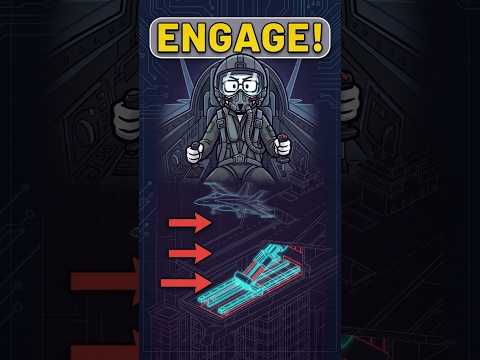
Imagine hurtling toward a steel deck in the middle of the ocean at 150 miles per hour. You are piloting a 30-ton fighter jet, and you have less than 300 feet to come to a complete dead stop. Under normal circumstances, a jet of this magnitude requires nearly 2,300 feet of runway to land safely. Reducing that distance by almost 90% isn't just a feat of bravery—it is a masterpiece of modern physics and sophisticated technology.
The Physics of the Impossible Stop
The primary challenge of landing on an aircraft carrier is the dissipation of kinetic energy. When a 60,000lb jet hits the deck, it carries a terrifying amount of momentum. To stop it, carriers utilize an "arresting gear" system. This consists of high-strength, braided steel wires stretched across the deck, connected to massive hydraulic engines below.
As the aircraft's tailhook snags one of these wires, the hydraulic system absorbs the energy, pulling the plane to a halt in approximately two seconds. However, the tension must be perfect. Too much tension and the hook rips off the plane; too little, and the jet plunges into the ocean.
The Role of Engineering IT in Modern Aviation
While the physical cables do the heavy lifting, the intelligence behind the system is driven by Engineering IT. In modern carrier operations, the transition from purely mechanical systems to digital oversight has revolutionized safety. Advanced software and sensor arrays now monitor the weight and approach speed of incoming aircraft in real-time.
By integrating Engineering IT into the flight deck’s infrastructure, crews can precisely calibrate the arresting gear for different aircraft types. This digital integration ensures that the mechanical components are under the exact amount of pressure required for each unique landing, significantly reducing the margin of error and hardware fatigue.
Where Code Meets Cables
The evolution of these systems continues with the Advanced Arresting Gear (AAG). Unlike the older hydraulic systems, the AAG uses electric motors and digital water brakes. This shift allows for a broader range of aircraft to be serviced, from light drones to heavy manned fighters. This level of versatility is made possible through dedicated Engineering IT frameworks that manage the complex algorithms required to control electromagnetic resistance.
Conclusion
Stopping a 60,000lb jet on a 300-foot runway is a symphony of mechanical strength and digital precision. It serves as a reminder that in the world of high-stakes engineering, the most impressive feats are often achieved where heavy-duty hardware meets intelligent software. Without the constant evolution of technology, the aircraft carrier would remain a theoretical impossibility rather than a cornerstone of modern naval power.


