Showing posts with label Artificial Intelligence. Show all posts

How AI Powers the Future: 3 Game-Changing Benefits for Every Smart Factory

...
engineering information technology
How AI Powers the Future: 3 Game-Changing Benefits for Every Smart Factory

How AI Powers the Future: 3 Game-Changing Benefits for Every Smart Factory

This article provides an in-depth exploration of Smart factory, covering foundational concepts, practical applications, and engineering insights.

The modern manufacturing landscape is undergoing a massive digital transformation. As companies strive to stay competitive in Industry 4.0, integrating Artificial Intelligence (AI) into a smart factory setup has shifted from a futuristic luxury to an essential operational strategy. AI-driven solutions equip manufacturers with unprecedented visibility and control over their entire production line.

Here are three key ways artificial intelligence is revolutionizing operations inside the modern smart factory.

1. Enhancing Production Precision

Precision is paramount in high-stakes manufacturing. Traditional quality control methods often rely on manual inspections, which can be time-consuming and subject to human error. AI-powered computer vision systems and machine learning models can inspect components at lightning speed on the assembly line. By detecting microscopic flaws invisible to the human eye, AI ensures that products consistently meet exact specifications, drastically reducing defect rates and scrap.

2. Identifying and Eliminating Operational Waste

Resource management, raw material usage, and energy consumption are major drivers of operational costs. AI algorithms excel at crunching complex operational datasets to uncover hidden inefficiencies across the plant floor. By tracking material workflows and power consumption in real time, AI flags where waste occurs and suggests actionable optimizations. This empowers facility managers to streamline processes, lower operational expenditures, and build more sustainable operations.

3. Predictive Maintenance to Flag Equipment Issues

Unplanned downtime can cost manufacturers thousands of dollars every hour. Instead of relying on rigid maintenance schedules or waiting for critical machinery to break down, AI provides a proactive alternative. By continuously analyzing data from IoT sensors—such as machine vibration, temperature, and acoustic signals—AI can detect subtle anomalies indicating wear and tear. It alerts engineers to potential failures long before a breakdown occurs, allowing teams to schedule targeted repairs during planned downtime.

Conclusion

Adopting AI is no longer just about automation; it is about intelligence, efficiency, and long-term resilience. Developing a tech-driven smart factory empowers manufacturers to boost production accuracy, minimize costly waste, and maintain seamless operational uptime.



🎬 Related Video Reference

How Unity AI Automates 3D CAD Data Preparation in Hours

...
engineering information technology
How Unity AI Automates 3D CAD Data Preparation in Hours

How Unity AI Automates 3D CAD Data Preparation in Hours

This article provides an in-depth exploration of CAD data, covering foundational concepts, practical applications, and engineering insights.

Preparing complex 3D assets for real-time applications, interactive simulations, or gaming has traditionally been a tedious, labor-intensive process. Designers and developers often spend days—or even weeks—fixing geometry, closing mesh gaps, and reducing polygon counts. Fortunately, Unity is revolutionizing this pipeline by introducing cutting-edge AI workflows designed to handle the heavy lifting for you.

What is Unity's AI-Powered CAD Workflow?

Unity’s new AI-driven capabilities allow creators to point intelligent agents directly at raw industrial files. The AI automatically imports, repairs, and optimizes your CAD data in a fraction of the time it used to take. What previously required days of manual editing can now be accomplished in just a few hours.

By leveraging machine learning, the system intelligent analyzes the geometry, detects structural flaws, and prepares the 3D model for immediate deployment in real-time engines.

Key Advantages of AI Automation for 3D Pipelines

  1. Automated Mesh Repair: Industrial CAD files frequently suffer from unstitched surfaces, inverted normals, or broken topology during export. Unity’s AI detects these flaws and automatically repairs them without human intervention.
  2. Smart Geometry Optimization: High-resolution CAD models contain millions of polygons that can crush real-time performance. The AI intelligent decimates the mesh, maintaining essential visual details while dramatically lowering polycounts.
  3. Seamless Engine Integration: Efficiently preparing CAD data bridges the gap between mechanical engineering design and interactive 3D experiences, such as digital twins, virtual reality (VR) training modules, and architectural visualizers.

The Future of 3D Asset Management

This advancement represents a major leap forward for developers, CAD engineers, and 3D generalists alike. By removing the technical bottleneck of file conversion and mesh cleanup, teams can focus their energy on creative interactive design rather than tedious data prep.

As real-time 3D environments become standard across industries—from automotive design to spatial computing—the ability to process massive CAD data sets effortlessly with AI will become an essential advantage for modern creators.


🎬 Related Video Reference

China’s Latest Open AI Model: Unlocking New Potential for Reverse Engineering Applications

...

The open-source artificial intelligence landscape has just witnessed a monumental shift. Tech giant Xiaomi recently stunned the global developer community by open-sourcing MiMo V2.6 Pro. This cutting-edge model quickly surged to the top of the Artificial Analysis leaderboard, effectively tying with heavyweights like Grok 4.7. This release signals a major leap forward for accessible, high-performance computing, opening up incredible new possibilities for code analysis, system auditing, and advanced reverse engineering applications.

A New Standard for Open-Source AI

For a long time, proprietary models maintained a firm monopoly on top-tier benchmark performance. Xiaomi’s MiMo V2.6 Pro fundamentally disrupts this trend by delivering enterprise-grade reasoning, coding, and problem-solving capabilities directly to the public. By securing a top spot on global leaderboards, it proves that open-weights AI can now match or even exceed closed-source alternatives. Developers around the world now have access to a tool capable of handling intricate logic, software synthesis, and complex data structures completely free of charge.

Transforming Code Analysis and Security

One of the most exciting capabilities of high-parameter open models is their ability to dissect complex codebases with unprecedented precision. Cybersecurity researchers and software developers can utilize MiMo V2.6 Pro to build highly specialized reverse engineering applications. Whether you are analyzing legacy systems, auditing compiled software for security vulnerabilities, or translating undocumented architecture, an AI model of this caliber drastically speeds up decompilation and logic-mapping tasks.

Furthermore, because MiMo V2.6 Pro is open source, organizations can run these workflows locally. This ensures that sensitive code analysis remains secure within internal environments, eliminating the data privacy risks associated with sending proprietary scripts to external cloud APIs.

The Future of Accessible Tech Innovation

Xiaomi's release of MiMo V2.6 Pro marks a crucial milestone in democratizing advanced technology. As engineers continue to integrate this open-source power into real-world reverse engineering applications, automated testing pipelines, and developer tooling, the gap between open and proprietary AI will continue to close. The era of elite open-source AI has officially arrived, giving tech innovators the power to analyze, inspect, and build software faster than ever before.

Mastering Regulatory Compliance: How an AI-Powered PLM System Keeps You Ahead

...
engineering information technology
Mastering Regulatory Compliance: How an AI-Powered PLM System Keeps You Ahead

Mastering Regulatory Compliance: How an AI-Powered PLM System Keeps You Ahead

This article provides an in-depth exploration of PLM system, covering foundational concepts, practical applications, and engineering insights.

In today's fast-paced global market, regulatory frameworks are evolving at an unprecedented speed. Whether dealing with environmental standards, safety guidelines, or regional trade policies, a single regulatory update can impact hundreds of products, suppliers, and international markets. When these changes occur, can your business instantly identify affected areas and generate proof of compliance?

For many organizations, answering this question requires days—or even weeks—of manual data analysis. However, integrating artificial intelligence into your enterprise PLM system transforms this tedious task into an automated, error-free process.

The Hidden Cost of Manual Compliance Tracking

Navigating regulatory shifts without centralized visibility poses severe risks. Missing a new standard can lead to costly product recalls, supply chain disruptions, heavy fines, and severe brand damage. Traditional compliance tracking relies on disparate spreadsheets and disconnected databases, making it nearly impossible to quickly map regulatory updates across complex global supply networks.

Unleashing AI Agility with Certivo CORA

To eliminate these bottlenecks, industry leaders are turning to smart, AI-driven solutions like Certivo CORA by Birlasoft. By enhancing a traditional PLM system with advanced AI capabilities, organizations can automatically scan new regulations, instantly pinpoint affected component parts, and evaluate supplier readiness in real time.

Instead of searching through fragmented documentation, quality and regulatory teams gain immediate clarity on:
- Affected Products: Which SKUs require immediate engineering modifications or re-certification.
- Supplier Impact: Which vendors meet the updated standards and where vulnerabilities exist in the supply chain.
- Market Access: Which regional markets are temporarily restricted or cleared for product distribution.

Future-Proof Your Compliance Strategy

As global supply chains grow increasingly complex, relying on legacy compliance methods is no longer sustainable. Upgrading your core PLM system with AI intelligence not only ensures rapid audit readiness but also turns regulatory agility into a distinct competitive advantage. By proactively managing compliance, you can confidently launch products faster and safeguard your market presence worldwide.


🎬 Related Video Reference

Unlocking the Future of Manufacturing: Monish Gandhi on AI and Industry 4.0

...
engineering information technology
Unlocking the Future of Manufacturing: Monish Gandhi on AI and Industry 4.0

Unlocking the Future of Manufacturing: Monish Gandhi on AI and Industry 4.0

This article provides an in-depth exploration of Industry 4.0, covering foundational concepts, practical applications, and engineering insights.

The industrial landscape is undergoing a massive transformation, driven by digital technology, real-time data analytics, and advanced automation. In a featured episode of The Industry 4.0 Podcast with Grantek, host Grantek sat down with Monish Gandhi, Founder and CEO of Gradient Ascent AI, to discuss how artificial intelligence is reshaping shop floors and executive decision-making alike.

With over 15 years of operational experience, Monish brings a practical, grounded perspective on bridging the gap between complex AI systems and everyday manufacturing operations.

The Intersection of AI and Operational Excellence

For many manufacturers, integrating artificial intelligence into existing workflows can feel like a daunting task. However, as Monish highlights, the goal of modern technology is not to replace human expertise, but to augment it. By combining operational data with machine learning algorithms, industrial organizations can unlock actionable insights that dramatically improve yield, reduce unplanned downtime, and optimize resource usage.

This shift represents a crucial milestone in the Industry 4.0 movement, where connected machinery and intelligent software work together to build resilient, self-optimizing factories.

Overcoming Challenges in Digital Transformation

Transitioning to a modern, tech-driven enterprise requires more than just deploying new tools—it demands strategic foresight and a cultural shift. During the interview, Monish outlines critical strategies for success, including:

  • Data Quality and Readiness: Ensuring legacy systems effectively capture and structure shop-floor data.
  • Scalable Implementation: Starting with targeted, high-impact pilot projects before rolling solutions out globally.
  • Workforce Empowerment: Equipping operators and engineers with intuitive tools that enhance daily decision-making.

By tackling these foundational elements, manufacturing leaders can successfully execute their Industry 4.0 initiatives and secure a sustainable competitive advantage in an ever-changing market.

Watch the Full Discussion

Whether you are an operational executive, plant engineer, or technology strategist, this episode offers invaluable insights into the practical application of AI in industrial environments.

To explore Monish Gandhi's full expert analysis and discover actionable strategies for your facility, watch the full episode on YouTube.


🎬 Related Video Reference

Building the Future: How China’s BRICS AI Pledge Will Revolutionize the Smart Factory

...

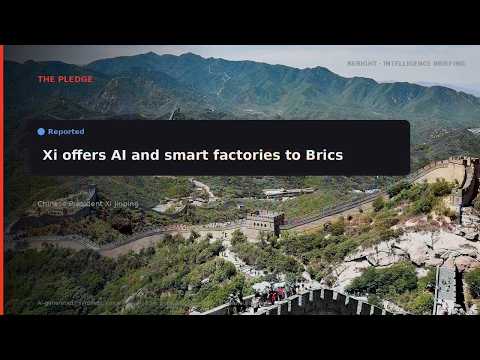
In a landmark move to accelerate global industrial transformation, Chinese President Xi Jinping recently pledged comprehensive support to BRICS nations in the fields of artificial intelligence (AI) and advanced technology. This strategic initiative aims to bridge the digital divide among emerging economies by integrating cutting-edge solutions into traditional manufacturing sectors. As part of this broad vision, China intends to share expertise, foster technological innovation, and help partner nations establish the foundation for a modern smart factory ecosystem.

Unlocking the Potential of AI in Industrial Production

The integration of artificial intelligence into industrial processes marks a critical shift toward higher efficiency, reduced operational costs, and enhanced output quality. By extending technical assistance, hardware, and infrastructure development, China's commitment empowers BRICS member states to upgrade their existing industrial bases.

Through machine learning algorithms, Internet of Things (IoT) sensors, and real-time data analytics, developing economies can rapidly transition from conventional labor-intensive assembly lines to data-driven operations. This technological leap is essential for any modern enterprise aiming to operate a competitive smart factory that can adapt seamlessly to global market demands.

Driving Sustainable Growth Across Emerging Markets

Beyond immediate technical upgrades, this collaborative effort aims to foster long-term, sustainable economic growth across the BRICS alliance. Access to advanced AI tools and smart manufacturing capabilities enables developing nations to optimize energy consumption, streamline supply chains, reduce industrial waste, and minimize overall environmental impact.

Furthermore, transferring knowledge and training local workforces to design, manage, and maintain a next-generation smart factory environment ensures that economic benefits remain localized and long-lasting. This shared expertise helps smaller or developing member nations build self-sustaining technological capabilities rather than relying permanently on foreign solutions.

A Shared Vision for Next-Generation Manufacturing

As global supply chains continue to evolve in response to technological advancements, international cooperation in deep-tech industries becomes increasingly vital. President Xi Jinping’s pledge represents a major step forward in standardizing digital manufacturing practices across emerging economies. By championing AI integration, cloud computing, and smart automation, China and its BRICS partners are actively laying the groundwork for an interconnected global manufacturing landscape—one driven by intelligence, efficiency, and shared economic prosperity.

GPT-6 Astra and the Future of AI: How It Impacts Data Engineering

...
engineering information technology
GPT-6 Astra and the Future of AI: How It Impacts Data Engineering

GPT-6 Astra and the Future of AI: How It Impacts Data Engineering

This article provides an in-depth exploration of Data engineering, covering foundational concepts, practical applications, and engineering insights.

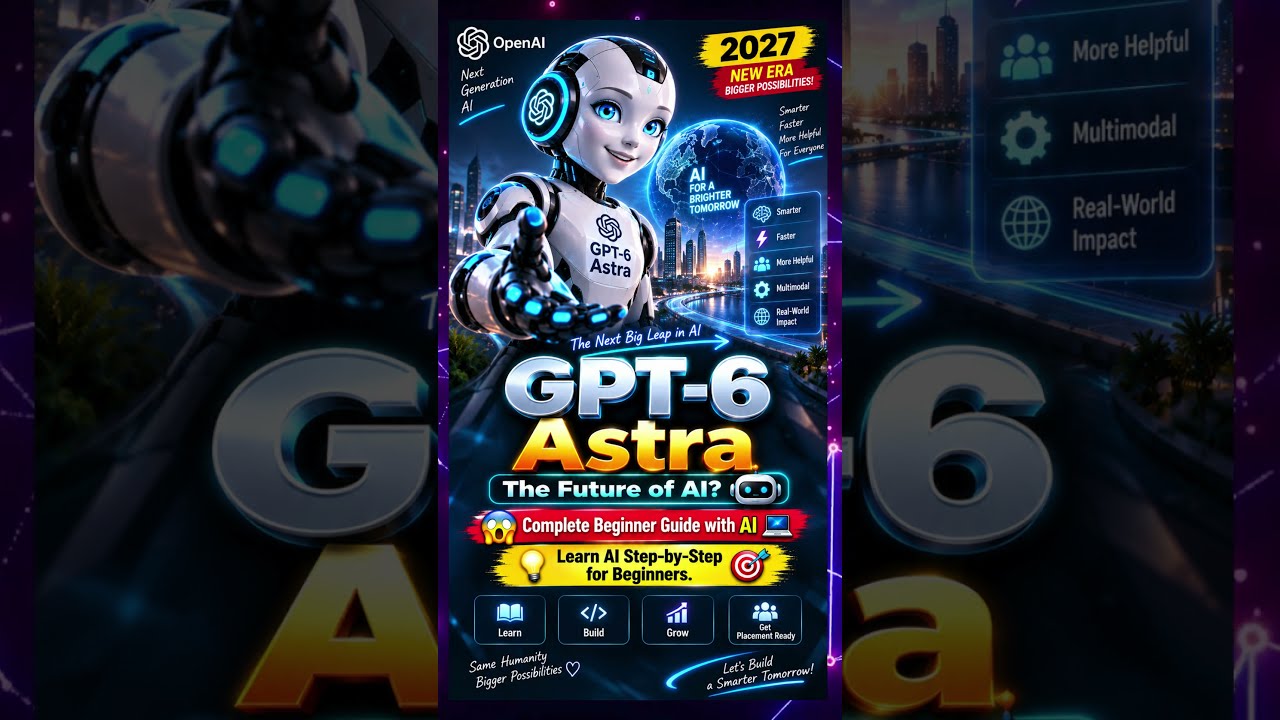
As artificial intelligence continues to evolve at a breakneck pace, speculation and excitement surrounding next-generation models like GPT-6 Astra are reaching new heights. Designed to push the boundaries of machine learning, autonomous reasoning, and multi-modal intelligence, GPT-6 Astra promises to redefine how industries handle information. Among the fields experiencing the most profound shift is data engineering, where advanced AI models are transforming how pipeline architectures, data flows, and analytical infrastructures are designed.

What is GPT-6 Astra?

GPT-6 Astra represents a conceptual leap in generative AI capabilities. Built on sophisticated deep learning frameworks, it moves beyond simple text generation toward proactive problem-solving, real-time code generation, and complex data processing. For technology professionals, understanding GPT-6 Astra is becoming essential for staying competitive in an increasingly automated tech landscape.

How GPT-6 Astra Impacts Tech Workflows and AI Jobs

The integration of next-gen AI models into corporate ecosystems is creating a surging demand for specialized roles. Rather than replacing human talent, tools like GPT-6 Astra act as powerful force multipliers for tech teams.

  • Automated Data Pipelines: Modern data engineering workflows can leverage GPT-6 Astra to clean, transform, and optimize massive datasets automatically, reducing manual overhead.
  • Intelligent Python Integration: Since Python remains the backbone of AI development, mastering Python alongside AI-driven automation equips professionals to build smarter, self-healing data systems.
  • New Career Opportunities: From AI systems architecture to specialized data modeling, the emergence of models like GPT-6 Astra is creating high-paying career paths for forward-thinking tech enthusiasts.

Preparing for the AI-Driven Future

To thrive in the era of GPT-6 Astra, professionals must continuously upskill. Combining core technical skills—such as Python programming and modern data engineering practices—with a deep understanding of advanced AI tools will ensure you remain indispensable. Whether you are a beginner looking to enter the IT industry or an experienced developer, the arrival of GPT-6 Astra signals a bright, dynamic future for technology careers.


🎬 Related Video Reference

Unlocking Zero Downtime: How Industry 4.0 Transforms Predictive Maintenance

...
engineering information technology
Unlocking Zero Downtime: How Industry 4.0 Transforms Predictive Maintenance

Unlocking Zero Downtime: How Industry 4.0 Transforms Predictive Maintenance

This article provides an in-depth exploration of Industry 4.0, covering foundational concepts, practical applications, and engineering insights.

Imagine a factory floor where machines actively communicate their operational status, warning managers of an impending failure hours or even days before a breakdown occurs. Unplanned downtime costs manufacturers billions of dollars annually, yet many organizations still rely on outdated reactive maintenance strategies. Fortunately, the era of Industry 4.0 is fundamentally reshaping how industrial operations maintain asset health and optimize productivity.

The Power of Connected Industrial Data and AI/ML

To prevent costly operational halts, modern manufacturers must evolve beyond traditional scheduled maintenance. By deploying smart IoT sensors across industrial machinery, facilities can continuously capture real-time operational data—such as vibration, temperature, and pressure fluctuations.

When this connected industrial data is paired with advanced Artificial Intelligence (AI) and Machine Learning (ML) models, it unlocks powerful predictive insights. These intelligent algorithms learn the baseline behavior of each asset and identify subtle anomalies long before physical damage occurs. Consequently, maintenance teams can schedule targeted repairs precisely when needed, extending machinery lifespan and drastically reducing unexpected outages.

Edge Computing: Real-Time Insights at the Source

While cloud computing provides vast analytical power, critical machinery often requires split-second decision-making. This is where edge computing becomes indispensable. By processing sensor data directly on or near the equipment, edge systems eliminate latency, enabling AI models to trigger instant automated safeguards or alerts the moment an anomaly is detected.

Integrating edge computing with central cloud analytics creates a robust, highly responsive operational framework. Technicians no longer need to manually analyze massive streams of raw data; instead, they receive clear, actionable insights that keep the production line running smoothly.

Embracing the Next Generation of Smart Manufacturing

As highlighted by Prashant Kapadia, Chief Growth Officer at MachineAstro, uniting connected industrial data with AI/ML and edge computing represents a crucial pillar of Industry 4.0. Transitioning from reactive firefighting to intelligent predictive maintenance empowers businesses to maximize throughput and reduce overhead costs.

By harnessing the advanced tools of Industry 4.0, forward-thinking manufacturers can transform silent machinery into self-monitoring assets—making unexpected downtime a thing of the past.


🎬 Related Video Reference

Unlocking the Future: How AI and Robotics Are Driving Industry 4.0 Innovation

...
engineering information technology
Unlocking the Future: How AI and Robotics Are Driving Industry 4.0 Innovation

Unlocking the Future: How AI and Robotics Are Driving Industry 4.0 Innovation

This article provides an in-depth exploration of Industry 4.0, covering foundational concepts, practical applications, and engineering insights.

The modern technological landscape is undergoing a massive transformation. As global industries evolve, traditional manufacturing and automated processes are rapidly giving way to smart, interconnected ecosystems. At the center of this revolution is Industry 4.0, a paradigm shift where artificial intelligence, robotics, and data analytics converge to redefine efficiency and productivity across the globe. Initiatives like the five-day online workshop hosted by the ROBOTiX Club at NIT Raipur highlight just how critical these technologies have become for future engineers and industry leaders.

The Power of AI and Robotics Integration

In today’s competitive market, artificial intelligence and robotics no longer operate in isolation. Instead, they work in tandem to create intelligent systems capable of self-optimization, predictive maintenance, and real-time decision-making. By embedding machine learning algorithms into robotic hardware, smart factories can adapt to complex production lines with minimal human intervention. This powerful synergy serves as the foundational core of Industry 4.0, driving innovations across diverse sectors including automotive manufacturing, logistics, and healthcare.

Bridging the Gap Between Learning and Application

To thrive in a tech-driven world, aspiring professionals must look beyond theoretical knowledge and embrace practical application. Workshops focusing on cutting-edge fields offer valuable exposure to real-world industrial challenges. Participants gain direct insights into smart automation frameworks, IoT integration, and intelligent control systems that define modern engineering practices. Understanding these principles is essential for anyone looking to build scalable and resilient solutions for tomorrow’s smart infrastructure.

Preparing for a Smart, Connected Future

As automation tools continue to advance, the boundary between human oversight and machine autonomy will continue to blur. Adopting Industry 4.0 concepts is no longer merely an option for forward-thinking organizations—it is a necessity for long-term growth and sustainability. By actively engaging with continuous learning and emerging technologies, innovators and engineers can position themselves at the forefront of this industrial revolution, shaping a smarter and more connected world.

Visual Insights & Illustrations

Industry 4.0
Industry 4.0
Industry 4.0

Unlocking AI: How Prompt Engineering is Transforming Tech Engineering

...
engineering information technology
Unlocking AI: How Prompt Engineering is Transforming Tech Engineering

Unlocking AI: How Prompt Engineering is Transforming Tech Engineering

This article provides an in-depth exploration of Tech engineering, covering foundational concepts, practical applications, and engineering insights.

Artificial Intelligence seems to be everywhere these days, powering everything from conversational chatbots to creative image generators. But have you ever wondered how experts get AI to deliver exact, high-quality results? The secret lies in prompt engineering—a discipline that is quickly becoming a crucial aspect of modern tech engineering.

What Exactly Is Prompt Engineering?

At its core, prompt engineering is the art and science of communicating effectively with artificial intelligence. To understand how it works, imagine trying to teach a robot how to make a classic peanut butter sandwich.

If you simply tell the robot, "Make a sandwich," it might place an unopened jar of peanut butter on top of a whole loaf of bread. To get an actual sandwich, you must provide precise, step-by-step instructions: open the bread bag, take out two slices, open the jar, grab a butter knife, and spread the peanut butter evenly.

AI models operate on the exact same principle. They do not guess your intent; they respond to the clarity of your instructions. The better your prompt, the better the output.

The Role of Prompting in Modern Tech Engineering

For decades, building technology required writing thousands of lines of complex code. While traditional programming remains vital, the scope of tech engineering has expanded to include natural language logic. Today, developers use carefully structured prompts to guide AI through code generation, system architecture, and automated troubleshooting.

Prompt engineering bridges the gap between human creativity and machine capabilities. By mastering context, setting clear constraints, and specifying formats, professionals in tech engineering can solve complex problems in a fraction of the time.

Why You Should Learn Prompting Today

You do not need a computer science degree to benefit from prompt engineering. Whether you are generating reports, brainstorming creative ideas, or analyzing business data, knowing how to talk to AI gives you a massive efficiency boost.

As AI tools continue to reshape industries, prompt engineering will remain one of the most practical skills to learn. Start treating your AI prompts like a step-by-step recipe, and you will instantly unlock the full power of artificial intelligence!

Visual Insights & Illustrations

Tech engineering
Tech engineering
Tech engineering

Mastering Prompt Engineering: The Ultimate Guide for the Future of Engineering IT

...

In the rapidly evolving landscape of modern technology, the ability to communicate effectively with Artificial Intelligence has become a superpower. Whether you are a developer, a data analyst, or a student, understanding how to talk to AI models like ChatGPT is no longer optional—it is essential. As Engineering IT departments worldwide begin to integrate generative AI into their workflows, "Prompt Engineering" has emerged as the bridge between human intent and machine execution.

What is Prompt Engineering?

At its core, prompt engineering is the process of refining and optimizing inputs to get the highest quality outputs from AI models. It is more than just "chatting" with a bot; it is a structured discipline that involves understanding the underlying logic of Large Language Models (LLMs). For those working within Engineering IT, mastering this skill means being able to automate documentation, debug code faster, and generate complex architectural ideas with unprecedented speed.

The Anatomy of a Perfect Prompt

To move from basic queries to expert-level results, you need to understand the four pillars of a great prompt: 1. Context: Give the AI a persona. Tell it if it should act as a senior software engineer or a creative copywriter. 2. Task: Be specific about what you want it to do (e.g., "Write a Python script" vs. "Help me with code"). 3. Constraints: Define the boundaries. Mention what to avoid or what specific libraries to use. 4. Format: Specify the output style, whether it is a table, a bulleted list, or a block of code.

Why It Matters for Modern Professionals

The integration of AI into the workplace is accelerating. By learning prompt engineering, you are essentially learning how to program in natural language. This shift is revolutionizing how we approach problem-solving. By applying these techniques, you can significantly boost the efficiency of your Engineering IT projects, allowing you to focus on high-level strategy rather than repetitive manual tasks.

Conclusion: Start Your Journey Today

Prompt engineering is a journey of experimentation. The more you iterate and refine your instructions, the better the results will become. As AI continues to reshape the tech industry, those who can master the art of the prompt will be the ones leading the next wave of digital transformation. Start practicing today, and turn the power of AI into your most valuable professional asset.

Engineering IT

How AI is Revolutionizing Engineering IT: Essential Tips for Tech Professionals

...

Artificial Intelligence (AI) is no longer just a futuristic concept; it is an active driver of innovation across the modern technology landscape. For professionals working in Engineering IT, leveraging smart AI tips and tools is fast becoming the key to unlocking unprecedented efficiency and automating complex workflows. Whether you are managing cloud infrastructure, writing software, or optimizing system operations, AI can dramatically elevate your productivity.

Streamlining Workflows with Smart AI Tools

One of the greatest advantages of integrating artificial intelligence into modern Engineering IT operations is the seamless automation of repetitive tasks. AI-powered code assistants, automated testing tools, and predictive models allow tech specialists to spend less time on manual troubleshooting and more time on high-level innovation.

To make the most of AI in your daily technical routine, consider implementing these practical strategies:

  • Leverage AI-Powered Code Generation: Use intelligent tools to generate boilerplate code, refactor existing scripts, and catch syntax errors in real time.
  • Automate Infrastructure Monitoring: Deploy machine learning models to analyze system logs, helping you predict potential downtime before it impacts end-users.
  • Optimize System Performance: Utilize data-driven AI algorithms to automatically manage network traffic and optimize cloud resource allocation.

Enhancing Security and Problem-Solving

Beyond routine task automation, AI plays a critical role in threat detection and proactive problem-solving. Advanced algorithms can analyze vast amounts of network telemetry data in milliseconds, pinpointing unusual patterns or vulnerabilities that human operators might overlook.

By adopting these proactive solutions, Engineering IT teams can build more resilient systems while drastically cutting down the time required to diagnose and resolve critical technical issues.

The Future of Modern Tech Operations

As artificial intelligence technology continues to evolve rapidly, staying informed about the latest tools and best practices is essential. Embracing AI-driven workflows today ensures that you remain flexible, competitive, and highly effective in an increasingly automated industry.

Engineering IT