Showing posts with label Embedded Systems. Show all posts

Master the Iron: 5 Essential Soldering Tips for Engineering IT Professionals

...

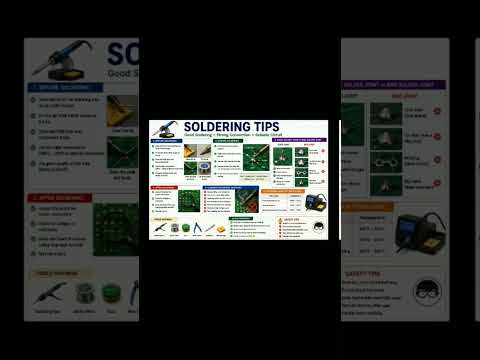
Soldering is an indispensable skill for anyone working at the intersection of hardware and software. As the demand for smart devices, IoT systems, and custom hardware grows, professionals working in Engineering IT often find themselves bridging the gap between code and physical circuitry. Whether you are assembling a prototype board or repairing a sensor module, mastering basic soldering techniques ensures your hardware runs as smoothly as your code.

Here are five practical soldering tips to help you build reliable circuit connections every time.

1. Choose the Right Iron and Temperature

Using the correct temperature is vital for a clean solder joint. Setting your soldering iron too cold leads to weak, dull joints (known as cold joints), while setting it too hot can damage sensitive microcontrollers or lift the copper traces off the circuit board. Aim for a temperature between 350°C and 380°C (660°F–715°F) for standard lead-free solder.

2. Heat the Component Pad, Not the Solder

One of the most common mistakes beginners make is melting solder directly onto the iron tip and trying to drop it onto the connection. Instead, touch your iron tip to both the board pad and the component lead simultaneously for two to three seconds. Then, feed the solder wire into the heated joint—not directly onto the iron. The solder will flow naturally toward the heat, creating a smooth, shiny connection.

3. Keep Your Tip Clean and Tinned

A dirty iron tip transfers heat poorly and causes solder to oxidize rapidly. Keep a damp sponge or brass wire cleaner at your workbench to clean the tip frequently while working. Always "tin" your tip—applying a thin layer of fresh solder to the iron before and after use—to prevent oxidation and extend the life of your equipment.

4. Flux Is Your Best Friend

If you are struggling to get solder to flow neatly, flux is the solution. Flux removes oxidation from metals during heating and helps the liquid solder flow evenly across the joint. Using a flux pen on pads prior to soldering makes a massive difference, especially when working with fine-pitch surface-mount components commonly found in modern Engineering IT hardware projects.

5. Inspect Your Joints with Care

A great soldering job finishes with a visual inspection. A ideal solder joint should look like a small, shiny concave cone (like a tiny volcano). If it looks round like a ball, you have used too much solder; if it looks dull and grainy, re-heat the joint and add a touch of fresh flux to fix the connection.

Conclusion

Building dependable physical prototypes requires precision and practice. By incorporating these essential soldering habits, you will minimize hardware errors and gain the confidence needed to excel in hands-on Engineering IT environments. Pick up your iron, grab some spare components, and start practicing today!

Engineering IT

Essential Engineering Software Checklist: Streamlining Firmware Code Reviews Before Production

...
engineering information technology
Essential Engineering Software Checklist: Streamlining Firmware Code Reviews Before Production

Essential Engineering Software Checklist: Streamlining Firmware Code Reviews Before Production

This article provides an in-depth exploration of Engineering software, covering foundational concepts, practical applications, and engineering insights.

Deploying firmware to production is one of the most critical stages in embedded systems development. Unlike traditional web or desktop applications, a post-launch firmware bug can result in costly hardware recalls, safety hazards, or permanently bricked devices. To prevent these catastrophic failures, utilizing robust engineering software during the review process is essential for delivering rock-solid code.

Critical Checklist Items for Firmware Code Reviews

A practical firmware review checklist goes far beyond basic syntax and style guidelines. It focuses on the complex interactions between hardware and software, stability, and edge-case resilience. Before signing off on a production release, ensure your team verifies these key areas:

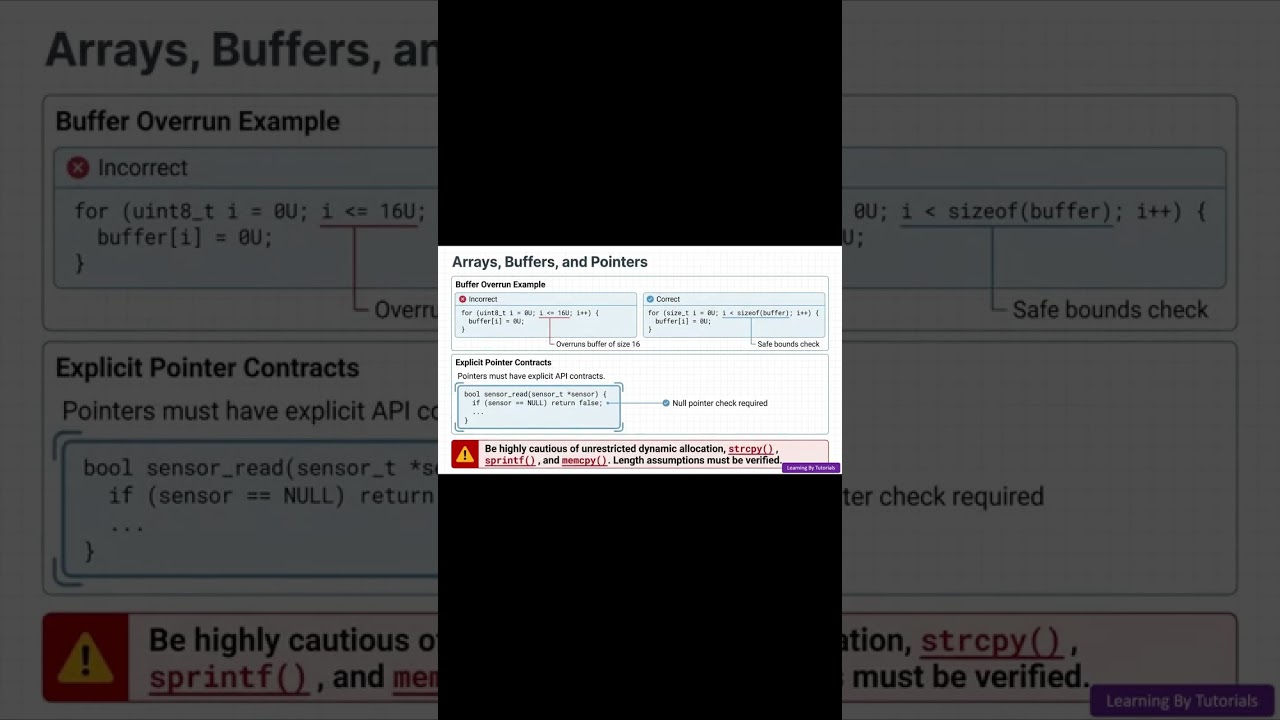
  • Memory Management & Pointers: Check for potential buffer overflows, uninitialized pointers, and unsafe dynamic memory allocations that could lead to unexpected runtime crashes.
  • Interrupt Handling & Concurrency: Verify that Interrupt Service Routines (ISRs) remain as brief as possible. Ensure proper synchronization mechanisms—such as mutexes or volatile declarations—are in place to prevent race conditions.
  • Peripheral & Error Recovery: Confirm that hardware initialization, bus timeouts (I2C, SPI, UART), and communication errors are handled gracefully rather than putting the processor into an infinite loop.
  • Watchdog Timers: Ensure the system watchdog is properly initialized and periodically refreshed to recover the microcontroller in case of deadlocks.

Streamlining Reviews with Modern Engineering Software

While manual peer reviews are indispensable for evaluating logic, combining human expertise with specialized engineering software dramatically enhances detection efficiency.

Automated static analysis tools integrated into your continuous integration (CI) pipeline can scan thousands of lines of firmware in seconds. These tools identify MISRA C/C++ rule violations, potential deadlocks, and memory leaks before peer reviews even take place. Leveraging specialized engineering software for automated checks reduces reviewer fatigue, maintains consistency across teams, and provides an auditable history for quality compliance.

Conclusion

Releasing production-ready firmware requires a disciplined, multi-layered approach. By coupling a rigorous manual checklist with modern engineering software, embedded engineers can eliminate critical bugs early, ensure hardware reliability, and ship high-performance products with confidence.

Visual Insights & Illustrations

Engineering software

Technique for Synchronizing Heterogeneous Sensor Inputs

...

In the era of autonomous systems and IoT, synchronizing heterogeneous sensor inputs is a critical challenge. Whether you are working with LiDAR, cameras, or IMUs, ensuring that data packets from different sources align in time is essential for accurate sensor fusion.

Why Sensor Synchronization Matters

When sensors operate at different sampling rates (heterogeneous), a lag in one signal can lead to significant errors in spatial perception. To build a robust system, developers often employ software-based temporal alignment or hardware triggering.

Key Techniques for Data Alignment

  • Message Filtering: Using policies like Approximate Time Synchronizer to match timestamps within a specific threshold.
  • Interpolation: Estimating missing data points between two known sensor readings to create a continuous timeline.
  • Timestamp Offsetting: Correcting clock drifts between independent processing units.

Example: Python Implementation for Time Sync

Below is a conceptual example of how to synchronize two data streams using a simple buffer-matching technique:


def synchronize_sensors(stream_a, stream_b, threshold=0.05):
    synchronized_pairs = []
    for data_a in stream_a:
        # Find the closest match in stream_b based on timestamp
        closest_match = min(stream_b, key=lambda x: abs(x.timestamp - data_a.timestamp))
        
        if abs(closest_match.timestamp - data_a.timestamp) <= threshold:
            synchronized_pairs.append((data_a, closest_match))
            
    return synchronized_pairs

Best Practices for and Performance

When optimizing your multi-sensor fusion pipeline, always prioritize hardware-level synchronization if available. However, for DIY robotics or low-cost IoT, the interpolation technique remains the most flexible approach for handling heterogeneous inputs.

Method for Designing Real-Time Sensor Data Acquisition Systems

...

Designing a Real-Time Sensor Data Acquisition System (DAQ) requires a meticulous balance between hardware precision and software efficiency. In the era of IoT and industrial automation, the ability to capture, process, and visualize sensor data in milliseconds is crucial for decision-making processes.

The Core Architecture of Real-Time DAQ

A robust DAQ system follows a specific method for designing real-time sensor data acquisition. It begins with the physical layer and ends with the data presentation layer. Here are the fundamental components:

  • Transducers & Sensors: Converting physical phenomena into measurable electrical signals.
  • Signal Conditioning: Filtering noise and amplifying signals to improve accuracy.
  • Analog-to-Digital Conversion (ADC): High-speed sampling to ensure data integrity without aliasing.
  • Data Processing Unit: Utilizing microcontrollers or FPGAs for low-latency computation.

Step-by-Step Design Methodology

To implement an effective system, engineers must follow these strategic steps:

1. Sampling Rate Optimization

According to the Nyquist-Shannon sampling theorem, your sampling frequency must be at least twice the highest frequency component of the signal. For real-time monitoring, we often use higher oversampling to ensure smooth data curves.

2. Minimizing System Latency

Latency is the enemy of real-time systems. Using Interrupt Service Routines (ISRs) instead of polling methods ensures that the processor handles sensor data immediately upon arrival, maintaining a predictable response time (determinism).

3. Data Transmission Protocols

Choosing the right protocol is vital. For local acquisition, SPI or I2C are standard. For remote cloud-based systems, MQTT is preferred due to its lightweight overhead and "publish-subscribe" architecture, which is ideal for real-time sensor streams.

[Image of data acquisition flow diagram]

Challenges in Modern DAQ Design

Common challenges include managing electromagnetic interference (EMI) and ensuring time-synchronization across multiple sensor nodes. Implementing digital filters (like Kalman or Moving Average) within the firmware can significantly enhance the reliability of the acquired data.

Conclusion

The successful design of real-time sensor data acquisition systems hinges on understanding the synergy between hardware limitations and software performance. By focusing on low latency, accurate sampling, and robust communication protocols, you can build a system capable of high-fidelity environmental or industrial monitoring.

Why IT Engineers Need to Understand Both Hardware and Software

...

In today’s fast-paced technology environment, IT engineers must have a comprehensive understanding of both hardware and software. A deep knowledge of hardware enables engineers to optimize system performance, troubleshoot effectively, and design more reliable infrastructures. On the other hand, software expertise ensures that engineers can develop, deploy, and maintain applications efficiently.

Understanding the interaction between hardware and software is crucial for tasks such as system optimization, network performance tuning, and cybersecurity implementation. For instance, knowing how memory allocation works at the hardware level can help software engineers write more efficient code. Conversely, hardware engineers benefit from understanding software requirements to create devices that support modern applications seamlessly.

Additionally, engineers with dual knowledge of hardware and software are better equipped to innovate in areas such as IoT (Internet of Things), embedded systems, and cloud computing. This holistic approach enhances problem-solving capabilities, reduces system failures, and increases overall productivity in IT projects.

In conclusion, the synergy between hardware and software knowledge is indispensable for modern IT engineers. Companies increasingly seek professionals who can bridge the gap between these two domains, making them valuable assets in any technology-driven organization.

Keywords: IT engineers, hardware and software, system optimization, IoT, embedded systems, cloud computing, network performance, cybersecurity, technology innovation

IT engineers, hardware, software, system optimization, IoT, embedded systems, cloud computing, network performance, cybersecurity, technology innovation


IT Engineering for Cyber-Physical Systems: Bridging the Digital and Physical Worlds

...

Cyber-Physical Systems (CPS) represent the next evolution in IT engineering, integrating computational algorithms with physical processes. Engineers in this field focus on designing systems where software, sensors, and actuators work seamlessly to monitor and control real-world operations.

Key Components of Cyber-Physical Systems

The foundation of CPS relies on advanced embedded systems, IoT devices, and real-time data analytics. By leveraging these technologies, engineers can create smart systems that improve efficiency, safety, and decision-making across industries like manufacturing, healthcare, and transportation.

Importance of IT Engineering in CPS

IT engineers play a crucial role in ensuring reliable data communication, system security, and fault-tolerant control. The integration of machine learning and predictive analytics allows CPS to adapt dynamically to changing environments and operational conditions.

Future Trends

Emerging trends in CPS include the use of digital twins, autonomous systems, and edge computing to reduce latency and enhance real-time decision-making. With the convergence of IT engineering and physical systems, CPS are poised to revolutionize industrial automation and smart city applications.

In summary, IT engineering for Cyber-Physical Systems is not just about coding or hardware design; it's about creating interconnected systems that are intelligent, adaptive, and highly efficient. Embracing these technologies ensures that industries remain competitive in a rapidly evolving digital landscape.

Cyber-Physical Systems, IT Engineering, Embedded Systems, IoT, Real-time Data, Smart Systems, Machine Learning, Predictive Analytics, Digital Twins, Edge Computing, Industrial Automation, Smart City


IT Engineering vs. Computer Engineering: What’s the Difference?

...

In today’s fast-evolving tech world, understanding the difference between IT Engineering and Computer Engineering is essential for students and professionals alike. Although both fields overlap in areas of technology and computing, their focus and career paths are distinct.

What is IT Engineering?

IT Engineering primarily focuses on the design, implementation, and management of information systems. IT engineers work on networking, database management, cloud computing, cybersecurity, and system administration. They ensure that technology infrastructure supports business operations efficiently.

What is Computer Engineering?

Computer Engineering combines elements of electrical engineering and computer science. Computer engineers design and develop computer hardware, embedded systems, and firmware. Their work often includes microprocessors, circuit design, robotics, and high-performance computing systems.

Key Differences Between IT Engineering and Computer Engineering

  • Focus: IT Engineering emphasizes software, networks, and system integration, while Computer Engineering emphasizes hardware and embedded systems.
  • Career Paths: IT engineers often become network administrators, system analysts, or cybersecurity experts. Computer engineers may work as hardware developers, robotics engineers, or firmware developers.
  • Skills: IT engineers require knowledge of databases, cloud platforms, and IT infrastructure. Computer engineers need skills in programming, electronics, and hardware design.

IT Engineering, Computer Engineering, Technology Careers, Software, Hardware, Networking, Embedded Systems, Cybersecurity, Engineering Education


Online Tutorials for Embedded Systems Engineering

...

If you are looking to improve your skills in Embedded Systems Engineering, online tutorials are one of the best ways to learn step-by-step. These tutorials help learners understand microcontrollers, firmware development, real-time operating systems (RTOS), and hardware–software integration in a practical and efficient way.

Why Learn Embedded Systems Online?

Online learning platforms provide flexible and accessible resources for both beginners and professionals. Many courses include video lessons, coding examples, circuit simulations, and hands-on exercises that make complex topics easier to understand. By learning online, you can explore embedded C programming, PCB design, IoT development, and system debugging at your own pace.

Popular Topics in Embedded Systems Tutorials

  • Microcontroller Programming: Learn Arduino, STM32, PIC, and ESP32 development with practical examples.
  • Embedded C & C++: Understand low-level programming for hardware control.
  • RTOS Fundamentals: Explore FreeRTOS, task scheduling, and real-time application design.
  • IoT Systems: Build connected devices using MQTT, WiFi modules, sensors, and cloud platforms.
  • Hardware Interfacing: Study communication protocols such as SPI, I2C, UART, and CAN bus.

Benefits of Learning Embedded Systems Through Online Tutorials

Online tutorials allow learners to follow clear instructions, practice with downloadable code examples, and experiment with virtual labs or simulations. These resources help learners gain confidence in designing embedded applications, debugging firmware, and optimizing hardware performance.

Recommended Platforms for Embedded Systems Tutorials

  • Coursera – Embedded Systems Specialization
  • Udemy – Microcontroller & IoT Courses
  • edX – Real-Time Embedded Systems
  • YouTube – Free Tutorials and Hands-on Projects
  • MIT OpenCourseWare – Engineering and Embedded Systems Topics

Conclusion

Whether you're starting your journey or improving your professional skills, online tutorials for embedded systems engineering offer high-quality learning materials. With the right resources, you can build real embedded applications, master programming techniques, and advance your career in the growing field of electronics and IoT development.