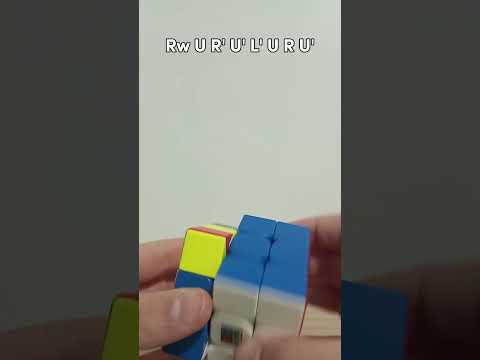
Speedcubing is more than just a hobby; it is a rigorous exercise in pattern recognition, muscle memory, and algorithmic execution. For anyone familiar with the CFOP (Cross, F2L, OLL, PLL) method, the Orientation of the Last Layer (OLL) is a critical stage where speed and accuracy are paramount. Among the 57 different OLL variations, the "T-Case" stands out as one of the most frequent and satisfying sequences to master.
Understanding the OLL T-Case The OLL T-Case is easily recognized by its distinct T-shaped pattern of oriented stickers on the top face of the cube. To solve it efficiently, cubers use a specific sequence of moves known as an algorithm. In the modern world of Engineering IT, efficiency and optimization are the primary metrics for success, and the same principles apply to solving a 3x3 cube.
The most common and effective algorithm for the standard T-Case (OLL 33) is: (R U R' U') (R' F R F')
This sequence, which utilizes a "Sexy Move" followed by a "Sledgehammer" variation, is designed for maximum ergonomics. Much like writing clean, scalable code, the goal here is to reduce "latency"—the time it takes for your brain to recognize the visual pattern and for your hands to execute the solution.
The Link Between Cubing and Technical Logic Why do so many tech professionals and developers gravitate toward the Rubik's Cube? It is because the mindset required for high-level cubing perfectly mirrors the systematic approach used in Engineering IT. Whether you are architecting a complex cloud infrastructure or debugging a legacy system, you are essentially identifying a current state and applying a predetermined set of logic-based steps to reach a desired outcome.
Tips for Mastery To truly master the T-Case, focus on "fingertricks." Instead of moving your entire hand to rotate a face, use your index fingers and thumbs to flick the layers. This micro-optimization is a physical representation of the process improvements seen in Engineering IT departments worldwide.
By practicing these algorithms, you aren’t just solving a plastic puzzle; you are sharpening the analytical parts of your brain. With enough repetition, the OLL T-Case becomes second nature, allowing you to bridge the gap between manual effort and automated, lightning-fast execution.
