1-Phase vs. 3-Phase Fan Motors: Essential Insights for Industrial IT
This article provides an in-depth exploration of Industrial IT, covering foundational concepts, practical applications, and engineering insights.
When managing power and machinery in smart automated facilities, selecting the right hardware is critical. Within modern smart manufacturing and Industrial IT infrastructure, understanding basic electrical components—specifically single-phase and three-phase fan motors—is essential for optimizing energy efficiency and device longevity. But what exactly sets a 1-phase fan motor apart from a 3-phase fan motor? Let's break down the core differences in simple terms.
Understanding 1-Phase Fan Motors
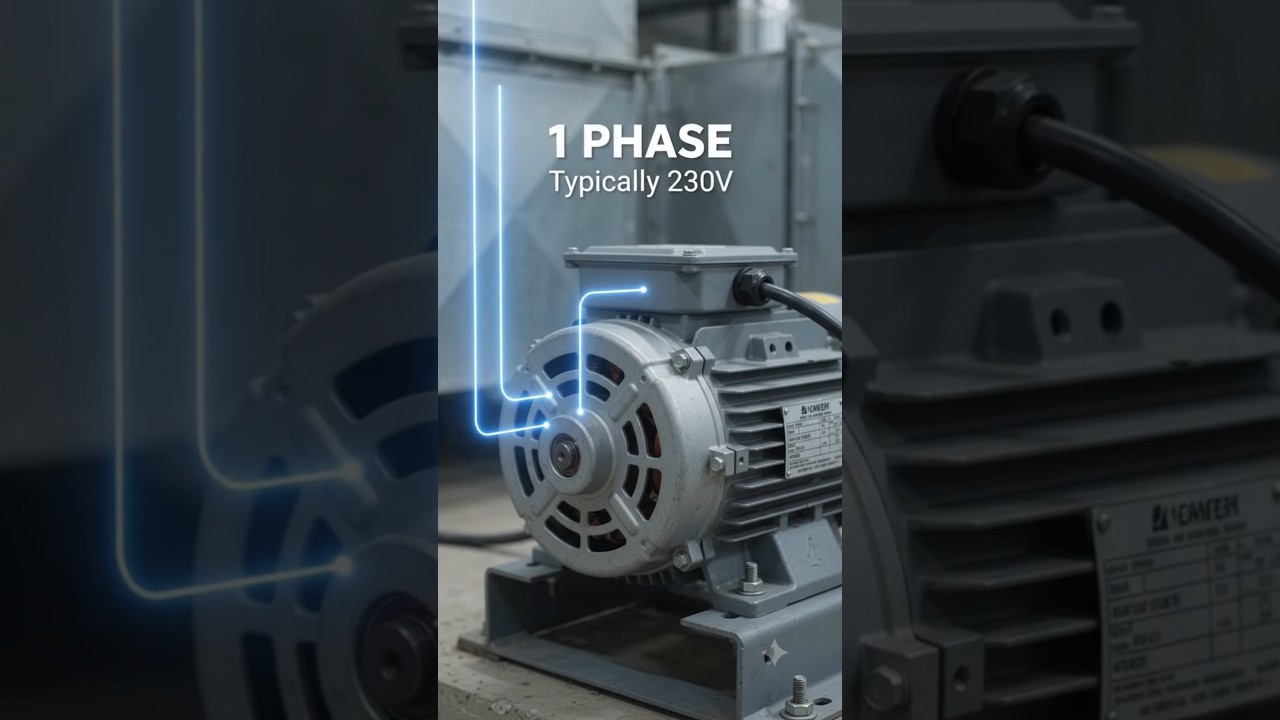
A single-phase (1-phase) fan motor operates using a single alternating current (AC) voltage wave. These motors are commonly found in residential settings, small commercial offices, and lighter equipment where extreme power output isn't required.
They are easy to install, cost-effective for smaller setups, and run on standard electrical supplies. However, 1-phase motors generally provide lower starting torque and reduced operational efficiency under heavy continuous loads.
Understanding 3-Phase Fan Motors
A three-phase (3-phase) fan motor utilizes three distinct alternating currents that peak at staggered intervals. This continuous cycle ensures a smooth, non-stop flow of electrical power without performance drops.
Because of their impressive torque, high energy efficiency, and reliable long-term performance, 3-phase fan motors are the standard choice for heavy industrial facilities, large HVAC systems, and server room cooling units. Their robust design makes 3-phase motors ideal for demanding operations managed by real-time Industrial IT monitoring systems.
Key Differences at a Glance
- Power & Efficiency: 1-phase motors rely on a single voltage cycle and are less efficient for heavy workloads, whereas 3-phase motors deliver higher power output with maximum energy efficiency.
- Starting Torque: 3-phase motors produce a strong natural magnetic field, generating reliable starting torque without needing extra starter capacitors.
- Vibration and Lifespan: Because 3-phase power delivery is smooth and continuous, these motors experience significantly less mechanical vibration, leading to a longer operational lifespan.
- Cost & Setup: 1-phase motors have lower initial costs and simpler wiring, while 3-phase systems require specialized 3-phase electrical supplies but lower long-term running costs.
Final Thoughts
Choosing between a 1-phase and a 3-phase fan motor depends on your operational scale and power requirements. While single-phase fans are sufficient for small-scale applications, three-phase fan motors deliver the power, efficiency, and dependability required for industrial environments. Selecting the right motor ensures high operational reliability and seamless alignment with your broader Industrial IT framework.
