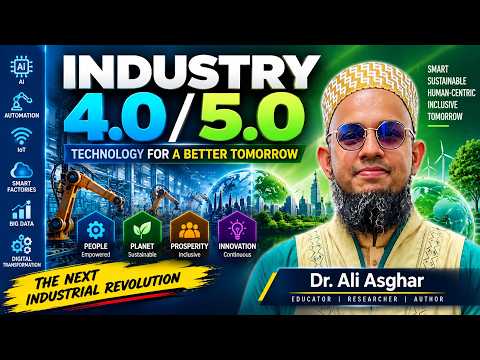
The global industrial landscape is undergoing a massive transformation. Over the past decade, Industry 4.0 has revolutionized how businesses operate, introducing unprecedented levels of automation, connectivity, and data-driven decision-making. As we continue to build upon these technological advancements, the conversation is already expanding toward the next frontier: Industry 5.0.
What Is Industry 4.0 and Why Does It Matter?
At its core, Industry 4.0 refers to the fourth industrial revolution—a phase characterized by smart manufacturing, cyber-physical systems, the Internet of Things (IoT), and cloud computing. By connecting machines to intelligent networks, organizations can optimize supply chains, predict maintenance needs, and reduce downtime significantly.
Key drivers of this era include: - Artificial Intelligence & Machine Learning: Enabling autonomous decision-making on the factory floor. - Big Data Analytics: Turning massive amounts of raw operational data into actionable business insights. - System Integration: Creating seamless communication between physical production assets and digital enterprise systems.
Transitioning Beyond: The Rise of Industry 5.0
While Industry 4.0 focuses heavily on hyper-automation and efficiency through technological systems, Industry 5.0 brings a crucial element back into the equation: human collaboration. Rather than replacing human workers, Industry 5.0 emphasizes placing human creativity and well-being at the center of production processes alongside advanced robotics and AI.
This next phase prioritizes three core pillars: 1. Human-Centricity: Designing technology to empower human operators rather than supersede them. 2. Sustainability: Developing resource-efficient processes to minimize environmental footprint. 3. Resilience: Building agile infrastructure capable of adapting to global supply chain disruptions.
Preparing for the Future of Smart Manufacturing
As highlighted in educational insights by experts like Dr. Ali Asghar, understanding the transition between these industrial eras is vital for modern engineers, business leaders, and policymakers. Navigating this evolution requires balancing digital efficiency with human-centered innovation. Organizations that successfully bridge the gap between automated systems and human talent will be best positioned to lead the future of industry.
