How Modern Engineering IT Transforms LLMs into Autonomous AI Agents
This article provides an in-depth exploration of Engineering IT, covering foundational concepts, practical applications, and engineering insights.
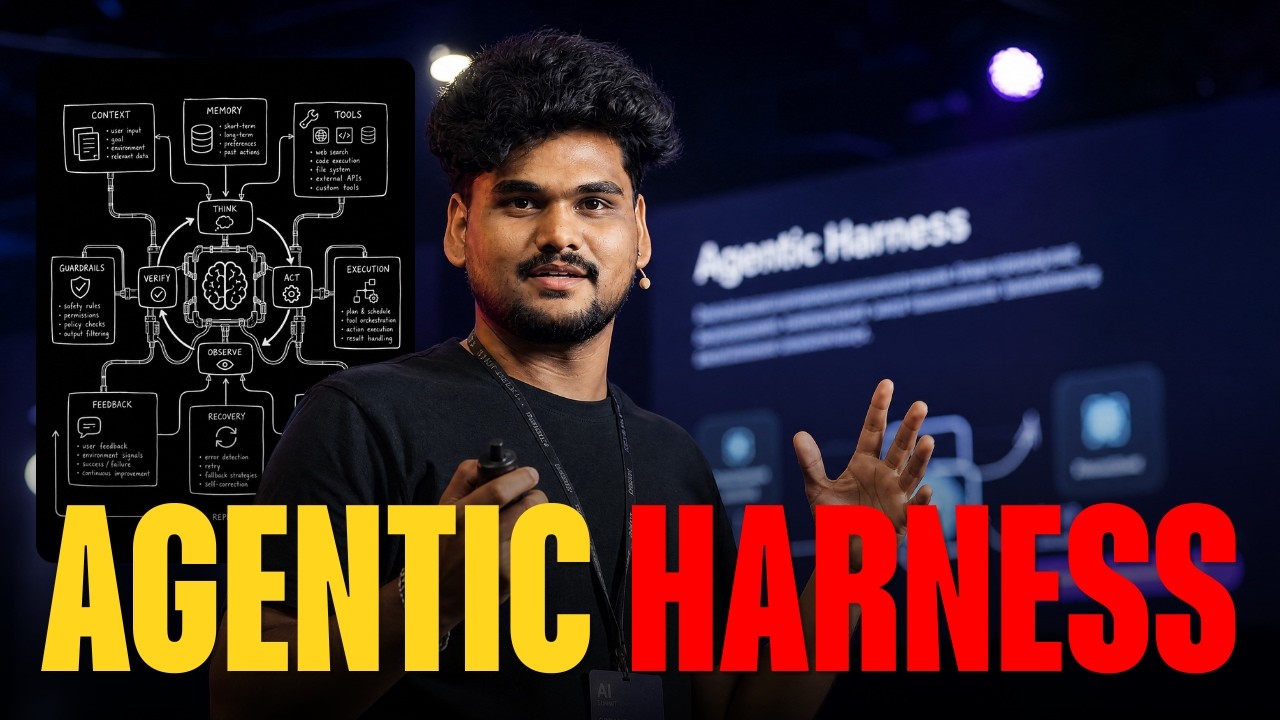
Artificial Intelligence is evolving at a breakneck pace. While prompt engineering was once considered the primary method for interacting with Large Language Models (LLMs), building truly autonomous, reliable AI agents requires a much deeper approach. To create an AI agent capable of executing complex multi-step tasks, developers must look beyond the prompt and focus on harness engineering—a discipline rapidly transforming the landscape of modern Engineering IT.
What is Harness Engineering for AI Agents?
Simply put, a "harness" is the structural framework, tooling, and environment surrounding an LLM. While the LLM acts as the core reasoning engine, the harness provides the necessary context, memory, tool integration, and safety guardrails.
Without a well-designed harness, an LLM is like a powerful engine without a chassis—capable of impressive outputs, but unable to reliably navigate real-world enterprise operations. Harness engineering bridges this gap by turning raw generative text models into goal-oriented digital agents.
Key Components of an AI Agent Harness
Building a production-grade agent involves integrating several critical layers into your Engineering IT framework:
- Tool & API Integration: Equipping the agent with the ability to execute code, query databases, and call external web services autonomously.
- Memory & State Management: Maintaining short-term context during active tasks while indexing long-term memory to preserve past learnings and enterprise data.
- Guardrails & Error Handling: Implementing deterministic rules, output validation, and fallback loops to ensure the agent operates within defined boundaries.
Unlocking Business Value with Robust Engineering
Prompting alone cannot solve non-deterministic errors, API failures, or memory drift in complex workflows. As organizations push to deploy AI solutions that deliver measurable operational efficiency, bridging the gap between raw LLM intelligence and systematic execution is essential.
By applying proven Engineering IT principles to construct resilient agent harnesses, enterprises can safely move beyond basic conversational chatbots and build powerful, fully autonomous AI agents designed for scale.


