AGV vs AMR Explained: Navigating the Future of the Smart Factory
This article provides an in-depth exploration of Smart factory, covering foundational concepts, practical applications, and engineering insights.
Imagine a massive warehouse or manufacturing floor where heavy materials move seamlessly from one station to another without a single driver behind the wheel. This is no longer a futuristic vision—it is the reality of the modern smart factory. As global supply chains embrace Industry 4.0 and intelligent logistics, driverless material handling systems like Automated Guided Vehicles (AGVs) and Autonomous Mobile Robots (AMRs) have become essential.
While both technologies eliminate manual labor and boost operational efficiency, they operate in fundamentally different ways. Here is what you need to know about AGVs vs. AMRs.
What is an Automated Guided Vehicle (AGV)?
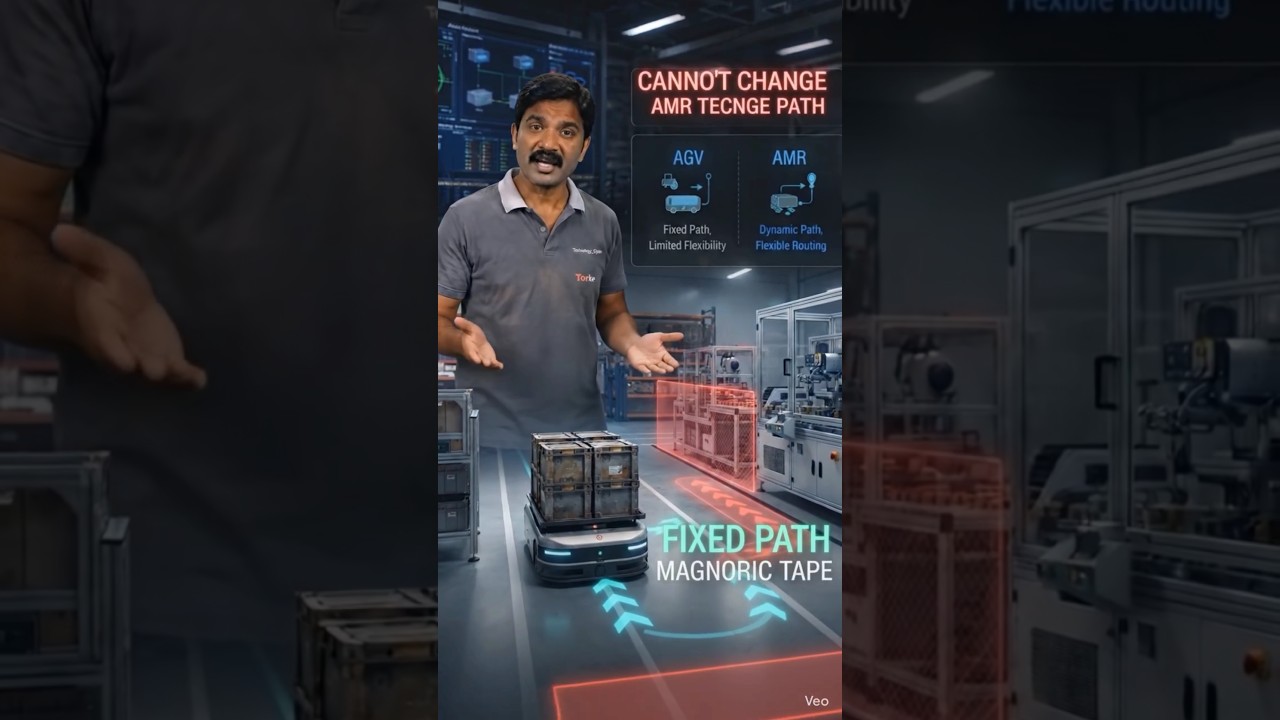
An Automated Guided Vehicle (AGV) is an automated transport system designed to follow fixed, predetermined paths. These paths are usually marked by physical infrastructure, such as magnetic strips, wires embedded in the floor, or laser reflectors.
AGVs are best suited for simple, highly repetitive tasks. They excel in structured environments where materials travel along the same route continuously, such as transferring raw parts to an assembly line. However, AGVs lack adaptability. If an object or person blocks an AGV’s path, the vehicle will stop and wait until the barrier is manually removed.
What is an Autonomous Mobile Robot (AMR)?
Unlike an AGV, an Autonomous Mobile Robot (AMR) navigates using built-in sensors, cameras, LiDAR, and intelligent software. AMRs build a digital map of their surrounding environment and calculate the best route to their destination dynamically.
The primary advantage of an AMR is flexibility. If an obstacle blocks its path, the robot instantly plans an alternate route around it without interrupting operations. This makes AMRs ideal for dynamic, fast-paced environments where floor layouts change often.
AGV vs. AMR: Key Differences
When upgrading a smart factory, choosing between AGVs and AMRs comes down to your specific operational needs:
- Flexibility: AMRs win on flexibility because they do not rely on fixed magnetic tapes or floor wires.
- Deployment: AGVs require infrastructure modification during setup, whereas AMRs can be deployed quickly by mapping the building digitally.
- Efficiency: AGVs are ideal for simple, predictable workflows, while AMRs excel in complex, unpredictable warehouse environments.
Final Thoughts
Both AGVs and AMRs play crucial roles in modernizing supply chains and streamlining material transport. By understanding how these technologies differ, businesses can choose the right automation tools to build a faster, safer, and more efficient smart factory.


