Beyond 3D Models: Transforming Traditional CAD Data into Intelligent BIM
This article provides an in-depth exploration of CAD data, covering foundational concepts, practical applications, and engineering insights.
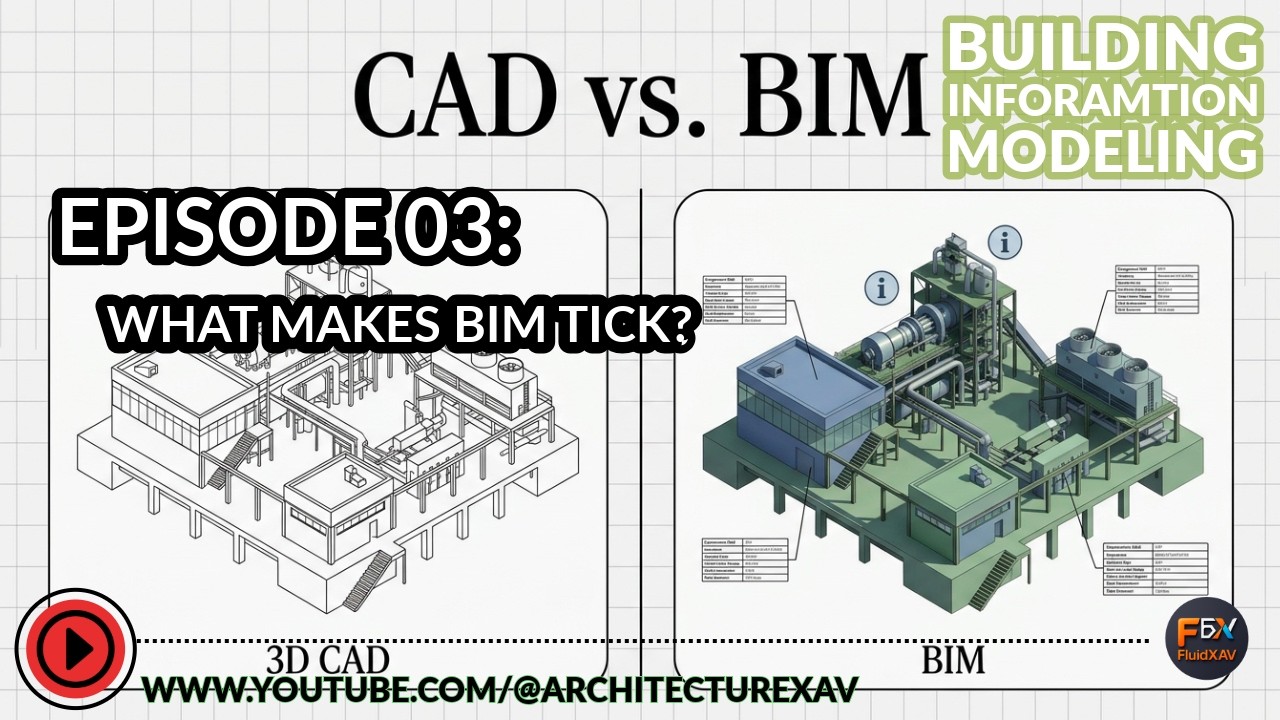
In the world of architecture, engineering, and construction (AEC), the term "BIM" is often used interchangeably with 3D modeling. However, as explored in the third episode of our Step into BIM series, there is a fundamental difference between a simple visual representation and a truly intelligent Building Information Model.
Beyond the Visuals: What is BIM?
Traditional CAD data has served as the industry standard for decades, allowing designers to create precise geometric representations of buildings. While 3D CAD provides a vital visual sense of space, it often lacks the underlying "intelligence" that defines modern construction technology.
BIM, or Building Information Modeling, is far more than just a 3D model; it is a sophisticated database of connected information. In a standard CAD environment, a door might simply be a collection of lines or a basic 3D shape. In a BIM environment, that same door is an "object" enriched with metadata. This includes its fire rating, manufacturer details, cost, and acoustic properties. This transition from static visuals to dynamic, searchable data is exactly what makes BIM tick.
The Power of Connected Information
The real magic of BIM happens when information becomes "connected." In traditional workflows relying on legacy CAD data, making a change to a floor plan often requires manual updates to sections, elevations, and material schedules. This disconnected process is not only time-consuming but also prone to human error and costly "clashes" during the construction phase.
With BIM, information is centralized. If an architect changes the dimensions of a window in the 3D view, the change is instantly reflected in the quantity takeoff and all relevant 2D drawings. This level of synchronization ensures that every stakeholder—from the lead designer to the site manager—is working from a single, reliable source of truth.
Why the Industry is Making the Switch
The shift from disconnected CAD data to integrated BIM is driving a revolution in building efficiency. By utilizing "Connected Information," project teams can predict building performance, estimate costs with higher accuracy, and even manage the facility’s lifecycle long after the physical construction is complete.
As we move further into the digital age, understanding that BIM is a process—not just a software—is crucial. It is about moving beyond the surface-level 3D model and embracing the wealth of data that sits behind every structural element. Stay tuned for the next episode as we continue to demystify the journey of digital transformation in construction.
Visual Insights & Illustrations


