Beyond Horsepower: How Engineering IT Powers BYD’s 3-Wheeled Hypercar
This article provides an in-depth exploration of Engineering IT, covering foundational concepts, practical applications, and engineering insights.
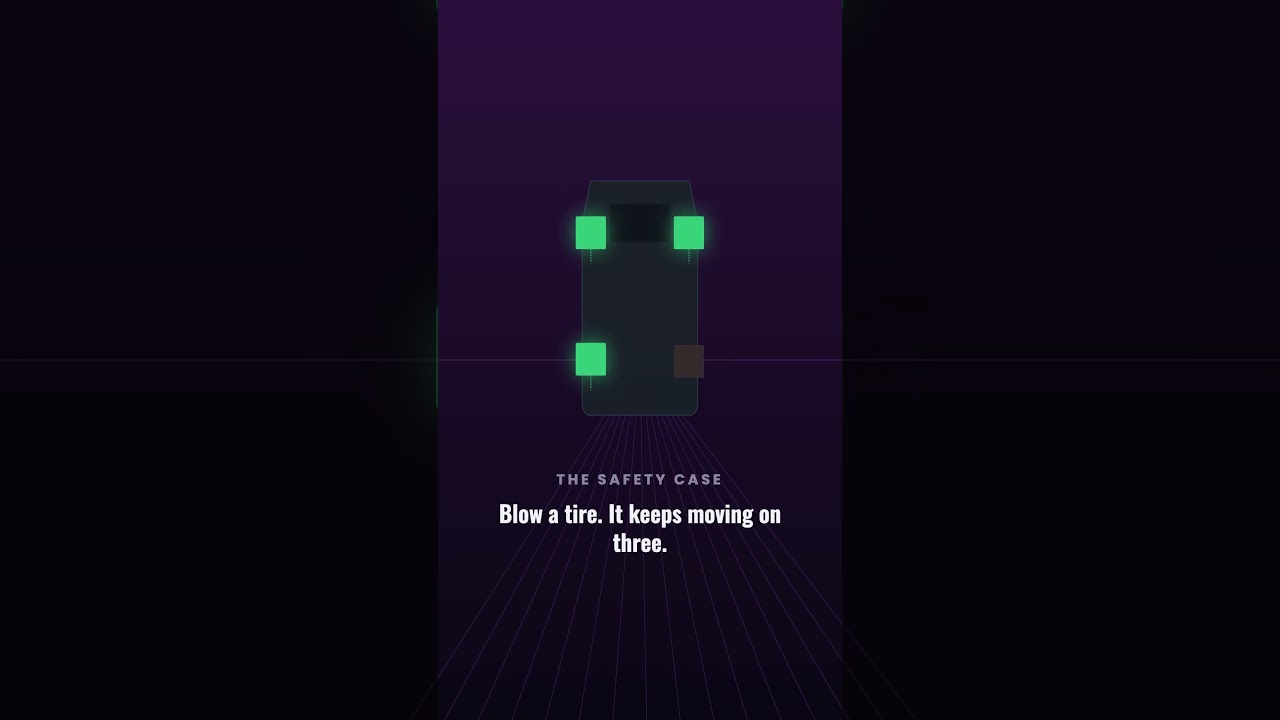
Most hypercar discussions focus heavily on raw horsepower, 0-60 mph times, and extreme top speeds. However, BYD recently shocked the automotive industry with a demonstration that goes far beyond traditional performance metrics: the Yangwang U9 hypercar driving smoothly on just three wheels and even hopping off the ground.
While it looks like a stunt, the innovation behind this feat is BYD’s revolutionary DiSus-X active body control system—a triumph that combines mechanical precision with advanced Engineering IT.
What Makes the DiSus-X System Unique?
Traditional suspension systems rely on passive mechanical components or basic adaptive dampers to handle road feedback. BYD’s DiSus-X, by contrast, is a fully active body control system capable of independently adjusting each wheel's vertical position with incredible speed and force.
By combining hydraulic, air, and kinetic control mechanisms, DiSus-X offers ultra-fast response times and high lifting power. This level of responsiveness is not merely a mechanical achievement; it requires a deep integration of intelligent sensor networks and robust Engineering IT systems designed to process complex physical forces in real time.
The Role of Engineering IT in Real-Time Vehicle Dynamics
To keep a multi-thousand-pound hypercar balanced on three wheels without scraping the ground or flipping over, control systems must make decisions instantaneously. This is where cutting-edge Engineering IT becomes essential.
A sophisticated network of onboard sensors continuously monitors vehicle pitch, roll, speed, and chassis alignment, feeding data into centralized control units at millisecond intervals. Powerful software algorithms calculate exact pressure requirements for each corner of the vehicle. If a wheel loses contact or is intentionally lifted, the control architecture instantly redistributes the vehicle’s weight balance to keep the chassis stable and safe.
The Future of Intelligent Automotive Design
Driving on three wheels or hopping over obstacles proves that modern vehicle performance is no longer defined strictly by internal combustion or electric motor output. As hypercars transition into computer-controlled systems on wheels, the synergy between hardware engineering and software control will dictate the future of automotive safety and agility. BYD's DiSus-X demonstrates that the next great leap in supercar technology depends as much on digital intelligence as it does on mechanical strength.
Visual Insights & Illustrations


