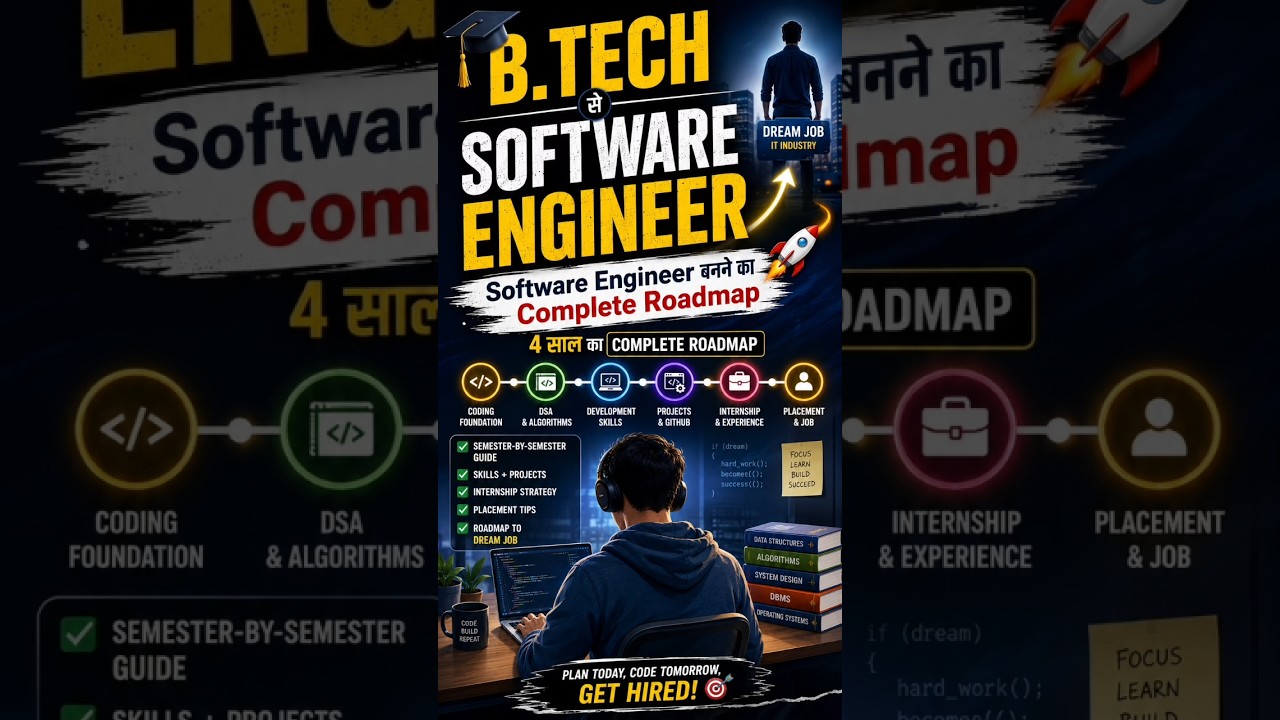
B.Tech to Tech Pro: The Ultimate 4-Year Roadmap for Engineering Software Careers
This article provides an in-depth exploration of Engineering software, covering foundational concepts, practical applications, and engineering insights.
Transitioning from a B.Tech student to a high-paying software developer requires more than just attending college lectures. Without a clear plan, navigating four years of engineering can quickly become overwhelming. To stand out in today's competitive tech industry, you need a structured, semester-by-semester strategy that builds practical skills from day one.
Here is the ultimate 4-year roadmap to guide your journey from student to professional developer.
Year 1: Mastering Fundamentals and Logical Thinking
Your first year is all about breaking the ice with technology and developing a strong problem-solving mindset.
* Learn a Core Language: Pick one foundational language—such as C++, Java, or Python—and master its syntax and core logic.
* Understand Tech Ecosystems: Start exploring how modern engineering software works under the hood, including basic computer networks and operating system concepts.
* Build Consistency: Practice basic coding regularly on platforms like HackerRank or GeeksforGeeks.
Year 2: Data Structures, Algorithms, and Core CS Concepts
Year two is where serious technical preparation begins.
* Master DSA: Focus heavily on Data Structures and Algorithms (DSA). This is the backbone of almost all technical hiring interviews.
* Core CS Subjects: Pay close attention to Object-Oriented Programming (OOP), Database Management Systems (DBMS), and Operating Systems.
* Git & GitHub: Learn version control to manage and showcase your code repositories efficiently.
Year 3: Specialization and Hands-On Projects
By year three, it is time to move beyond theoretical knowledge and start building real-world applications.
* Pick a Tech Stack: Choose a domain such as Full-Stack Web Development, Mobile App Development, Cloud Computing, or Machine Learning.
* Build Projects: Create 2–3 end-to-end projects. Hands-on experience in building, debugging, and deploying applications demonstrates your practical ability to construct reliable engineering software.
* Open Source & Internships: Apply for summer internships and contribute to open-source projects on GitHub to gain industry exposure.
Year 4: Interview Prep, System Design, and Placement
Your final year is dedicated to conversion—turning your preparation into top job offers.
* Advanced DSA & Mock Interviews: Practice competitive programming and learn fundamental System Design principles. Conduct mock interviews to build confidence.
* Resume & Networking: Craft a clean, high-impact resume highlighting your best projects and internship experience. Optimize your LinkedIn profile and reach out for job referrals.
* Target the Right Companies: Apply for roles across tech startups and established enterprises that specialize in developing cutting-edge engineering software.
Final Thoughts
Consistency is the true key to transforming your B.Tech journey into a successful tech career. By breaking down your 4 years into clear semester-wise goals, you can build industry-ready skills step-by-step. Start today, stay disciplined, and take control of your engineering future!
Visual Insights & Illustrations


