Perfecting Your Stitch: How to Fix Industrial Sewing Machine Tension in the Era of Industrial IT
This article provides an in-depth exploration of Industrial IT, covering foundational concepts, practical applications, and engineering insights.
Is your industrial sewing machine giving you jumpy, uneven stitches? A perfectly calibrated machine is the backbone of any professional textile operation. In today's modern manufacturing landscape, smart factories rely heavily on Industrial IT to optimize production lines, but even the smartest software can't fix a poorly calibrated needle. If your machine's mechanical fundamentals are off, your output will suffer.
In this guide, we will walk you through exactly how to troubleshoot your industrial machine’s tension and measure your Stitch Per Inch (SPI) for flawless results.
Step 1: Mastering Your Machine's Tension
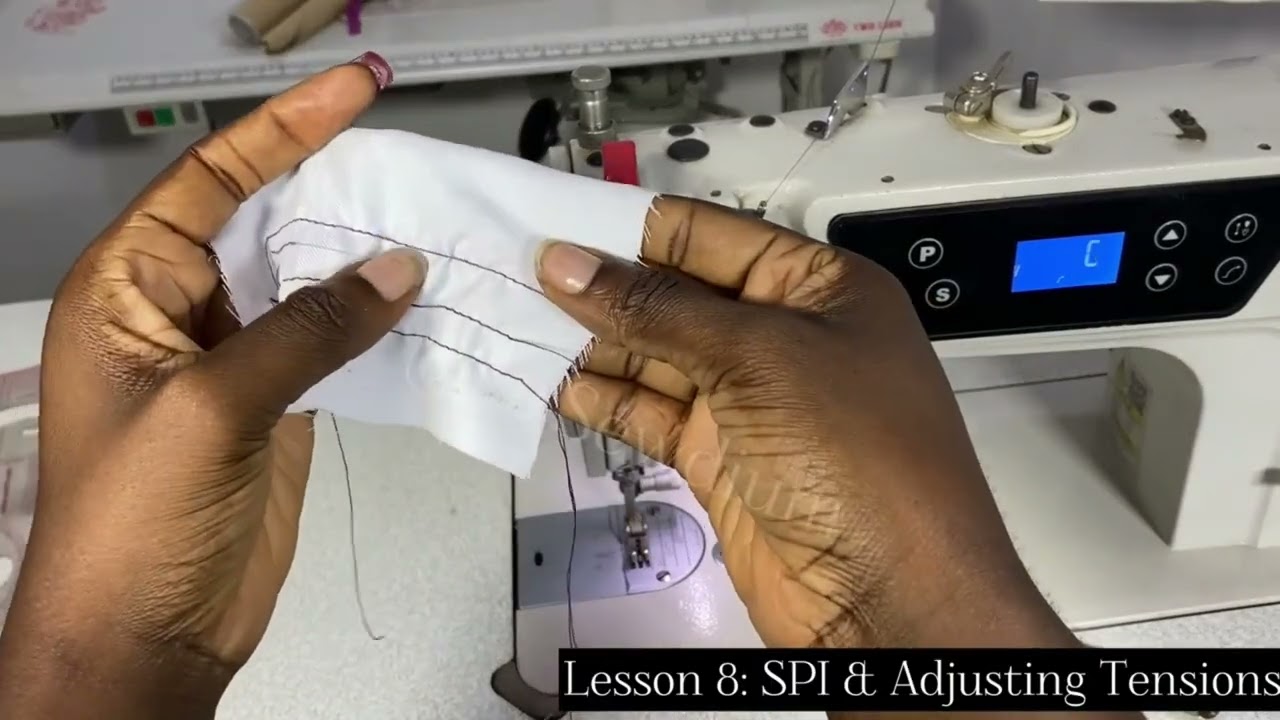
When dealing with jumpy or loose stitches, the culprit is almost always improper tension. To fix this, you must balance both the upper thread and the bobbin thread.
- Check the Upper Tension: Locate your machine's tension dial. If your thread is looping on the underside of the fabric, your upper tension is too loose. Turn the dial clockwise to tighten it. If the fabric is puckering, the tension is too tight; turn the dial counter-clockwise to loosen it.
- Adjust the Bobbin Tension: Remove the bobbin case and pull the thread. It should have a slight, smooth resistance—similar to a spider sliding down its silk. Use the small screw on the bobbin case to make micro-adjustments if needed.
Step 2: How to Measure Stitch Per Inch (SPI)
Stitch Per Inch (SPI) determines the overall strength and aesthetic of your seam. Keeping a precise log of your SPI is essential, especially when integrating quality assurance protocols into your facility's Industrial IT infrastructure.
To measure your SPI manually:
* Sew a straight line on a scrap piece of fabric using your target material.
* Place a standard ruler directly along the sewn seam.
* Count the number of individual stitch punctures within exactly one inch.
* Adjust your machine's stitch length regulator dial until you hit the precise SPI required for your project.
Conclusion: Mechanical Precision Meets Modern Standards
Perfecting your machine's physical settings is the first step toward high-efficiency manufacturing. By combining hands-on mechanical calibration with robust Industrial IT systems to monitor your workflow, you can eliminate downtime, reduce material waste, and achieve flawless textile production at scale.
Visual Insights & Illustrations


