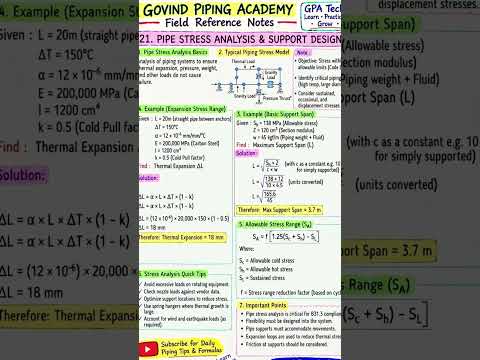
Piping engineering is a complex discipline that bridges mechanical principles, fluid dynamics, and industrial safety. Whether you are working on offshore platforms, chemical processing plants, or oil refineries, having immediate access to reliable field notes, formulas, and guidelines is vital for operational accuracy and regulatory compliance.
Why You Need a Practical Engineering Standards Reference
In the fast-paced world of industrial facility design and maintenance, engineers cannot afford to guess critical calculations or search through massive codebooks while on site. A concise engineering standards reference serves as an indispensable tool, allowing professionals to quickly verify pipe dimensions, pressure-temperature ratings, material selection, and stress analysis parameters. Utilizing a streamlined field reference bridges the gap between theoretical engineering and practical site application.
Essential Field Notes and Formulas for Piping Professionals
To master piping engineering and design, certain core concepts and mathematical formulas must be readily accessible during field operations:
- Pipe Wall Thickness Calculations: Determining the minimum required thickness based on internal design pressure, allowable material stress, and joint efficiency (in line with ASME B31.3 requirements).
- Pressure Drop and Flow Velocity: Balancing flow rate against internal pipe diameter to minimize erosion, cavitation, and excessive energy loss.
- Flange Ratings and Joint Integrity: Matching temperature and pressure limits to the appropriate ASME B16.5 flange classes and gasket materials.
- Thermal Expansion and Support Spanning: Calculating linear expansion due to temperature changes and placing pipe supports effectively to prevent sagging or structural failure.
Consolidating these vital formulas into an accessible engineering standards reference empowers design engineers, project managers, and field technicians to troubleshoot complex layout problems on the fly and prevent costly rework.
Elevating Safety, Compliance, and On-Site Efficiency
Consistency is the cornerstone of safe industrial engineering. Adopting standardized formulas and cheat sheets not only accelerates project execution but also ensures that every design meets strict international safety codes. Maintaining an updated engineering standards reference guarantees that your field decisions remain compliant, accurate, and aligned with industry best practices.
By mastering these essential piping notes and formulas, engineering professionals can significantly enhance site safety, optimize fluid transport systems, and boost overall project efficiency.
