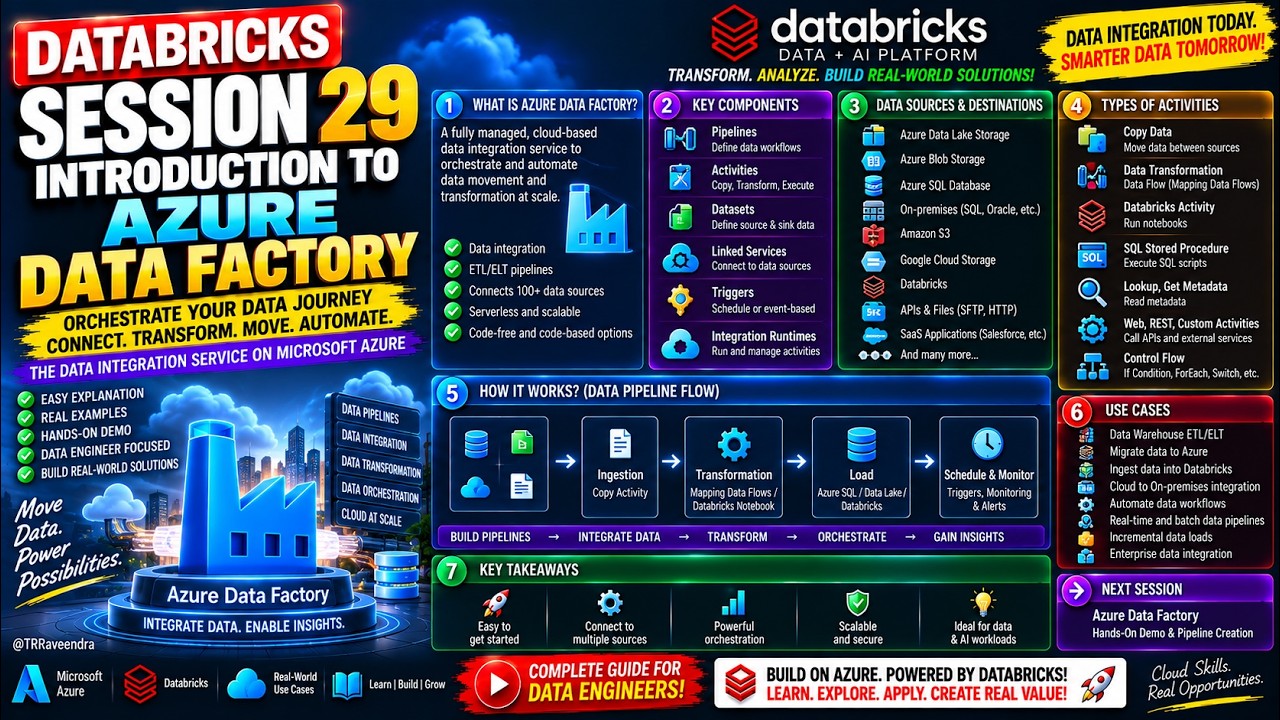
Mastering Azure Data Factory: The Ultimate Guide for Data Engineering
This article provides an in-depth exploration of Data engineering, covering foundational concepts, practical applications, and engineering insights.
In the rapidly evolving tech landscape, modern data engineering relies heavily on scalable, cloud-native tools to transform raw information into actionable business insights. Among the leading solutions in the Microsoft Azure ecosystem is Azure Data Factory (ADF)—a fully managed, serverless data integration service designed to orchestrate complex workflows seamlessly.
What is Azure Data Factory?
At its core, Azure Data Factory acts as the conductor of your data orchestra. It allows developers to construct cloud-based ETL (Extract, Transform, Load) and ELT (Extract, Load, Transform) pipelines without writing extensive infrastructure code. By automating data movement and transformation across diverse sources, ADF simplifies complex data processing tasks for enterprise applications.
Core Components of ADF Architecture
To leverage Azure Data Factory effectively, it is essential to understand its fundamental building blocks:
- Pipelines: Logical groupings of activities that perform a specific unit of work.
- Activities: The individual action steps within a pipeline, such as copying data or executing a query.
- Datasets: Named views of your data that point to or reference the data sources you want to use.
- Linked Services: The connection strings that define how ADF connects to external compute and data storage resources.
- Integration Runtimes: The underlying compute infrastructure used by ADF to execute activities across different network environments.
Supercharging Workflows with Azure Databricks
While ADF excels at orchestrating data movement, combining it with powerful compute engines like Databricks takes your processing power to the next level. Through ADF, you can automatically trigger Databricks notebooks, run PySpark jobs, and manage large-scale data transformations effortlessly. This seamless integration creates a robust data engineering ecosystem that excels in big data analytics, AI, and machine learning.
Why Azure Data Factory is Essential
Building efficient pipelines requires reliable scheduling, monitoring, and enterprise-grade integration capabilities. Azure Data Factory provides an intuitive drag-and-drop visual interface alongside native monitoring tools to track execution and manage alerts. Whether you are migrating legacy on-premises databases to the cloud or building real-time analytics platforms, mastering ADF is a crucial skill for anyone aiming to excel in data engineering.
