Hydraulic motors are the unseen powerhouses behind heavy machinery, construction equipment, and industrial automation. At their fundamental level, these mechanical devices perform a vital transformation: converting hydraulic fluid energy into powerful, rotary mechanical motion. To truly appreciate how these systems operate, one must look at the engineering core principles that govern fluid mechanics and power transmission.
Converting Fluid Energy into Rotary Motion
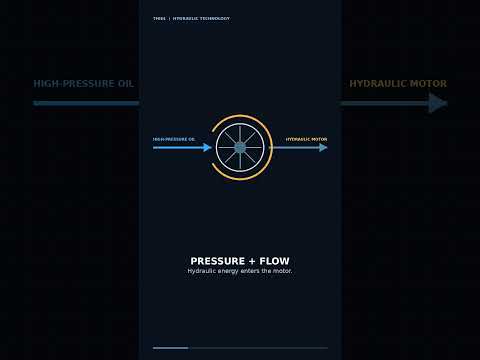
Unlike hydraulic cylinders, which produce linear (straight-line) movement, a hydraulic motor generates continuous rotational force. The process begins when pressurized hydraulic fluid—typically high-viscosity oil—is pumped into the motor's inlet port. As this high-pressure fluid enters the internal chamber, it pushes against mechanical elements such as gears, vanes, or pistons.
This applied force compels the motor's internal assembly and output shaft to rotate, successfully translating fluid pressure into usable mechanical motion. Once the work is performed, the fluid exits through the outlet port at a reduced pressure and flows back to the system reservoir to repeat the cycle.
The Dynamics of Pressure, Torque, and Speed
Understanding how a hydraulic motor delivers work requires examining how key mechanical variables interact. These dynamics demonstrate fundamental engineering core principles in action:
- Hydraulic Pressure and Torque: Torque represents the turning force generated by the motor shaft. It is directly proportional to the fluid pressure supplied to the system. Raising the fluid pressure increases the output torque, allowing heavy machinery to rotate, turn, or drive massive loads effortlessly.
- Flow Rate and Rotational Speed: The motor's shaft speed—measured in revolutions per minute (RPM)—is governed by the flow rate, or the volume of fluid passing through the motor over time. Increasing the fluid flow causes the shaft to spin faster, while reducing fluid flow slows it down.
By adjusting fluid pressure and flow rate simultaneously, machine operators and automated control systems can precisely regulate power output and rotational velocity.
The Importance of Fluid Mechanics in Engineering
Mastering these engineering core principles allows designers, engineers, and maintenance professionals to optimize machinery performance, reduce energy loss, and prevent equipment failure. Whether propelling excavator tracks, powering industrial winches, or driving agricultural machinery, hydraulic motors remain a primary cornerstone of modern mechanical engineering.


