Mobileye vs George Hotz

...
Bloomberg publishes an article about famous 24-year old hacker George Hotz making a self-driving car in his garage based on 6 cameras and a LIDAR. Hotz says that his technology is much better than one of Mobileye used in Tesla Model S: “It’s absurd,” Hotz says of Mobileye. “They’re a company that’s behind the times, and they have not caught up.”

Mobileye spokesman Yonah Lloyd denies that the company’s technology is outdated, “Our code is based on the latest and modern AI techniques using end-to-end deep network algorithms for sensing and control.”

SeekingAlpha reports that Tesla comes to Mobileye's rescue. "We think it is extremely unlikely that a single person or even a small company that lacks extensive engineering validation capability will be able to produce an autonomous driving system that can be deployed to production vehicles," says Tesla. "[Such a system] may work as a limited demo on a known stretch of road -- Tesla had such a system two years ago -- but then requires enormous resources to debug over millions of miles of widely differing roads. This is the true problem of autonomy: getting a machine learning system to be 99% correct is relatively easy, but getting it to be 99.9999% correct, which is where it ultimately needs to be, is vastly more difficult. Going forward, we will continue to use the most advanced component technologies, such as Mobileye’s vision chip, in our vehicles. Their part is the best in the world at what it does and that is why we use it."
12:34 PM

PMD and Infineon Present Improved ToF Sensors

...
Infineon and pmd unveil their latest 3D image sensor chip of the REAL3 family. Compared to the previous version, the optical sensitivity as well as the power consumption of the new 3D sensors has been improved and the built-in electronics take up little space. The chips make it possible for cell phones to operate mini-camera systems that can measure 3D depth data.

The optical pixel sensitivity of the new 3D image sensors is now double that of the previous version. This means that their measurement quality is just as good, while at the same time working with only half of the emitted light output and the camera’s system power consumption is almost halved. The improved optical pixel sensitivity is the result of applying one microlens to each of the pixels of the 3D image sensor chip.

The new 3D image sensor chips were specifically designed for mobile devices, where most applications only need a resolution of 38,000 pixels. The previous 100,000-pixel matrix was accordingly scaled down, and other functional blocks, such as the analog/digital converter for the chip area and performance range were optimized. Thus, the system cost is lower: the sensor chip area is almost halved, and, because of the lower resolution, smaller and less expensive optical lenses can be used.

The three new REAL3 3D image sensors differ in their resolutions: the IRS1125C works with 352 x 288 pixels, the IRS1645C with 224 x 172 pixels and the IRS1615C with 160 x 120 pixels. In this respect, the IRS1645C and IRS1615C are produced on half the chip area of the IRS1125C.

Google’s “Project Tango” using Infineon's IRS1645C 3D image sensor chip. The complete 3D camera for Google “Tango” – consisting of IRS1645C and an active infrared laser illumination – is housed in an area of approximately 10 mm x 20 mm. With a range up to 4 meters (13 feet), a measuring accuracy of 1% of the distance and a frame rate of 5 fps, the 3D camera subsystem consumes less than 300 mW in active mode.

The IRS1125C will be available in volume in Q1 2016. The start of production for the smaller IRS1645C and IRS1615C is planned for Q2 2016. All three types are exclusively delivered as a bare die to allow maximum design flexibility while minimizing system costs.

11:08 AM

TOP 225 International Design Firms (2015)

...


TOP 225 International Design Firms (2015)
International Design Firms


RANK 2015/2014


FIRM


TYPE OF FIRM


1/4


AECOM, Los Angeles,
Calif., U.S.A.


EA


2/1


WorleyParsons, North
Sydney, NSW, Australia*


EC


3/6


ARCADIS NV,
Amsterdam,The Netherlands*


E


4/5


Fugro NV,

CCD vs CMOS: Smear

...
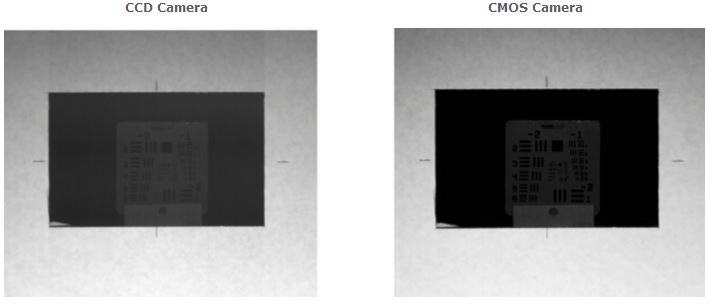
Adimec publishes a nice demo of smear in CCDs and virtual absence of it in CMOS sensors. The smear manifests itself in:
  • Contrast reduction of the image
  • Questionable patterns depending on image contents
  • Higher noise level in the dark areas of the image
  • The three effects above combined: degradation of DRI (detection, recognition, identification)
  • For color: a shift of white balance, depending on the smear level

12:25 PM

Contruction Supervisor (Mechanical & Piping) -CH2M

...


Contruction Supervisor (Mechanical & Piping) Abu Dhabi, UAE


Site Construction Supervisor (Mechanical & Piping) during the EPC execution of Project. Responsible of the supervision of Piping and Mechanical site construction activities, on-plot and well-heads.


To perform activities during construction, pre-commissioning and commissioning stages, including review of reports,

Associate Piping Designer - McDERMOTT

...


Associate Piping DesignerSaudi Arabia - AQ - Al Khobar


Job Description


PRIMARY FUNCTIONS:

Prepare layout and design of complex offshore piping design systems using 2D Microstation /AutoCAD & 3D PDS & PDMS software.
Assist in the piping layout of equipment, and arrangement of piping to equipment.•Pipe Support Detailed Drawings & Marking Plans.
Generating Piping Line List and Tie-In
5:59 AM

Senior Discipline Engineer - Piping (Brunel)

...


Senior
Discipline Engineer - Piping

Are you a driven, independent and dedicated Individual
and interested in joining the team of our client, a major EPC Company based in
Saudi Arabia?


Job


Summary as a Senior
Discipline Engineer - Piping:

·        
Have experience in
the oil / gas, hydrocarbon, refinery, offshore, or infrastructure industries
and
5:18 AM

TechInsights iPhone 6s, 6s Plus 12MP Sensor Report

...
TechInsights announces a reverse engineering report of 12MP Sony sensor from Apple iPhone 6s and 6s Plus, to be published on Dec 22, 2015:

"The Sony 12 megapixel CMOS image sensor is fabricated using a 4 metal (Cu), 90 nm CMOS image sensor process. The backside illuminated die is wafer bonded to an underling control ASIC using through silicon vias (TSVs) to provide die-to-die interconnections. The image sensor features a 1.22 µm large pixel with RGB color filters and a single layer of microlenses. Four pixels share a common readout circuit comprising four transfer gates, a reset gate, select gate and source follower in a 1.75T architecture."
8:48 AM

IISW 2017 Time and Location Announced

...
2017 International Image Sensor Workshop (IISW) announces its time and location. The workshop is to be held on May 30th – June 2nd, 2017 in Hiroshima, Japan. The Grand Prince Hotel Hiroshima is located on a small island in south Hiroshima with a nice archipelago view from the hotel. Miyajima and the downtown Hiroshima, which are UNESCO world heritages, are within the reach and are good excursion candidates.

9:42 PM

TI Unveils ToF SoC

...
TI releases its first SoC for 3D ToF imaging integrating ToF Sensor, AFE, Timing Generator, and Depth Engine on a single chip. While the OPT8320 chip is based on 30um sized Softkinetic pixel technology, it's made by TI and most of the IP is developed in-house in TI. TI publishes a detailed datasheet with example applications, and compares it with a older non-integrated ToF imager:

10:35 AM

Rumor: Microsoft Lumia 1050 Smartphone to Feature 50MP Sensor

...
JBHNews quotes a rumor that Microsoft Lumia 1050 smartphone, to be released in January or February 2016, would feature 50MP camera having a variable aperture, a zoom lens, an OIS and a laser AF. "Overall, Lumia 1050 would be a defining phone in the history of Microsoft."
10:21 AM

Collecting Thoughts, Ethical and Otherwise

...

The world of publishing is changing rapidly as electronic media such as ebooks open up new distribution channels that allow authors to bypass the traditional gatekeepers of hard-copy publishing houses.  One effect of this is to allow writers with small audiences to consider publishing their own books without having to sink thousands of dollars into a vanity press run of a thousand copies, for example.  Instead, these days you can spend some time learning how various ebook-publishing software and distributors work, and do the whole thing yourself (or at most, with the help of an artist for covers).  That is just what I've done with a collection of many of the most popular articles in this blog, and the result is Ethical and Otherwise: Engineering In the Headlines, the cover of which you can see in the sidebar to the right.

I apologize for taking over the blog this week for self-promotion, but I promise not to do it more than once per book.  So here goes.

Ethical and Otherwise has a total of 46 articles culled from the nearly ten years that I've been writing this blog.  They were selected largely on the basis of page views, and so to that extent you, the reader, have played an essential role in its production. 

It's organized into three broad sections:  "Tragedies Large and Small", "Cautionary Tales", and "The Engineering Profession."

The "Tragedies" section is the largest and describes disasters of various types:  "Earth, Air, Wind, and Fire" (natural or nature-assisted disasters); "Planes, Trains, and Automobiles" (transportation accidents); "Mines, Wells, Oil, and Gas"; and "Construction and Destruction."  In this section you'll find out what really caused the Titanic to sink, what set off the natural-gas explosion that killed three hundred students and others in New London, Texas in 1937, and what caused the submarine theater in the Aquarena Springs amusement park in San Marcos, Texas to flip over, besides many other disasters, both well-known and obscure.  In an interview with an engineering podcast a few years ago, I expressed some regret that so many of my blogs deal with death and mayhem, but that's what grabs the headlines, and it's apparently what people like to read about too. 

The "Cautionary Tales" section deals with engineering and technical-enterprise wrongdoings of various kinds:  cyber attacks, counterfeit electronic components, bribery, corruption, copyright battles, and similar matters.  Following that, the section on the engineering profession takes up questions about licensing, engineering education and employment, and other thoughts about the human enterprise of engineering.  Finally, I had to put in a section called "Engineering Ethics In Movies" because (for reasons that are still not clear), the most popular blog article of all time by far is a review of the Tesla film "The Prestige" I wrote back in 2006, and it didn't fit any of the other categories.

So far, the book is available in two formats:  as an iBook in the iTunes bookstore, and as a Kindle book at Amazon.com.  If demand warrants, I will consider issuing a hard-copy paper version through an on-demand publisher, though I have not explored that option much up to this point. 

The selections are distributed fairly evenly throughout the history of the blog, so if you have started reading this blog only recently, you will encounter pieces in the book that you probably haven't read before.  While it's true that all the articles are out there for the reading without your having to buy the book, there's something to be said for the selection process, as the book represents less than 10% of the total number of articles—the most interesting 10%, I hope.

Those of you who have instructional responsibilities regarding engineering ethics may have found engineering-ethics case studies on the web in various places.  For example, Texas A&M maintains a website with case studies, as does the Illinois Institute of Technology, the National Academy of Engineering's OnlineEthics Center, and the National Society of Professional Engineers.  What the NSPE has is actually summaries of cases brought before their board of review, stripped of identifying information.  While these collections are useful, their scope is sometimes limited to certain types of engineering (e. g. civil), and they can sometimes be on the dry side. 

While I didn't put together Ethical and Otherwise exclusively with the classroom in mind, I hope ethics instructors will find it useful.  All the articles are about the same length (I aim for a thousand words, more or less), and they are all drawn from real-life situations of one kind or another.  While I haven't tried to do a full-dress scholarly bibliography, all the URLs referenced in the book were still working at the time of publication.  So I think it will be a useful and possibly even entertaining resource for those who teach ethics-related technical subjects.

Because most of the articles are independent of the others, it's the kind of book you can pick up and put down almost at random.  To be frank, I don't use a Kindle much myself, but my impression is that the kind of lighter tell-me-a-story reading that Ethical and Otherwise has lots of, is fairly well suited to the ebook format. 

At any rate, that's what the book is about, and so if you're looking for more of a dose of this sort of thing than my weekly posts provide, consider buying Ethical and Otherwise.  As far as sales go, I'll be happy if it earns back the $125 it cost to buy the ISBN number.  If after reading it, you like it, you will earn my undying gratitude by writing a favorable review on Amazon.  But don't let my urging bias your review.  That would be unethical, wouldn't it?

Sources:  Ethical and Otherwise:  Engineering In the Headlines is available in the Kindle format at http://www.amazon.com/dp/B018KQ1K7C.  To find the iBook version in the iTunes store, go all the way to the bottom of the iTunes main page where it says "Explore" and click Books, then in the search box at the upper-right corner type "Ethical and Otherwise."  Texas A&M's collection of civil-engineering ethics cases can be found at http://ethics.tamu.edu/CaseStudies.aspx.  The case collection at the Illinois Institute of Technology is at http://ethics.iit.edu/eelibrary/case-study-collection.  The National Academy of Engineering's Online Ethics Center has case studies and other ethics-related material on its main website at http://www.onlineethics.org.  And the National Society of Professional Engineers keeps their review board cases at http://www.nspe.org/resources/ethics/ethics-resources/board-of-ethical-review-cases.  The phenomenon of a medium (such as a blog) advertising itself is known (at least to me) as Stephan's Law, as described in my blog of Dec. 15, 2014.

MIT Proposes to Use Polarization to Improve 3D Imaging

...
Optics.org: Researchers from MIT media lab (Prof. Ramesh Raskar) claim that exploiting the polarization of light allows them increasing the resolution of conventional 3-D imaging devices by as much as 1,000 times. The new 3D imaging system, which they call Polarized 3D, in a paper they are presenting at the International Conference on Computer Vision in Santiago, Chile, on December 11-18, 2015:


"Today, 3-D cameras can be miniaturized to fit on cellphones,” said Achuta Kadambi, a PhD student in the MIT Media Lab and one of the system’s developers. “But this involves making compromises to the 3-D sensing, leading to very coarse recovery of observed geometry. That is a natural application for polarization, because you can still use a low-quality sensor, but by adding a polarizing filter gives a result quality that is better than from many machine-shop laser scanners.”

Polarization affects the way in which light bounces off of physical objects. Light within a certain range of polarizations is more likely to be reflected. So the polarization of reflected light carries information about the geometry of the objects it has struck. Microsoft Kinect is used for a coarse depth estimation, while polarization helps to interpolate and improve its depth accuracy.

“The work fuses two 3-D sensing principles, each having pros and cons,” commented Yoav Schechner, an associate professor of electrical engineering at Technion — Israel Institute of Technology. “One principle provides the range for each scene pixel: This is the state of the art of most 3-D imaging systems. The second principle does not provide range. On the other hand, it derives the object slope, locally. In other words, per scene pixel, it tells how flat or oblique the object is.”

Thanks to AG for the link!
6:05 AM

Yole Report on Autonomous Vehicles

...
Yole Developpement research "Sensors and Data Management for Autonomous Vehicles report 2015" shows the roadmap from manned driving to "feet off" to "hands off" to "mind off" and the sensors needed for that:


"Currently, the most advanced commercial car with autonomous features embeds in the order of 17 sensors. Yole anticipates 29+ sensors by 2030. Today, two sensor businesses dominate: ultrasonic sensors and cameras for surround. Together they are worth a $2.4B market value, but ultrasonic sensors comprise 85% of current market volume. By 2030, cameras for surround will lead the market at $12B, followed by ultrasound sensors and long-range radar ($8.7B and $7.9B respectively), and then short-range radar ($5B). Overall 2030 market value is estimated at $36B.

All of these evolutions will likely lead to mass-market adoption of semi-autonomous vehicles by 2030. We expect more than 22M units (18% of all vehicles sold) of level-2 vehicles and 10M units of level-3 vehicles by 2030, along with 38M units of level-2 vehicles and 1M units of Level-4 vehicles.
"
5:44 AM

High Speed Bullet Photography

...
Odos Imaging CEO Chris Yates publishes an article in Vision Systems Design showing its high speed camera capabilities in shooting a bullet:

Camera measures the bullet deceleration due to the air drag
1:07 AM

AR Startup Magic Leap Raises $827M on Valuation of $3.7B

...
WSJ, Forbes, The Verge: Augmented-reality startup Magic Leap could raise up to $827 million in a new funding round. This would bring Magic Leap’s total funding to about $1.4 billion. If Magic Leap raises the full amount, it could be valued at about $3.7 billion, according to venture-capital data firm VC Experts. The previous investments came from Google, Qualcomm Ventures, KKR, Vulcan Capital, KPCB, Andreesen Horowtiz, Obvious Ventures and others.

“We’re fundamentally a new kind of lightfield chip to enable new experiences,” said Magic Leap founder and CEO Rony Abovitz at a conference in June. “There’s no off-the-shelf stuff used. That’s the reason for the amount of capital we’ve raised — to go to the moon.” Abovitz also released Magic Leap’s SDK and said the company was building 260,000 sq. ft. manufacturing facility in Florida to develop components for the device.
9:00 AM

Pixpolar Receives EC Seal of Excellence Award

...
Pixpolar was awarded European Commission’s Seal of Excellence. Certificate delivered by the European Commission,as the institution managing Horizon 2020, the EU Framework Program for Research and Innovation 2014-2020. Following evaluation by an international panel of independent experts Pixpolar Oy was successful as an innovative project proposal.

A year ago, Pixpolar Oy received the funding from the first round of Horizon 2020 Small and Medium-sized Enterprises (SME) Instrument funding from EU for Phase 1 projects. In this round, the instrument received in total 2602 eligible project proposals, out of which 6% received funding. The toughest competition was within the Open Disruptive Innovation (Information and Communication Technologies) topic, where 3% of 886 eligible proposals received the funding. Pixpolar Oy was the only successful applicant from Finland under the Open Disruptive Innovation topic.

Also a year ago, Pixpolar Oy has received a support from TEKES (the Finnish Funding Agency for Technology and Innovation) for a demonstrator project.
12:04 PM

Softkinetic Receives Vrije University Award

...
Vrije Universiteit Brussel awards its first Certificate of Appreciation to Optrima/SoftKinetic, a 3D Sensor company and a very successful VUB spin-off. The award is a token of recognition of the contribution, quality work, and dedication in promoting and valorising VUB's technological excellence around the globe. In October 2015, Sony announced the acquisition of SoftKinetic Systems.

SoftKinetic originated from a merger of VUB spin-off Optrima and SoftKinetic in 2011. Prof. Maarten Kuijk (ETRO), who founded Optrima with four of his PhD students, stood at the origin of SoftKinetic's groundbreaking 3D technology.
11:11 AM